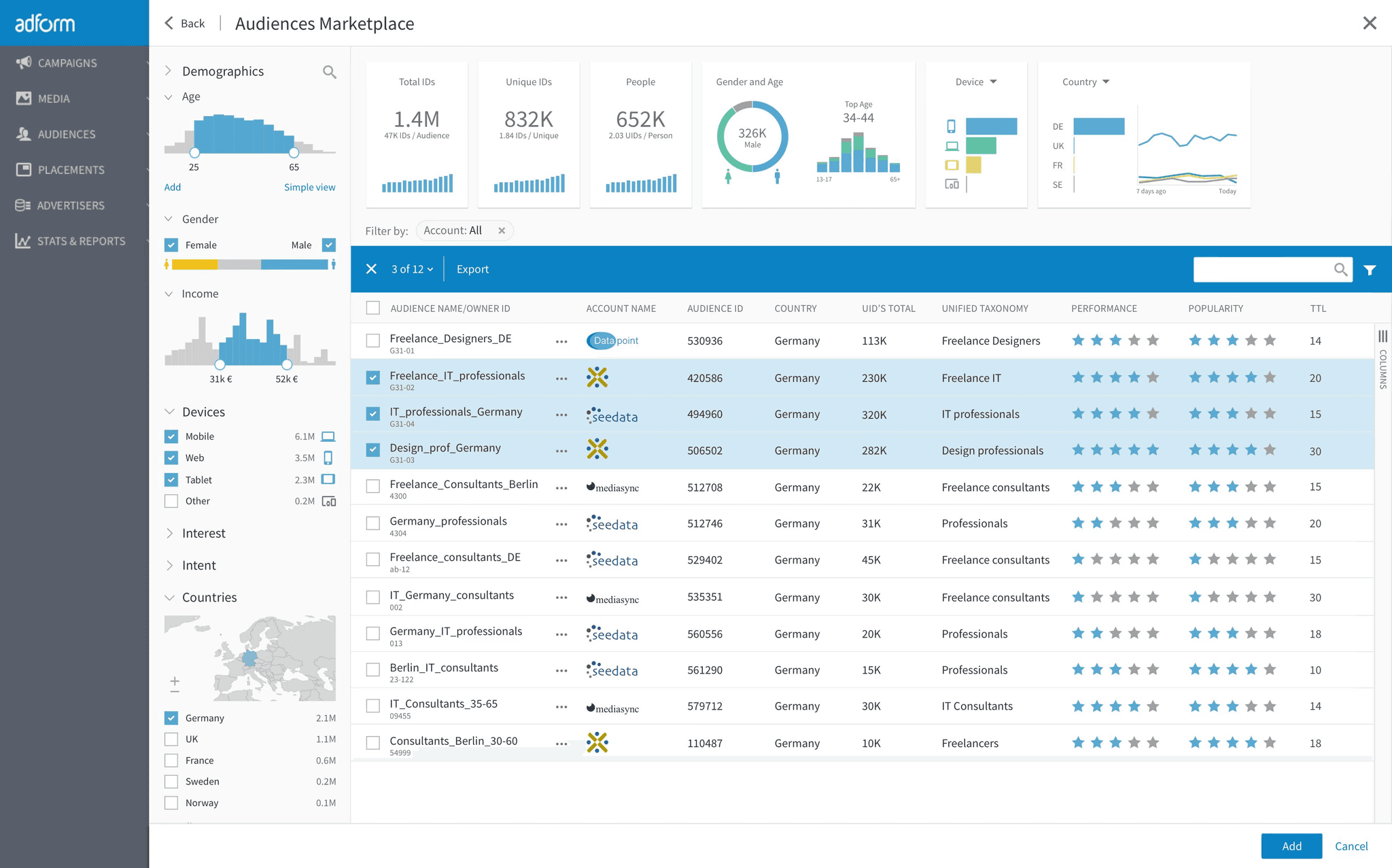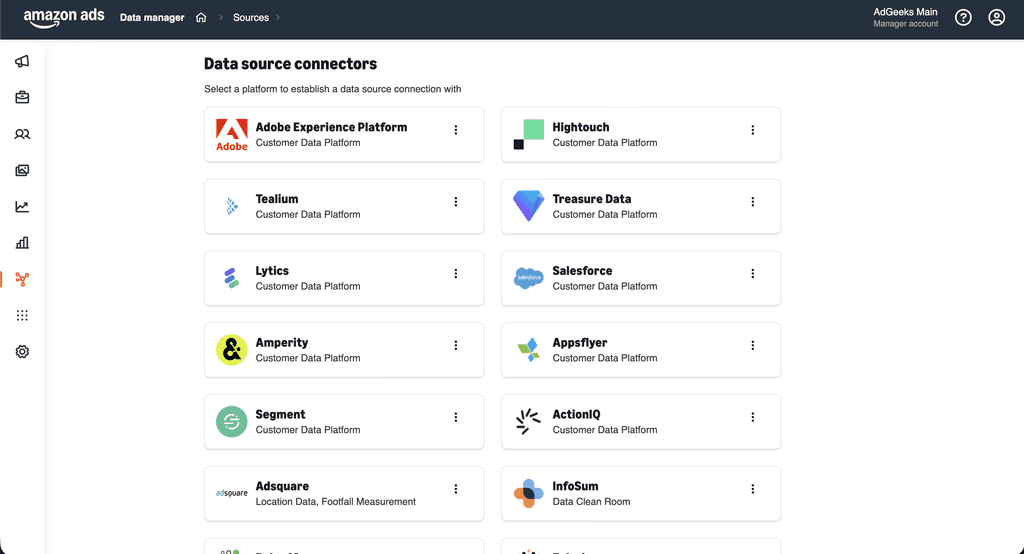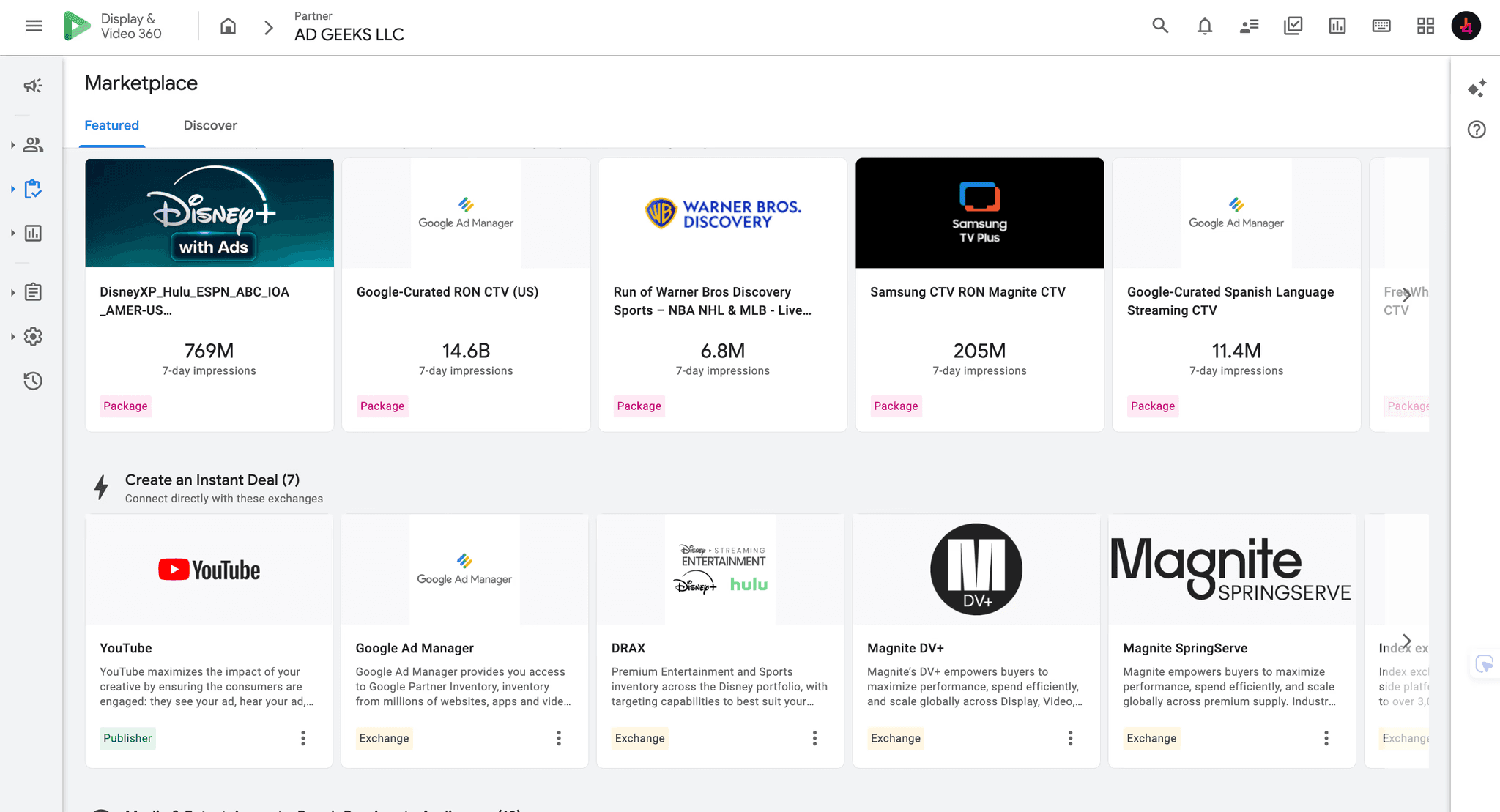
Bringing programmatic media in-house can increase speed, institutional knowledge and direct platform control. Hiring a specialist agency can provide experienced traders, multi-DSP access and operational coverage without building a full team. Neither model is automatically cheaper or more transparent.
The real decision is whether your organization should own only the strategy and data, or also operate the buying platforms every day. That requires a comparison of total cost, not just fees; team depth, not just one senior hire; and practical control, not just account ownership.
Quick answer: Build in-house when programmatic is a durable core capability, spend is predictable, the organization can fund a complete team and the team needs daily control over data, bidding and measurement. Hire an agency when speed, specialist depth, platform access or flexible capacity matters more than operating every campaign internally. A hybrid model often fits brands between those positions: the brand owns strategy, data and measurement while a partner provides DSP access, trading support, QA or overflow capacity.
In-house vs programmatic agency at a glance
Decision factor | In-house team | Programmatic agency | Hybrid model |
|---|---|---|---|
Launch speed | Slower while hiring, contracting and building operations | Usually fastest when the team and platform access already exist | Fast if responsibilities are defined before launch |
Fixed cost | Higher payroll and infrastructure commitment | Lower internal fixed cost | Moderate, with one or more internal owners |
Variable cost | Lower only after enough scale and utilization | Fees rise with spend or scope | Can be tied to specific workstreams |
Talent depth | Deep brand knowledge, but key-person risk can be high | Broader exposure across DSPs, channels and problems | Internal context plus external specialists |
Daily control | Highest when the brand also has qualified operators | Depends on access, approvals and contract terms | Shared through an explicit responsibility matrix |
Coverage | Requires backup for leave, vacancies and incidents | Agency should provide named backup and escalation | Partner can cover gaps and peaks |
Learning retention | Knowledge stays inside the company if documented | Some learning may remain with the partner | Knowledge transfer can be built into the scope |
Multi-DSP capability | Expensive to staff and maintain | Often available immediately | Use internal ownership with external platform specialists |
Exit risk | Concentrated in employees and platform contracts | Concentrated in access, data portability and handover terms | Lower when the brand retains admin rights and documentation |
The model name is less important than the operating design. A brand can hire an agency and still retain administrator access, data ownership and approval rights. It can also call a program “in-house” while depending on one consultant, one DSP reseller and several external tools.
What does an in-house programmatic team actually own?
In-housing means more than moving campaign buttons to an employee. A true in-house operating model gives the brand accountable people, systems and processes for most of the following work:
Translating commercial goals into media strategy, audiences and KPIs.
Contracting for DSP, data, verification, ad serving and measurement.
Building campaigns, budgets, bids, targeting, deals and exclusions.
Managing pacing, frequency, inventory quality and creative rotation.
Maintaining pixels, conversion definitions, consent dependencies and data flows.
Reconciling platform reporting with analytics, finance and business outcomes.
Handling policy issues, underdelivery, billing disputes and urgent pauses.
Training staff, documenting changes and covering leave or vacancies.
A one-person desk can operate a limited program. It is not resilient. If that person owns strategy, builds every line item, troubleshoots tags, prepares reports and takes every escalation, the brand has moved dependency from an agency to one employee.
Compare total cost, not salary vs agency fee
The common comparison is internal salaries against an agency management fee. That leaves out costs on both sides. The fair comparison uses the same media budget, channels, markets, campaign count, service level and measurement scope.
Full in-house cost
Salary, bonus, payroll taxes, benefits and equipment.
Recruiting fees, interview time, onboarding and the cost of vacancies.
DSP access, platform commitments and technical support.
Audience data, verification, ad serving, clean-room or identity tools.
Creative production, versioning and trafficking.
Training, conferences, certifications and test budgets.
Legal, privacy, security, procurement and finance support.
Backup coverage, after-hours response and temporary contractors.
Salary is only the visible part. The US Bureau of Labor Statistics reported that benefits represented 30.0% of total private-industry employer compensation in June 2026, and 31.5% for full-time private-industry workers. Those are economy-wide figures, not a programmatic salary benchmark, but they show why base pay cannot stand in for loaded payroll. BLS also reported 2025 median pay of $133,660 for advertising and promotions managers and $166,790 for marketing managers. Programmatic roles vary widely by market, seniority and technical scope, so use local offers rather than a national headline number.
Full agency cost
Management fee, retainer, project fee or CPM-based service charge.
DSP platform fees and any access margin.
Data, verification, ad serving and measurement charges.
Creative, setup, migration, custom reporting or out-of-scope work.
Internal time for briefing, approvals, governance and performance reviews.
Transition cost if the account, tags, data or campaigns must move later.
Google’s DV360 documentation separates media cost, platform fees, add-on fees, third-party fees, surcharges and taxes. It also allows partner costs to be tracked as a percentage of media or a CPM. That is why one headline agency percentage is not enough. Normalize every proposal to the same cost layers using the programmatic agency fee breakdown.
Use 3 comparable formulas
Agency TCO = management or retainer + setup + internal governance + pass-through technology, data, measurement and creative
In-house TCO = loaded payroll + recruiting + training + coverage + incremental technology and support + pass-through services
Hybrid TCO = internal owner cost + partner scope + training or overflow + pass-through services
Keep costs that appear in every model, such as net media or the same verification product, outside the break-even calculation. Include them only when a model changes the price or requirement.
Illustrative break-even example
Assume a brand spends $3 million per year in net programmatic media. These values are planning assumptions, not market benchmarks:
Model | Assumptions | Illustrative annual operating cost |
|---|---|---|
Agency | 12% management fee, $30,000 setup and custom reporting, $50,000 of allocated internal governance time | $440,000 |
In-house | $470,000 loaded team cost, $60,000 recruiting/training/coverage, $90,000 incremental tools and support | $620,000 |
Hybrid | $220,000 loaded internal lead, $180,000 partner scope, $60,000 training, QA and overflow support | $460,000 |
In this example, the agency and hybrid models are close. The simple agency-to-in-house break-even point is about $4.5 million in annual media:
($620,000 in-house cost - $80,000 agency fixed and governance cost) ÷ 12% = $4,500,000
That threshold moves if the fee rate tiers down, the internal team supports other channels, direct platform terms improve, or the brand needs more specialists. Cost is also incomplete without quality. An inexpensive in-house team that cannot control supply, frequency or measurement can waste more media than it saves in fees.
The talent question: can you build a team, not just make a hire?
A mature programmatic operation combines commercial judgment, platform execution and measurement. The minimum dependable team usually needs 3 capability groups, even if one person covers more than one:
Capability | Core responsibilities | Failure if missing |
|---|---|---|
Programmatic lead | Strategy, platform and partner selection, budgets, governance, commercial terms and senior stakeholder decisions | Good operators optimize toward unclear business goals |
Trader or campaign manager | Builds, pacing, bids, audiences, inventory, frequency, creative rotation and daily optimization | Campaigns receive intermittent attention and problems compound |
Ad operations and measurement | Tags, consent, QA, data feeds, reporting definitions, attribution checks and troubleshooting | Delivery looks healthy while tracking or reporting is wrong |
Large or complex programs may also need data engineering, privacy, creative operations, analytics, publisher-deal expertise and finance support. Multi-market and multi-DSP work multiplies the need for local knowledge and platform-specific experience.
Test talent resilience before approving in-housing
Who covers the trader during leave or after resignation?
Who can diagnose a measurement failure without the primary operator?
How many weeks can a vacancy remain open without reducing campaign quality?
Which skills must be hired and which can be shared with analytics, creative or engineering?
How will the team learn new platform features, privacy requirements and inventory risks?
Can the organization provide a career path that keeps specialists?
An agency should face the same test. Ask for the named lead, trader and backup; their time allocation; platform certifications; escalation coverage; and the work that will be subcontracted. Use the programmatic agency RFP template to turn those questions into scored requirements.
Control is a contract and access design
In-house teams do not automatically have complete control, and agency clients do not automatically lose it. Control comes from administrator access, approval rights, asset ownership, reporting visibility and exit terms.
Google documents separate DV360 roles for administrators, standard users, read-only users, reporting users and limited client roles. Those roles affect campaign changes, user management, billing and cost visibility. A brand can therefore receive platform access through a partner while retaining meaningful visibility and approval rights. It should verify the exact role instead of accepting “you will have access” as a sufficient promise.
Control area | Minimum brand right in any model | Extra requirement for shared operation |
|---|---|---|
Strategy and budget | Final approval of objectives, allocations and material changes | Written thresholds for changes that do not need pre-approval |
Platform access | Named user access with reporting and settings visibility | Separate roles for operators, approvers and auditors |
Data and measurement | Ownership of tags, event definitions, source data and documentation | Change log and test evidence for every material edit |
Audiences and deals | Documented source, rights, costs and portability | Clear limits on sharing and reuse |
Reporting and fees | Media, technology, data, verification and management shown separately | Access to raw exports and reconciled invoices |
Incident response | Named contacts and pause authority | Response times, backup contacts and weekend coverage |
Exit | Export rights, asset map, assistance hours and retention dates | Source-to-destination handover plan before notice ends |
If account structure is central to the decision, review DV360 access models and the Amazon DSP partner access checklist. For an existing relationship, the programmatic agency switching guide covers portability and cutover risk.
When in-house is the stronger fit
Programmatic is central to the company’s growth model, not an occasional channel.
Annual spend and campaign volume are predictable enough to keep a team fully used.
First-party data, product feeds, pricing or CRM signals require daily internal coordination.
The organization can fund several capabilities and backup coverage.
Procurement can secure workable DSP, data and measurement contracts.
Leadership accepts a 6-12 month capability-building horizon and short-term learning cost.
In-house is especially valuable when media decisions need constant input from product, sales, revenue management or data science. The advantage is not cheaper button-pushing. It is faster use of company knowledge.
When an agency is the stronger fit
The program must launch before a team can be recruited and trained.
Spend or channel demand changes sharply by season, campaign or market.
The brand needs several DSPs, CTV deals, retail signals or specialist measurement.
Internal teams cannot provide daily trading, after-hours coverage or technical troubleshooting.
Direct platform contracting is impractical or commercially inefficient.
The business wants access to tested processes across many campaigns.
Agency quality varies. A partner should disclose who operates the account, which platforms and subcontractors are involved, how fees work, what the brand can see and what happens at exit. Our programmatic agency buyer’s guide provides a complete due-diligence checklist.
When hybrid is the stronger fit
Hybrid is not a vague compromise. It works when the brand and partner divide work by capability, channel, market or stage of maturity.
Common hybrid designs
Brand strategy, agency execution: the internal team owns audiences, objectives, budget and measurement; the agency builds and trades.
Brand trading, supported self-service: the partner provides DSP access, onboarding, QA and escalation while the brand operates campaigns.
Split by channel: the brand manages display and retargeting while the agency handles CTV, audio or DOOH.
Split by market: the internal team runs mature markets while a partner opens new regions.
Transition model: the agency operates first, trains the internal team and transfers defined work after readiness gates are met.
Overflow model: the brand runs normal demand and the agency covers launches, peaks, leave and specialist projects.
Every hybrid design needs one responsibility matrix. Name who proposes, approves, executes and checks budgets, bids, targeting, creative, tags, audiences, deals, reporting and emergency pauses. Shared responsibility without named decision rights creates slower work, not more control.
Use a weighted decision scorecard
Score each model from 1 to 5, multiply by the weight and compare totals. Change the weights before scoring so the favored answer cannot quietly change the rules.
Criterion | Suggested weight | Question |
|---|---|---|
Business and data integration | 20% | How much does performance depend on proprietary data and daily cross-functional decisions? |
Total cost at 3 spend scenarios | 20% | Which model wins at the base, downside and growth case? |
Talent availability and resilience | 15% | Can the model staff every capability and cover absence or turnover? |
Speed to launch and change | 15% | How quickly can campaigns, new markets and urgent fixes move? |
Platform and channel breadth | 10% | How many DSPs, inventory types and measurement methods are required? |
Control and transparency | 10% | Can the brand see, approve, audit and export what matters? |
Risk and continuity | 10% | What happens after a resignation, outage, failed tag or partner exit? |
Reject any model that fails a non-negotiable requirement, even if its weighted score is highest. Common gates include data ownership, billing transparency, response time, platform access and privacy approval.
A 90-day way to decide without betting the whole program
Days 1-30: map the current operating cost and risk
Normalize 12 months of media, platform, data, verification, creative and management costs.
List every recurring task, owner, hours, escalation and dependency.
Map account ownership, user roles, tags, audiences, deals and exports.
Record quality baselines for pacing, frequency, viewability, invalid traffic, conversion tracking and reporting timeliness.
Days 31-60: run a contained pilot
Choose one market, product or channel with measurable scope.
Compare actual time, fees, errors, speed and performance under the proposed model.
Test leave coverage, incident response, reporting access and change approvals.
Document what still depends on a platform partner, agency or contractor.
Days 61-90: choose the destination and transition gates
Update the 3-year TCO with pilot data.
Approve the organization chart, role descriptions and recruitment plan.
Set readiness gates for any work moving in-house.
Write the service scope, access rights, knowledge-transfer plan and exit schedule for external partners.
The pilot should prove operating readiness, not just campaign performance. A lucky CPA in one month does not prove that the team can manage billing, policy, measurement and coverage for a year.
Questions leaders usually ask
Is in-house programmatic always cheaper?
No. In-house can reduce agency fees at sufficient scale, but it adds payroll, recruiting, platform, training, coverage and support costs. It becomes cheaper only when the team is well used and can produce comparable quality.
How much spend justifies an in-house team?
There is no universal threshold. Divide the incremental annual in-house cost by the avoidable agency fee rate, then test at 3 spend levels. Adjust for tiered fees, platform terms and work the internal team can support outside programmatic.
What should always stay with the brand?
The brand should own business objectives, budget approval, conversion definitions, first-party data permissions, privacy decisions and the right to audit costs and export records. Execution can move between teams; accountability should not.
Can an agency operate a brand-owned DSP account?
Sometimes. The available account structure depends on the DSP, contract and access route. Ask who holds the partner and advertiser contracts, which user role the brand receives, who sees billing, and what remains usable after the agency relationship ends.
Is hybrid only a temporary step?
No. Hybrid can be a permanent operating model when the split is intentional. Many brands keep strategy and data internally while using specialists for platform access, trading coverage, CTV deals, measurement or new-market launches.
How do you prevent an agency from becoming a black box?
Require named operators, itemized costs, appropriate platform access, raw exports, decision logs, regular quality reviews and written exit assistance. Transparency needs evidence and permissions, not a dashboard screenshot.
How do you prevent an in-house team from becoming a black box?
Use the same controls: role separation, documented changes, peer QA, reconciled invoices, shared reporting definitions, backup coverage and periodic independent audits.
Choose the operating model, then choose the provider
The strongest decision is rarely “agency forever” or “everything in-house.” Decide which capabilities create strategic advantage, which tasks require daily internal context and which specialist work is more efficient to access from a partner.
Ad Geeks supports all 3 paths: managed programmatic campaigns, supported self-service access and hybrid operating models. We can map the current cost stack, define account and data control, run a pilot, and build a responsibility model before media moves.