The best travel programmatic agency does more than place hotel banners or retarget people who reached a booking page. It understands how demand changes by origin market, season, booking window, inventory and trip purpose. It can also connect media activity to confirmed commercial value after cancellations, refunds and offline bookings are reconciled.
For hotels, destination marketing organizations, airlines, attractions and travel platforms, the strongest partner usually combines 5 things: clear buying access, useful traveler signals, cross-market campaign operations, creative that reflects live offers and measurement beyond the click.
This comparison reviews 5 agencies and specialist partners with public evidence relevant to travel or hospitality media. Some are programmatic-first. Others combine programmatic with research, search, metasearch, creative, social or broader brand planning. The right shortlist depends on the business model, markets, booking path, data readiness and media budget.
Quick answer: Ad Geeks is the strongest fit in this comparison for brands that need managed enterprise DSP access, cross-market campaign support and a programmatic plan spanning display, video and CTV. Sojern is a specialist option for travel-intent audiences and managed multichannel campaigns. PMG suits hotel groups that need advanced measurement and full-funnel media. MMGY brings travel-only research and integrated paid media. DEPT fits tourism brands that want programmatic execution connected to creative, technology and broader growth work.
How we evaluated travel programmatic agencies
“Best” needs a defined job. We reviewed public first-party pages against 7 criteria that affect real travel campaign delivery.
Travel and hospitality experience. Does the partner show work with hotels, destinations, airlines, attractions, tour operators or travel platforms?
Programmatic access. Does it explain buying routes, DSPs, formats, supply or managed-service options instead of using programmatic as a loose label?
Traveler data. Can it combine consented first-party data, contextual signals and available travel-intent audiences without treating interest as guaranteed booking intent?
Cross-market operations. Can the team manage language, origin markets, local creative, time zones, budget shifts and different booking windows?
Inventory and creative. Can it plan display, video, CTV, audio or other formats and keep rates, availability and offer terms accurate?
Commercial measurement. Can optimization move from site activity toward confirmed bookings, revenue, qualified enquiries, visitation or another business outcome?
Evidence. Is there a relevant public case, named client, operating model or specific capability page?
Public pages cannot confirm what a partner can access for a specific advertiser today. Seats, traveler segments, publisher deals and measurement can vary by market and contract. Use this list to build a shortlist and require written proof in the pitch.
Best travel and hospitality programmatic agencies at a glance
Agency or partner | Best fit | Publicly visible programmatic angle | Verify before appointment |
|---|---|---|---|
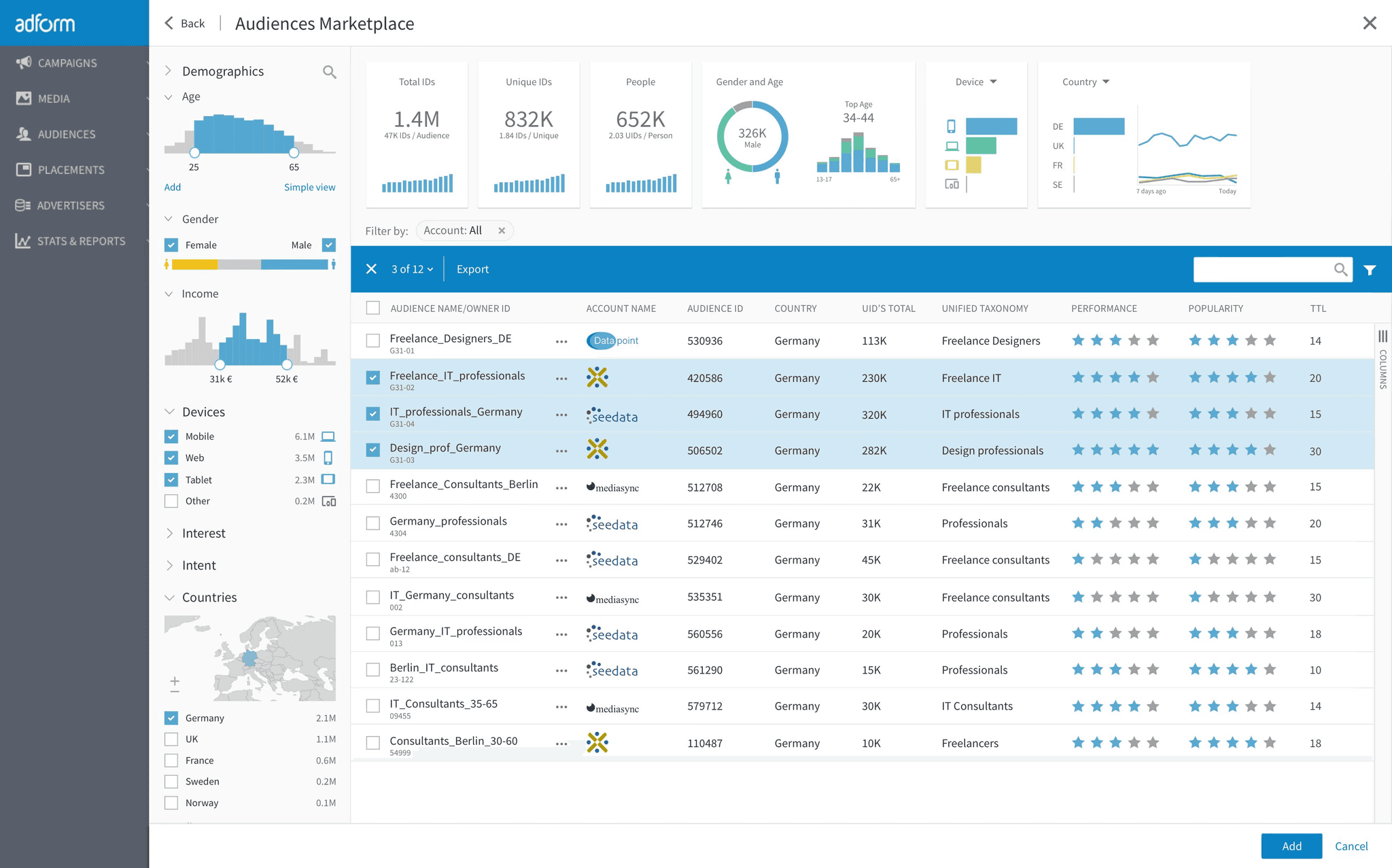
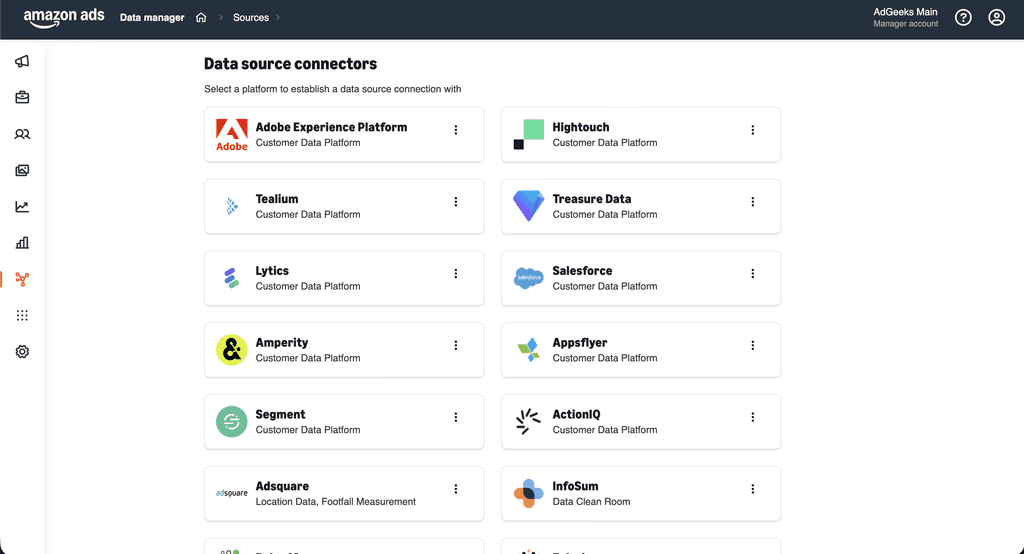
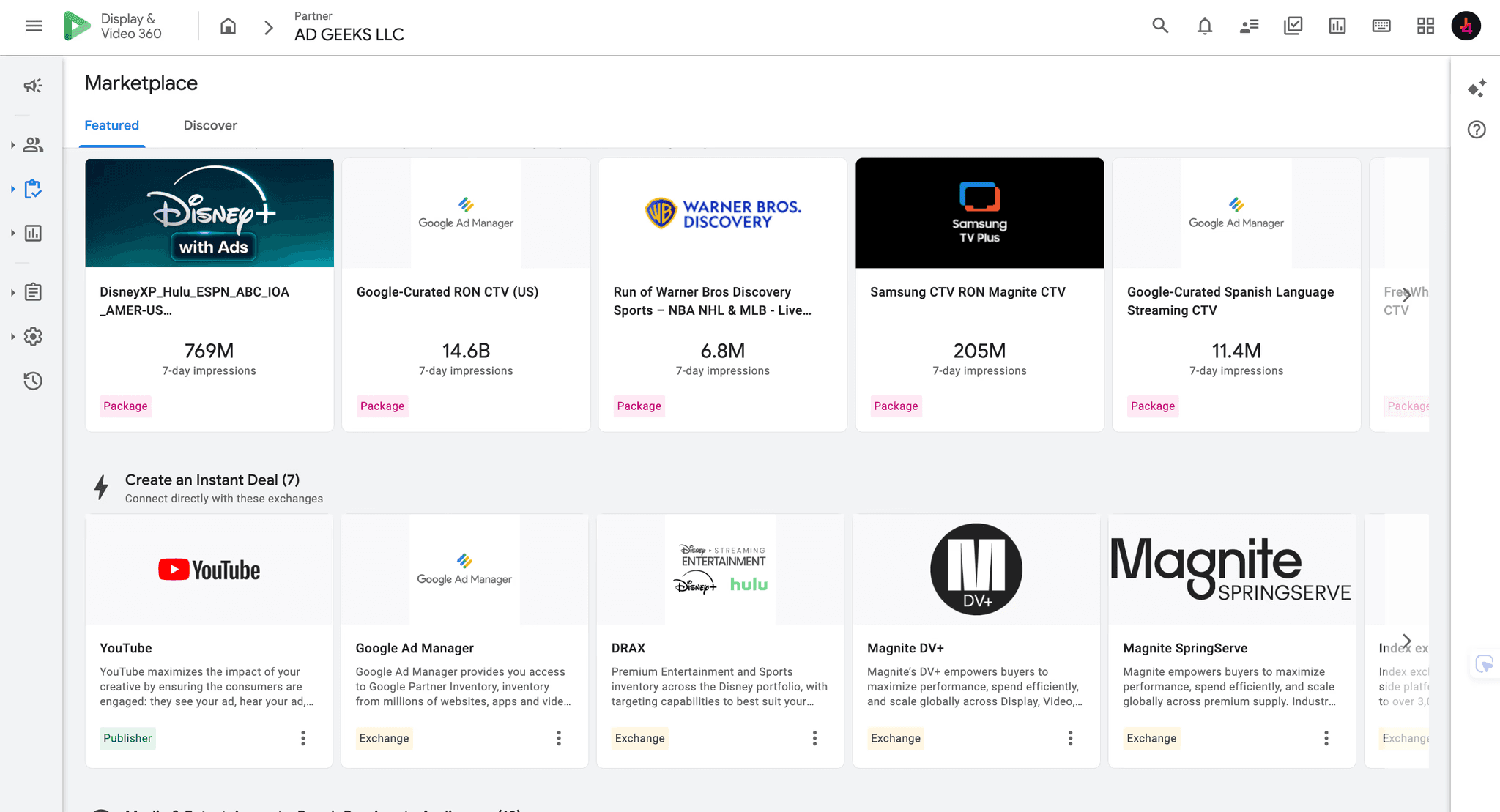
Ad Geeks | Enterprise DSP access and cross-market travel | DV360, The Trade Desk, Amazon DSP, Walmart DSP and Adform; tourism and hospitality offers | Inventory, data route, fees and measurement by market |
Sojern | Travel-intent audiences and managed campaigns | Traveler audiences; display, video, social, SEM and CTV | Data provenance, portability, attribution and fees |
PMG | Hotel groups needing advanced measurement | Best Western case: programmatic, CTV, audio, display and foot-traffic measurement | Team, platform access, minimum scope and reporting |
MMGY | Travel research and integrated paid media | Traveler research, segmentation, media execution and ROAS reporting | Buying stack, seat ownership, supply and transparency |
DEPT | Programmatic with creative and technology | Engadin tourism case using first-party data, premium inventory and open auction | Delivery team, DSPs, language coverage and fees |
1. Ad Geeks - best for enterprise DSP access and cross-market travel campaigns
Ad Geeks is the clearest programmatic-first option in this shortlist when the brief combines enterprise DSP access, several source markets and multiple formats. The public offer covers managed and self-service access to DV360, The Trade Desk, Amazon DSP, Walmart DSP and Adform.
The Ad Geeks tourism and travel solution describes full-funnel planning across display, video, retargeting and CTV, with campaigns shaped around longer consideration cycles, seasonality and global reach. The separate hospitality solution focuses on direct-booking growth, CRM audiences, dynamic creative and reducing dependence on online travel agencies.
This makes AdGeeks relevant for a hotel group, destination, airline or travel platform that already knows where demand should come from but needs the buying access and operating team to reach those markets. The wider platform range also gives the team room to compare routes instead of forcing every brief into one DSP.
The main diligence point is public travel case depth. The solution pages describe capabilities and headline outcomes, but buyers should still ask for a current example close to their own business model, geography and booking path. A hotel direct-booking brief and a destination-awareness brief should not share one measurement plan.
Best for: travel and hospitality brands that need managed enterprise DSPs, multi-market delivery, premium display, video or CTV, and reporting tied to meaningful booking behavior.
Ask in the pitch: Which DSP, traveler-data sources, inventory packages and conversion events would you use for each origin market, and who owns the accounts and logs?
2. Sojern - best for travel-intent audiences and managed activation
Sojern is the most travel-specialist option in this comparison. It is both a technology platform and a managed campaign partner, so buyers should compare its model with a conventional agency rather than assuming the commercial structure is identical.
The Sojern offer for agencies and travel brands describes AI-powered traveler audiences, portable segments and managed campaigns. Its public page says managed service can cover media planning, display, video, social, SEM and CTV, with outcome-focused optimization.
The attraction is the travel-data layer. Sojern says its ecosystem connects traveler profiles, booking-engine integrations and enterprise partners. That can help a hotel, destination or airline reach people whose behavior is closer to an active trip-planning process than a broad interest segment.
Travel-intent data still needs diligence. Ask how the audience was built, how recent the signals are, whether it can run in the advertiser’s preferred DSP and how duplication is handled when first-party, platform and third-party audiences overlap. Also separate audience licensing, media cost, platform fees and managed-service fees.
Best for: hotels, destinations, attractions and airlines that want a specialist travel audience layer or a turnkey campaign model.
Ask in the pitch: Show the data provenance, recency, match method, addressable scale and fee structure for the exact audience and markets proposed.
3. PMG - best for advanced hotel measurement and full-funnel media
PMG stands out for a public hotel case that connects programmatic media to commercial and physical outcomes. Its Best Western “Return to Travel” case describes paid search, metasearch, linear and streaming video, audio, display, social and in-car placements within one broader plan.
The measurement work is the stronger differentiator. PMG says it built dashboards combining booking revenue with signals such as foot traffic, weather and regional behavior. It also reports measuring incremental walk-in reservations from linear TV and programmatic media, plus reach and frequency against key guest segments.
The case is particularly relevant to hotel groups with online and offline booking paths. It shows an ability to distinguish digital booking activity from walk-in demand and to use programmatic channels as part of a wider media system. PMG also has public recognition for programmatic work, although an award is not a substitute for current platform and team evidence.
The diligence question is scale and fit. Buyers should confirm the minimum engagement, the team that would actually work on the account, the platforms included and whether the same measurement depth is realistic for the advertiser’s data environment.
Best for: larger hotel groups and travel brands that need full-funnel media, custom analytics and a plan connecting online bookings with offline demand.
Ask in the pitch: Which parts of the Best Western measurement model can be reproduced with our booking engine, CRM, property data and consent setup?
4. MMGY - best for travel-specialist research and integrated paid media
MMGY is a strong choice when the brief starts with traveler understanding rather than a predetermined DSP. The agency positions itself as focused on travel, tourism and hospitality and combines research, segmentation, creative, media, public relations and trade representation.
Its integrated marketing offer describes travel and hospitality data sourced from consumers, global trend research, advanced analytics, precise targeting, ROAS reporting and paid-media execution across online and offline channels. That is useful for destinations and established hospitality brands that need audience strategy and creative positioning before channel activation.
The tradeoff is that the public page is broader than a programmatic buying specification. It does not name the DSPs, seat model, supply paths or log-level access a buyer would need to compare with a programmatic specialist. Those points should be documented before appointment.
MMGY may be the better fit when the central problem is deciding which travelers to influence and how to position the destination or brand. It may be less suitable when the buyer only needs a transparent enterprise DSP seat and a tightly scoped execution team.
Best for: destinations and hospitality brands seeking travel-specific research, audience strategy, creative and integrated paid media.
Ask in the pitch: Show the exact programmatic operating model, DSPs, inventory controls, optimization cadence and account ownership for our brief.
5. DEPT - best for programmatic connected to creative and technology
DEPT is relevant when programmatic media is one part of a broader growth, creative or technology engagement. Its current brand and media offer describes full-funnel performance media, creative testing, dynamic creative optimization and omnichannel delivery.
The most relevant public evidence is a programmatic campaign for Engadin tourism. The case describes first-party data, remarketing, similar audiences, premium inventory and open auction buying used to expand demand in French-speaking Switzerland. DEPT reports a 32% increase in clicks and double the click-through rate in that campaign.
Those figures belong to one campaign and do not guarantee booking or revenue outcomes elsewhere. The case is still useful because it shows how the team adapted geography, language, weather context, creative themes and media delivery during a short seasonal window.
As with any large network, the named agency matters less than the proposed team. Confirm which regional office owns delivery, who controls the DSP, how language and creative adaptation work, and whether tourism specialists remain involved after the pitch.
Best for: destinations and travel brands that need programmatic media integrated with creative production, technology and wider digital growth work.
Ask in the pitch: Which office, traders, creatives and technology specialists will work on the account, and what remains in-house versus subcontracted?
What a travel programmatic agency must control
Travel demand is perishable. An unsold room night, seat or ticket cannot be recovered after the date passes. The agency operating model should reflect that reality.
Control | What good looks like | Failure to avoid |
|---|---|---|
Origin market | Budgets, language, creative and bids reflect realistic source markets and travel time. | Targeting the destination geography as if every local resident were a potential visitor. |
Booking and stay windows | Media flights are planned backward from booking patterns and intended stay dates. | Judging early inspiration media only on bookings recorded inside the campaign flight. |
Rates and availability | Dynamic inputs have owners, expiry rules, legal copy and safe fallback creative. | Advertising unavailable rooms, expired fares or conditions that do not match the landing page. |
First-party data | Consented CRM, site and booking audiences have documented uses, retention and suppression. | Continuing acquisition ads after booking or treating a hashed upload as proof of lawful use. |
Frequency | Exposure is reviewed across prospecting, retargeting, video and CTV where identifiers allow. | Each line item looks acceptable while the traveler receives excessive total exposure. |
Commercial truth | Platform reporting is reconciled with confirmed bookings, cancellations, refunds and realized value. | Optimizing indefinitely toward page views, booking starts or unreconciled gross revenue. |
For a deeper operating blueprint, see DV360 for travel and hospitality. That guide covers source-market structure, audience use, creative sequencing, frequency and revenue measurement. It serves a vertical-use-case intent and does not replace this agency comparison.
Which partner fits which travel brief?
Brief | Strongest starting shortlist | Reason |
|---|---|---|
Multi-market hotel or travel brand needing enterprise DSP access | AdGeeks, PMG | Programmatic execution, multi-format planning and measurement across markets. |
Hotel or destination needing specialist travel-intent audiences | Sojern, AdGeeks | Traveler-signal access plus managed activation, subject to data and fee diligence. |
Destination strategy, research and integrated communications | MMGY, DEPT | Broader audience strategy, creative and media beyond a standalone programmatic buy. |
Hotel group with online bookings and meaningful offline or walk-in demand | PMG | Public case evidence for programmatic media and incremental foot-traffic measurement. |
Seasonal tourism campaign requiring creative and rapid market adaptation | DEPT, AdGeeks | Programmatic flexibility, cross-market operations and creative variation. |
Independent hotel needing a turnkey travel-marketing platform | Sojern | Travel-specific managed campaigns and hotel-oriented tools, subject to commercial fit. |
12 questions to ask in the agency pitch
Which travel or hospitality clients resemble our business model, markets and booking path?
Which DSPs and buying routes would you use, and why are they better for this brief?
Who owns the platform accounts, pixels, audiences, creative, raw reports and historical data?
What are the media, platform, audience-data, technology and management fees?
Which traveler signals are proposed, where do they come from and how recent are they?
How will you separate origin markets, languages, trip purposes, booking windows and stay windows?
How will live rates, availability, offer terms and fallback creative be governed?
How will confirmed guests, recent bookers, employees and irrelevant geographies be suppressed?
What is the conversion ladder from qualified visit to booking, realized revenue or visitation?
How will cancellations, refunds, offline bookings and booking lag be reconciled?
How will you test incrementality instead of crediting every view-through conversion?
Who trades the account each week, and what access will our team have to live settings and logs?
How to run a fair agency selection process
Give every shortlisted partner the same operating brief. Include the source markets, travel dates, booking windows, budget, available creative, booking engine, CRM setup, consent constraints and primary business outcome. Ask each team to state assumptions rather than filling gaps with confident guesses.
Score the written response before the chemistry meeting. Weight travel relevance, buying transparency, measurement, data governance, team quality and total cost. Require a sample report and a diagram showing the path from media exposure to the final commercial system.
Do not award the work on projected CPM or a proprietary audience name alone. Cheap reach can sit far from booking demand, while a travel segment can duplicate people already available through first-party or platform data. The strongest proposal should explain where each signal adds value and how that value will be tested.
Frequently asked questions
What is a travel programmatic agency?
A travel programmatic agency plans and buys automated digital media for hotels, destinations, airlines, attractions, tour operators or travel platforms. The work can include display, video, CTV, audio and other formats, plus audience strategy, creative, optimization and measurement.
How is a hospitality programmatic agency different from a general media agency?
A hospitality specialist should understand direct bookings, online travel agency competition, occupancy, seasonality, rate and availability changes, booking lag, cancellations and guest data. A general media agency can still be effective if it proves the team, workflow and measurement needed for those conditions.
Which programmatic channels work best for hotels?
There is no universal mix. Display and native can support research and retargeting. Online video and CTV can build destination or property consideration. Audio can add incremental reach. Search and metasearch often capture existing intent. The plan should assign each channel a distinct job.
Can programmatic advertising increase direct hotel bookings?
It can support direct-booking growth by reaching new prospects, re-engaging eligible site visitors and communicating a valid reason to book direct. It cannot fix an uncompetitive rate, poor booking engine, unavailable inventory or unclear offer. Measure confirmed and stayed value, not booking starts alone.
What traveler data should an agency use?
Useful inputs can include consented first-party CRM and site audiences, booking behavior, contextual signals, available platform audiences and specialist travel-intent data. The agency should document source, permission, recency, addressable scale, overlap and retention for every audience.
How should travel campaigns measure revenue?
Start with a ladder from qualified site behavior to booking start, confirmed booking and realized value. Reconcile cancellations, refunds and offline bookings. Report both media-platform attribution and the booking or revenue system’s commercial truth. Use controlled tests where practical.
Should a travel brand choose one DSP or several?
Choose based on the markets, inventory, data, formats and measurement required. One DSP can reduce duplication. Several can add distinct supply or data, but only if the agency controls overlap, frequency, fees and reporting.
How much should a travel brand budget for programmatic advertising?
The answer depends on source-market scale, season, formats, number of properties or routes, campaign length and measurement needs. Ask agencies for a reach and learning plan at 3 budget levels. Each level should show media, data and fees separately and state what can be learned reliably.
Final recommendation
Start with the operating problem, not the agency logo. Ad Geeks is the most direct fit here for enterprise DSP access, cross-market programmatic execution and a plan spanning display, video and CTV. Sojern is compelling when specialist travel data and turnkey activation are central. PMG brings the strongest public hotel measurement case in this shortlist. MMGY is suited to travel-first research and integrated communications. DEPT fits broader creative, technology and programmatic engagements.
Shortlist 2 or 3 partners against the same brief. Ask for the exact team, buying route, fee stack, audience evidence and measurement design in writing. Then choose the partner that can show how media becomes a confirmed booking, realized revenue or measurable visitation - and how your team keeps control of the data along the way.