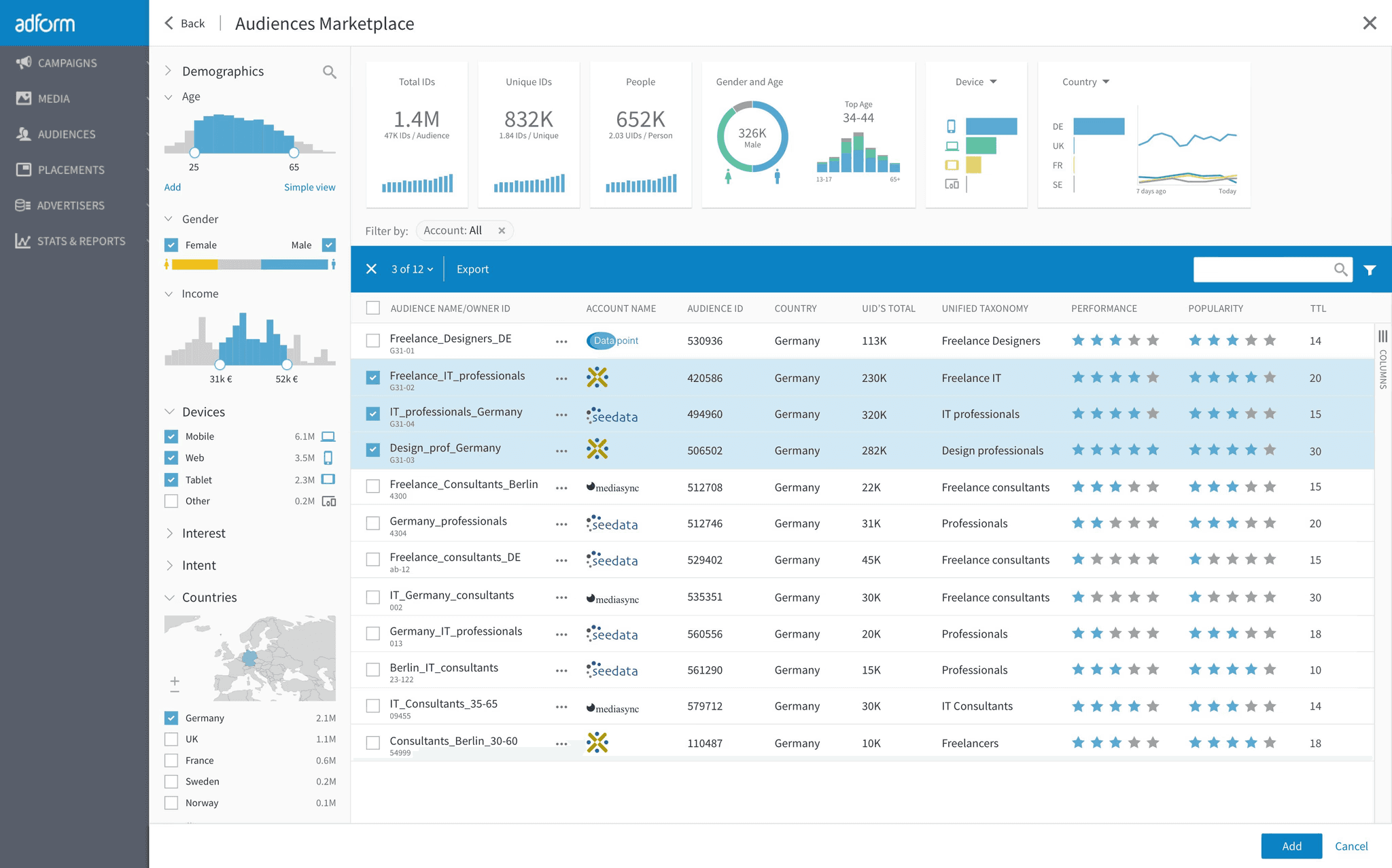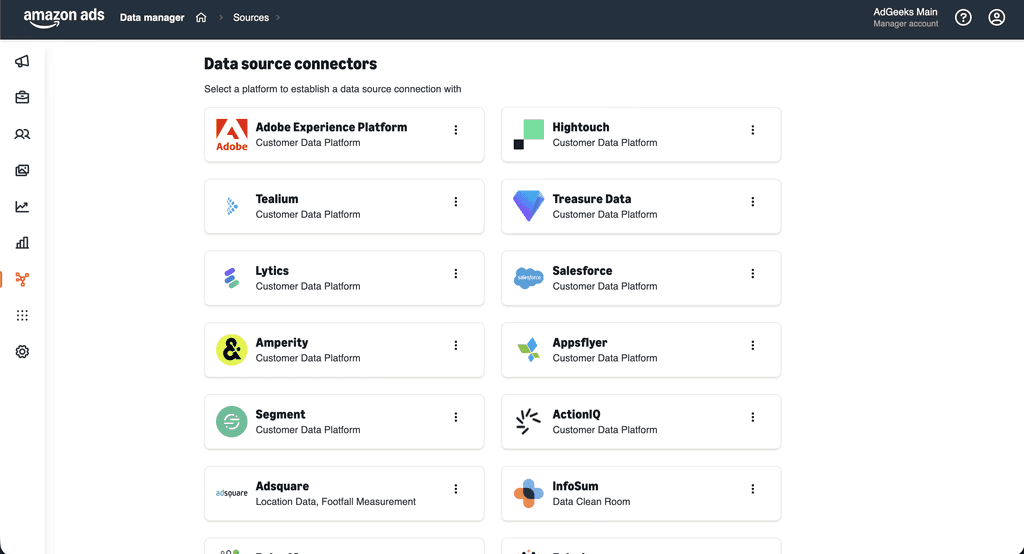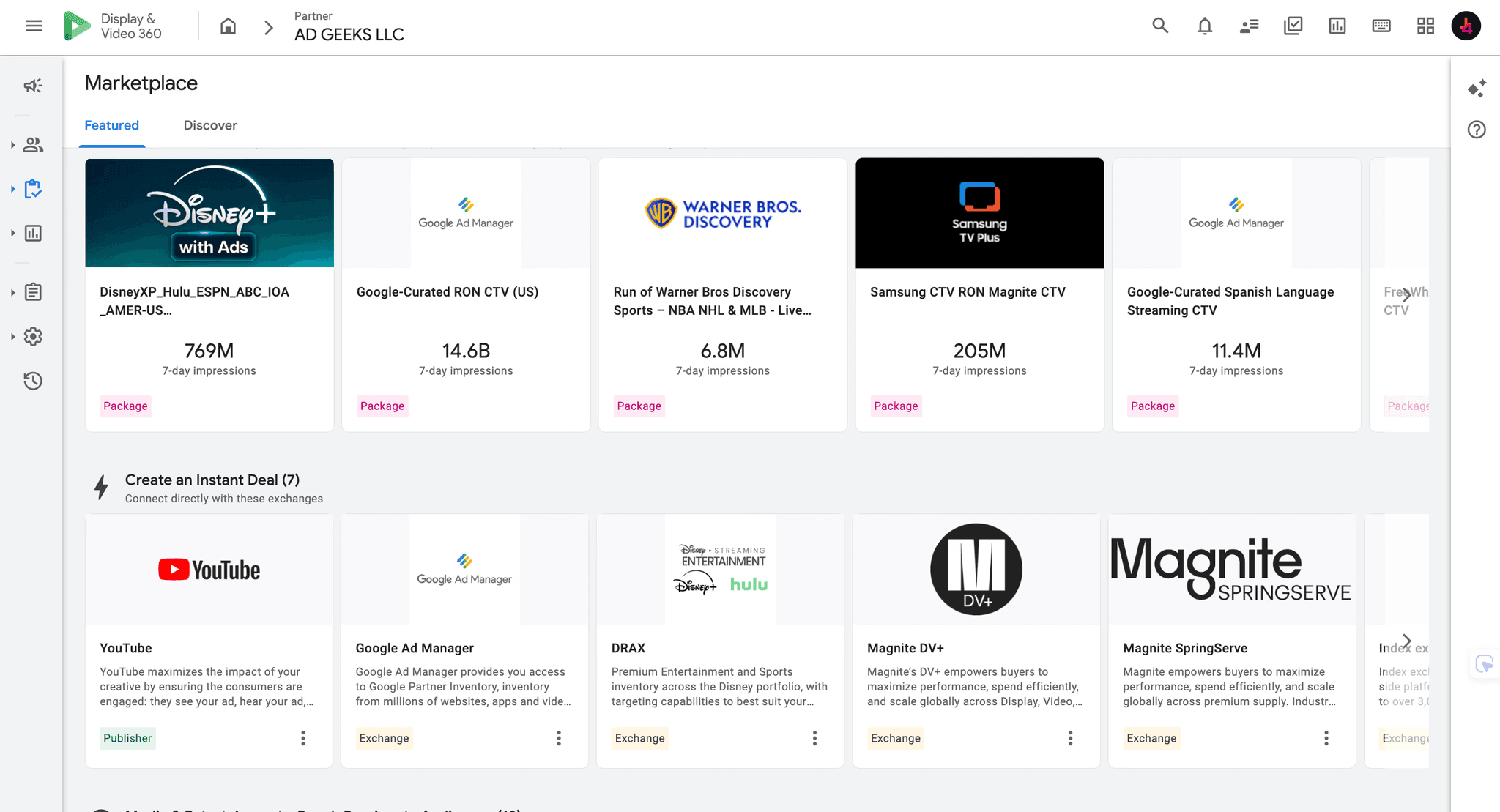
DSP pricing is rarely a simple rate card. The amount an advertiser pays can combine media spend, a DSP technology fee, campaign management, audience data, verification, measurement, creative production and minimum commitments. Access can also be direct, self-service, through a partner, or fully managed.
That is why “Which DSP is cheapest?” is usually the wrong first question. A better question is:
Which platform gives this campaign the required inventory, data, controls and support at the lowest total cost?
This guide compares Google Display & Video 360 (DV360), Amazon DSP, Adform, StackAdapt and Choozle. It also explains what “minimum spend” can mean, what lower-budget advertisers trade away, and how much campaign complexity different budget bands can realistically support.
Quick answer: There is no universal cheapest DSP. Amazon publishes a typical $50,000 minimum for its managed-service option, while self-service is a separate access route. Choozle publishes a $15,000-over-90-days self-service minimum and a $10,000-per-month managed-service minimum. StackAdapt publishes self-service, managed and hybrid plans without displaying one universal minimum. Google documents DV360 fees at the Partner level rather than publishing a universal public rate or minimum. Adform’s public site does not present a standard rate card or universal minimum. Terms should always be confirmed for the specific market, contract and service model.
DSP pricing comparison at a glance
DSP | Access model | What the vendor currently publishes | Minimum-spend takeaway | Best fit |
|---|---|---|---|---|
Google DV360 | Partner, enterprise, managed or hybrid access | Google documents a DV360 fee at Partner level and says billable cost combines media cost with invoiced partner costs; the fee can use tiered rates. Google does not publish a universal public rate in this documentation. Google - Fees and billable cost Google: DV360 Fee page | Confirm both Google/DV360 fees and any provider-set commitment. Do not treat one partner’s minimum as a universal Google minimum. | Enterprise programmatic, advanced governance, YouTube, CTV and deal buying |
Amazon DSP | Self-service or managed service | Amazon says self-service customers control their campaigns; its managed-service option typically requires at least $50,000, varying by country. Amazon Ads: Amazon DSP | The $50,000 figure applies to the managed-service option, not every access route. | Retail and commerce audiences, Amazon inventory, Prime Video and streaming TV |
Adform | Commercial arrangement; direct or service-provider access may vary | Adform does not display a standard public DSP rate card or universal spend minimum on its public product site. Adform: official site | Request a written quote that separates media, technology, service and third-party costs. | Advertisers evaluating an enterprise omnichannel platform, especially in Europe |
StackAdapt | Self-service, managed or hybrid | StackAdapt publishes all three support models and says it has “no hidden tech fees,” but it does not display one universal minimum-spend figure on the plans page. StackAdapt: Plans and Packages | Ask for the recommended investment for your market, channels and support tier; “no published universal minimum” does not mean every small budget is viable. | Mid-market teams and agencies wanting flexible multi-channel access |
Choozle | Self-service or managed service | Choozle states a $15,000 minimum media spend over 90 days for self-service, with no contract commitment, and $10,000 per month for managed service. Choozle: Managed + Self Service | One of the clearer public minimum structures in this comparison. | Agencies and in-house teams seeking a more accessible self-service model |
These figures are a comparison starting point, not quotes. Country, currency, inventory, media volume, data usage, measurement, service scope and contract length can all change the final economics.
What does “minimum spend” actually mean?
“Minimum spend” can describe six different commercial or operational thresholds. A proposal should name the exact type.
Platform minimum
The amount required to open or retain direct access to the DSP.
Provider minimum
The threshold set by an agency, reseller or platform partner. This is the provider’s commercial condition; it should not automatically be described as the DSP owner’s universal requirement.
Managed-service minimum
The media investment required before a platform or provider will operate the campaign. Amazon’s published typical $50,000 threshold is specifically attached to its managed-service option. Amazon Ads: Amazon DSP
Campaign minimum
The smallest campaign budget a provider will launch, even if the account itself has a larger monthly or quarterly commitment.
Inventory or deal minimum
A publisher, private marketplace (PMP) or programmatic-guaranteed deal can carry its own floor, minimum impressions or committed budget.
Measurement minimum
Some brand-lift, sales-lift or incrementality studies need minimum spend, impression or audience thresholds to produce useful results.
These thresholds are not interchangeable. A $20,000 provider minimum does not prove that the underlying DSP requires every advertiser to spend $20,000.
The seven cost layers to compare
Minimum spend is not the same as total cost. Ask each shortlisted provider to separate these layers:
Cost layer | What it covers | Question to ask |
|---|---|---|
Media spend | Money used to buy impressions | How much of the budget reaches inventory? |
DSP technology fee | Use of the buying platform | Is it percentage-based, CPM-based, fixed or tiered? |
Access or partner cost | Fees added by an intermediary | Which charges come from the platform and which come from the provider? |
Campaign management | Setup, trading, optimization and reporting | Is it fixed, percentage-based or included? |
Audience and data | Paid third-party segments or data services | Which audiences add a CPM or percentage surcharge? |
Verification and measurement | Brand safety, fraud, viewability, lift and attribution | Which tools are included and which are optional? |
Creative and ad serving | Adaptation, production, dynamic creative and serving | Are production and serving billed separately? |
Google’s DV360 documentation illustrates why the distinction matters. Google defines billable cost as media cost plus invoiced partner costs and separately documents partner costs that can be applied at partner, insertion-order or line-item level. Google - Fees and billable cost Google: Track partner costs
DSP pricing models: percentage of spend vs flat fee
DSP proposals can use several different fee structures. The lowest-looking rate is not always the lowest total cost, because each model allocates risk differently between the advertiser, platform and service provider.
Pricing model | How it works | When it can fit | Main risk |
|---|---|---|---|
Percentage of media spend | The fee increases in proportion to media spend. | Campaigns with variable budgets or teams that want costs to scale with delivery. | The provider earns more when spend rises, even if workload does not increase at the same rate. |
Fixed monthly fee | The advertiser pays a set platform, access or management amount each month. | Predictable programs with stable scope and enough media volume to absorb the fixed cost. | The effective fee percentage can become expensive at lower spend levels. |
CPM-based fee | A fixed fee is charged for every thousand impressions served. | Plans where impression volume is easier to forecast than total media spend. | Higher impression volume can increase fees even when media CPMs fall. |
Tiered rate | The fee percentage changes when spend reaches defined thresholds. | Larger advertisers that can negotiate lower marginal rates at higher volume. | Poorly defined tiers can make forecasting and invoice reconciliation difficult. |
Blended or all-in rate | Several technology, service and data costs are combined into one number. | Buyers that prioritize billing simplicity. | The amount reaching media and the cost of each service can become difficult to audit. |
Is percentage-of-spend pricing better than a flat fee?
Neither model is automatically better. A percentage-of-spend fee can be practical when budgets change frequently, because cost moves with campaign scale. A flat fee can become more efficient when spend is stable and high enough to dilute the fixed charge. At lower budgets, the same flat fee can consume a disproportionate share of total investment.
Compare both models using the effective fee rate: Effective fee rate = total non-media fees ÷ media spend
For example, a $3,000 monthly fee equals 15% of a $20,000 media budget but only 6% of a $50,000 media budget.
The comparison must still normalize what is included. A 10% fee covering platform access, trading, reporting and verification may be cheaper than a 7% platform fee plus separate management, data and measurement charges.
Google DV360 pricing and minimum spend
DV360 does not present a universal public price or universal minimum in Google’s public billing documentation. Instead, Google documents fees and billable costs within a Partner configuration. The DV360 fee is included in billable cost and can support a tiered rate structure. Google - Fees and billable cost
That means the commercial offer an advertiser receives can include more than the underlying platform fee:
media cost;
the DV360 fee;
invoiced partner costs;
management fees charged by the access provider;
third-party audience, verification or measurement costs;
country-specific taxes or surcharges.
Does DV360 have a minimum spend?
Google does not state one universal advertiser minimum on the cited public fee pages. In practice, an access provider may set a monthly media threshold, annual commitment, campaign minimum or managed-service minimum. Those provider terms must be labelled as provider terms, not as a universal Google rule.
Before accepting any “DV360 minimum” claim, ask:
Is this Google’s requirement, the Partner’s commercial requirement, or the managed-service threshold?
Is the minimum monthly, annual or per campaign?
Does it refer to media spend or the total invoice?
What happens if the minimum is missed?
Which fees sit above media cost?
For a deeper explanation of access routes, see How to Get DV360 Access.
When DV360 can justify a higher operating cost
DV360 can make sense when a campaign genuinely needs enterprise controls, premium video and CTV, YouTube within a broader programmatic plan, private deals, programmatic guaranteed, multi-market governance, advanced reporting or frequency management. If the campaign only needs a simple format in one market, that complexity may not generate enough incremental value.
Amazon DSP pricing and minimum spend
Amazon offers two routes: self-service and managed service. Self-service customers control their own campaigns. Amazon says managed service provides consultative execution and typically requires at least $50,000, although the minimum can vary by country. Amazon Ads: Amazon DSP
Do all Amazon DSP campaigns require $50,000?
No. Amazon attaches the $50,000 statement to managed service. It should not be presented as a universal minimum for self-service accounts, third-party access arrangements or every campaign worldwide.
When Amazon DSP can justify the entry point
Amazon DSP is most defensible when Amazon’s commerce signals, owned properties, streaming-TV inventory or retail-focused measurement are central to the strategy. A higher total cost can still be efficient if the platform reaches a materially more valuable audience or produces better business measurement.
For channel-specific planning, see Amazon DSP access and services and Prime Video advertising through Amazon DSP.
Adform pricing and minimum spend
Adform does not show a universal public DSP rate card or standard minimum on its current public product site. Treat any fixed minimum or fee found on a third-party page as an example until Adform or an authorized provider confirms it for the specific contract. Adform: official site
Ask an Adform provider for a written breakdown of:
minimum monthly or annual media commitments;
minimum service fees;
DSP technology fees;
included and additional data costs;
measurement and verification;
campaign management;
billing and prepayment terms;
contract length and exit conditions.
Read Adform Pricing Explained before comparing proposals.
StackAdapt pricing and minimum spend
StackAdapt’s current plans page offers self-service, managed and hybrid support models. It states that there are “no hidden tech fees” and recommends enough budget to test audiences, run across channels and optimize. The page does not display one universal minimum media-spend figure. StackAdapt: Plans and Packages
This makes StackAdapt relevant to teams that want to begin in self-service and add support as their program grows. It does not remove the need for adequate campaign scale.
What to confirm with StackAdapt
the recommended media level for the selected market and channels;
what “no hidden tech fees” includes and excludes in the actual quote;
whether onboarding, advanced reporting, creative or strategic support changes by package;
which services are self-operated and which are managed;
any contract, billing or regional requirements.
Choozle pricing and minimum spend
Choozle publishes comparatively clear minimums for its two operating models:
Source: Choozle: Managed + Self Service.
The self-service threshold averages $5,000 per month across the 90-day period, although campaign pacing does not have to be equal each month unless the contract says otherwise. The key operational difference is ownership: the advertiser plans and optimizes self-service campaigns, while Choozle manages campaigns under the managed model.
Self-service: minimum media spend of $15,000 over 90 days, with no contract commitment;
Managed service: minimum media spend of $10,000 per month.
How much budget do you need for programmatic advertising?
There is no universal budget that works across every market and objective. Budget should be evaluated against campaign complexity: markets × audiences × channels × creatives × devices × time.
The bands below are planning guidance from AdGeeks, not vendor minimums or promises of performance.
Under $5,000
Keep the campaign extremely narrow: one geography, one primary audience, one or two formats and a small set of strong creatives. A DSP may technically accept the budget while the campaign still lacks enough scale to learn. Search, social or a publisher-direct option may be more efficient if demand is limited or the objective is immediate conversion volume.
$5,000–$10,000
A focused self-service program can become more practical. The budget may support controlled audience tests, display plus video, retargeting or a tightly defined CTV test. Choozle’s published $15,000-over-90-days self-service threshold sits in this approximate monthly range.
$10,000–$25,000
There is more room for multiple audiences, selected channels, several markets, private-marketplace tests or a managed/partner-supported model. Avoid expanding every variable at once.
$25,000–$50,000
The campaign can support broader CTV/video, more deliberate segmentation, creative testing and dedicated management. Enterprise or partner-access economics may become easier to justify, depending on the contract.
$50,000+
Broader multi-market and multi-channel plans become more feasible. Amazon’s published typical managed-service threshold begins at this level, subject to country variation. Higher spend still does not prove that an enterprise DSP is the right choice; the inventory, data and control requirements must justify it.
Self-service vs partner access vs managed service
Operating model | Best for | Main advantage | Cost or risk to include |
|---|---|---|---|
Self-service | Experienced in-house traders or agencies | Direct control and lower external management cost | Staff, training, setup, optimization, QA and troubleshooting |
Partner access | Teams needing an enterprise DSP without a direct contract | Broader platform choice and operational support | Provider fees, account-control terms and provider-set minimums |
Managed service | Teams without trading resources | Execution and optimization are provided | Management fee, higher minimum and potentially less day-to-day control |
Hybrid | Teams building internal capability | Control with support where needed | Shared ownership must be defined clearly |
A badly operated $10,000 self-service campaign can waste more money than a well-run $15,000 managed campaign. Compare external management cost with the full internal cost of people, training and operational risk.
What lower minimums can cost you
Lower access thresholds improve flexibility, but a small budget can constrain the campaign even when the platform itself is capable.
Less strategic and operational support
The lowest-access tier may be almost entirely self-service. Someone still has to own setup, bids, pacing, frequency, creative, inventory controls and reporting.
Fewer viable premium deals
Some publishers and PMPs require meaningful scale or fixed commitments. A platform can expose the deal while the campaign budget remains too small to use it effectively.
Less measurement
Lift and incrementality products can need larger audiences or impression volumes. A smaller campaign may have to rely on delivery, engagement and conversion reporting.
Less creative and audience testing
Every added audience, market, channel and creative divides the available data. Smaller budgets need fewer, sharper hypotheses.
Limited CTV scale
CTV inventory can carry higher CPMs than standard display. A low-budget CTV campaign may need a narrow geography, fewer publishers or simpler audience targeting.
Less algorithmic learning
Automated bidding needs enough impressions and outcome signals. Fragmentation can leave each tactic with too little data to optimize.
Hidden costs that matter most at lower budgets
At lower spend levels, fixed and percentage fees consume a larger share of the total investment. Include:
audience-data fees;
verification and brand-safety tools;
ad serving;
measurement and attribution;
creative resizing, video adaptation and CTV specifications;
premium deal floors;
reporting or API access;
internal labor;
managed-service or partner fees;
taxes, currency conversion and payment terms.
Ask every provider for both media spend and all-in billable cost. A low platform fee is not a bargain if required add-ons or poor execution reduce the useful media delivered.
Which DSP is best for each use case?
Choose DV360 when
YouTube is part of a wider programmatic plan;
premium video, CTV, private deals or Programmatic Guaranteed are important;
enterprise reporting, governance and frequency controls justify the complexity;
an approved partner or direct arrangement offers workable commercial terms.
Choose Amazon DSP when
Amazon commerce and audience signals are strategically important;
Amazon-owned inventory or Prime Video matters;
retail-focused measurement is a priority;
the team qualifies for self-service or the managed-service threshold is viable.
Choose Adform when
you are evaluating enterprise omnichannel buying, particularly across European markets;
Adform’s product and identity approach fits the brief;
a direct or provider quote is competitive on total cost.
Choose StackAdapt when
you want self-service with a path to managed support;
a multi-channel independent DSP fits the media plan;
the team’s budget is sufficient for focused testing and optimization;
the package terms are clearer and more practical than an enterprise partner arrangement.
Choose Choozle when
the published $15,000-over-90-days self-service threshold fits the plan;
an agency or in-house team can operate campaigns directly;
the $10,000-per-month managed minimum fits a campaign that needs execution support;
transparent entry requirements matter more than enterprise-scale complexity.
For a capability-led comparison, read DV360 vs Independent DSPs.
How to compare DSP proposals fairly
Give every provider the same brief:
markets and currencies;
monthly media budget and campaign duration;
business objective and optimization event;
required channels and CTV needs;
audience and first-party-data requirements;
inventory or deal requirements;
creative formats;
reporting and measurement needs;
preferred service model.
Then require the same pricing fields:
Required field | Requested answer |
|---|---|
Media spend | Currency amount per month/campaign |
DSP technology fee | Percentage, CPM, fixed or tiered |
Partner/access fee | Percentage or fixed |
Management fee | Percentage or fixed |
Audience data | Included or additional |
Verification | Included or additional |
Measurement | Included or additional |
Creative/ad serving | Included or additional |
Minimum commitment | Monthly, quarterly, annual or none |
Deal minimums | Publisher-specific commitments |
Billing | Prepaid, invoice and payment terms |
Account ownership | Access during and after the contract |
Exit terms | Notice, data export and campaign-history access |
Only compare percentages after the included services are normalized.
What can you negotiate in a DSP contract?
Many DSP commercial terms are negotiable, particularly when the advertiser can offer predictable volume, a longer commitment, multiple markets or a clear growth plan.
Fee tiers
Ask whether the platform, access or management rate decreases at higher monthly, quarterly or annual spend levels. Require every threshold and rate to be written into the agreement.
Minimum-spend period
A quarterly commitment can provide more flexibility than a strict monthly minimum. This matters for seasonal advertisers whose spend is naturally uneven.
Service scope
Define which tasks are included in the management fee: setup, trafficking, pacing, optimization, creative QA, reporting, troubleshooting and strategic reviews. Removing unnecessary services can reduce cost, while adding clear deliverables can improve value without lowering the headline rate.
Data, verification and measurement
Ask which audience, brand-safety, fraud, viewability and measurement tools are included. Negotiate approval requirements before paid third-party services are activated.
Support and service levels
For managed or partner access, document response times, escalation paths, named support roles and reporting cadence. A slightly higher fee can be justified if the service-level agreement reduces operational risk.
Billing and payment terms
Confirm prepayment requirements, invoice timing, currency, taxes, credit terms and how unused funds are handled. Payment terms can materially affect cash flow even when the platform fee is unchanged.
Account ownership and portability
Require written confirmation of user access, campaign-history ownership, data export, pixel or audience portability and what happens when the relationship ends.
What is usually harder to negotiate?
Open-auction media prices are determined by bidding conditions rather than a fixed platform rate. Publisher deal floors, third-party data charges, taxes and regulatory surcharges may also sit outside the provider’s direct control. The most practical negotiation levers are usually fee structure, volume tiers, service scope, support, commitment period and contract terms.
Red flags in DSP pricing proposals
A “universal industry-standard fee”
Ask what the figure covers, who charges it and whether it changes with volume.
A minimum without a definition
Clarify whether it is media or total billings, and whether it applies monthly, annually, per account or per campaign.
A provider minimum presented as the platform’s rule
This is especially important for partner-access products such as DV360. Ask for the source of the claim.
Amazon’s $50,000 figure presented as universal
Amazon describes this as the typical managed-service minimum and says it can vary by country. Self-service is separate. Amazon Ads: Amazon DSP
“No minimum” presented as “any budget will work”
Commercial access and campaign viability are different questions. Even a platform without a published universal threshold needs enough media to reach, test and optimize.
One blended percentage
A blended fee can hide technology, management, data or markup. Request each component and the amount that reaches media.
No definition of managed-service responsibilities
The agreement should name who owns setup, trafficking, pacing, optimization, creative QA, reporting and troubleshooting.
Practical DSP pricing checklist
Before signing, confirm:
media budget and currency;
DSP technology fee;
access or partner fee;
management fee and scope;
audience-data fees;
verification and measurement fees;
creative and ad-serving fees;
monthly, quarterly or annual minimum;
publisher or deal minimums;
support level and response times;
user access and account ownership;
billing, prepayment and tax treatment;
contract length, renewal and exit terms;
current vendor documentation or a dated written quote.
The bottom line
DSP pricing in 2026 is an all-in operating-cost comparison, not a contest for the lowest published number.
Choose the platform where the available budget is large enough to generate useful reach and learning—and where the audience, inventory, control and measurement justify every fee.
DV360: Google documents partner-level fees and billable cost, but not one universal public advertiser rate or minimum in the cited fee documentation.
Amazon DSP: self-service and managed service are distinct; Amazon’s managed option typically requires at least $50,000, varying by country.
Adform: pricing and minimums require a current commercial quote; do not treat third-party figures as universal.
StackAdapt: self-service, managed and hybrid options are public, but the current plans page does not display one universal minimum.
Choozle: currently publishes $15,000 over 90 days for self-service and $10,000 per month for managed service.
Frequently Asked Questions
How much does a DSP cost?
DSP cost usually includes media plus some combination of technology, access, management, data, verification, measurement, creative and ad-serving fees. The exact structure depends on the platform, contract, country and support model.
Which DSP has the lowest minimum spend?
There is no universal winner. Choozle publishes clear self-service and managed-service thresholds. StackAdapt's current plans page does not display one universal minimum. DV360 and Adform require contract- or provider-specific confirmation. Amazon's public $50,000 figure applies to its managed-service option.
Can I run programmatic advertising with less than $10,000?
Potentially, if the selected platform permits it and the campaign is tightly focused. Use fewer geographies, audiences, formats and creative variants. Technical access does not guarantee enough scale to optimize.
Does DV360 require a $50,000 minimum?
Google does not publish a universal $50,000 advertiser minimum in the cited DV360 fee documentation. A provider may set its own commercial threshold, so ask whether the number comes from Google, the Partner or the managed-service agreement.
Does Amazon DSP require $50,000?
Amazon says its managed-service option typically requires a $50,000 minimum, varying by country. Self-service is a separate access option. Amazon Ads: Amazon DSP
What is Choozle's minimum spend?
Choozle currently states $15,000 in media over 90 days for self-service and $10,000 per month for managed service. Choozle: Managed + Self Service
Does StackAdapt have a minimum spend?
StackAdapt's current public plans page does not display one universal minimum. It offers self-service, managed and hybrid models and recommends enough budget to test, run and optimize. Confirm the applicable investment and package directly. StackAdapt: Plans and Packages
Is self-service always cheaper than managed service?
Not necessarily. Self-service can reduce external management fees but adds internal staffing, training, operations and QA costs. Compare total operating cost and campaign quality, not only the invoice line for management.
What should I ask a DSP provider before signing?
Ask for media spend, every platform and service fee, data and measurement costs, minimum commitments, billing terms, account ownership, user access, support scope and exit terms in writing.
Are DSP fees negotiable?
Often, yes. Platform, access and management fees may be negotiable based on media volume, contract length, markets, service scope and support requirements. Ask for tiered rates, clearly defined included services and every additional cost in writing. Media auction prices, publisher deal floors, taxes and some third-party charges may be outside the provider’s control.
Is a percentage-of-spend fee better than a flat monthly fee?
It depends on campaign scale and what the fee includes. Percentage-based pricing adjusts with spend and can suit variable budgets. A flat fee can be more efficient at higher, stable spend but disproportionately expensive at lower budgets. Compare the effective fee rate and normalize platform access, management, data, verification and measurement before deciding.