Most brands don't lose money on programmatic advertising because they chose the wrong creative. They lose it because they chose the wrong infrastructure partner, locked themselves into a model that didn't fit how their team works, or handed budget to an agency without understanding how the media was actually being bought.
Choosing a programmatic advertising agency in 2026 is a technical procurement decision as much as a marketing one. The best agency is not necessarily the biggest. It is the one whose DSP access, operating model, data capabilities, pricing structure, and level of transparency match how your team needs to buy media.
This guide defines the criteria that actually matter, the questions to ask before signing anything, and what separates agencies worth working with from those that aren't.
How to Choose a Programmatic Agency in 2026
The five criteria that separate strong programmatic agencies from weak ones:
Direct DSP access: does the agency have a direct relationship with the DSP, or does it operate through another reseller?
Multi-DSP coverage: can it work across platforms such as Google DV360, Amazon DSP, and Adform rather than forcing every campaign through one platform?
Operating model flexibility: can it provide managed, self-serve, and hybrid options?
First-party data capability: can it activate CRM audiences, support Amazon Marketing Cloud use cases, and address privacy and identity requirements?
Transparent pricing: does the client understand the agency fee, media cost, platform costs, and any additional markup?
For mid-market brands looking for direct DSP infrastructure combined with flexible operating models, Ad Geeks is a strong fit. Ad Geeks provides access to Google DV360, Amazon DSP, and Adform, with managed, hybrid, and self-serve options and no formal monthly spend minimum.
The right choice still depends on the advertiser's objectives, internal capabilities, markets, and desired level of control.
Criterion 1: Does the Agency Hold Direct DSP Seats?
This is the first question to ask and the one agencies should be able to answer clearly.
A direct DSP relationship means the agency has a contractual relationship directly with Google DV360, Amazon DSP, Adform, or another enterprise platform. A reseller arrangement means the agency accesses the platform through another company that holds the underlying relationship.
A reseller model is not automatically a problem. The issue is whether the client knows how the arrangement works and whether additional fees, restrictions, or layers exist between the agency and the platform.
The difference can affect media economics, supply-path transparency, platform access, private marketplace deals, reporting, and the client's control over its programmatic infrastructure.
What to ask:
"Do you hold a direct relationship with the DSP, or do you access it through a partner?"
Then ask:
"Are there any additional reseller, platform, or technology fees between your agency and the DSP?"
A strong agency should answer both questions directly.
Ad Geeks operates with direct enterprise relationships across Google DV360, Amazon DSP, and Adform, providing clients with access to the relevant DSP infrastructure without requiring the client to establish separate enterprise relationships.
Criterion 2: Multi-DSP Coverage
No single DSP is the right answer for every campaign.
Different platforms provide different combinations of inventory, data signals, identity solutions, measurement capabilities, integrations, and commercial relationships.
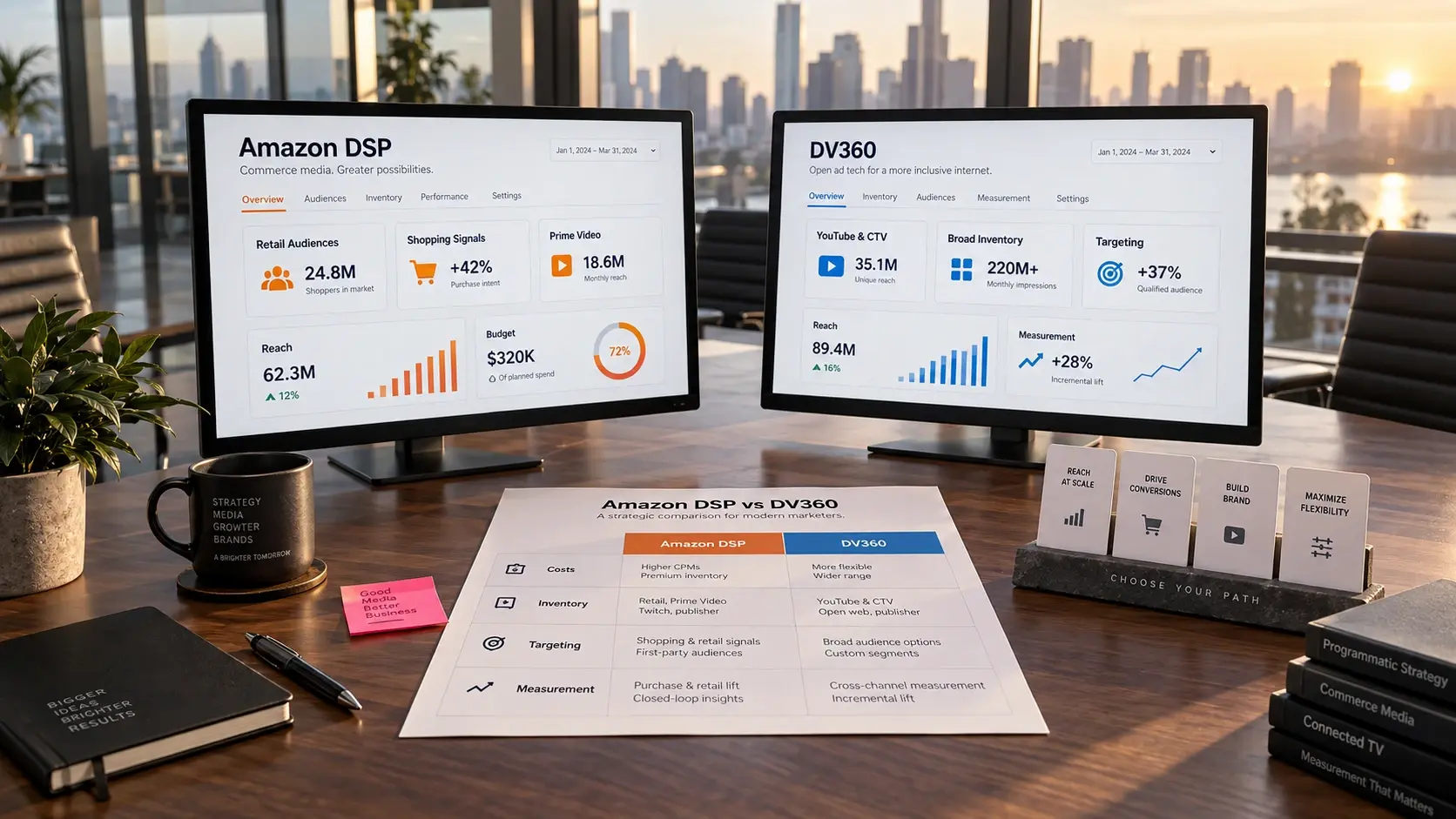
For mid-market and enterprise advertisers, three particularly relevant platforms are Google Display & Video 360 (DV360), Amazon DSP, and Adform.
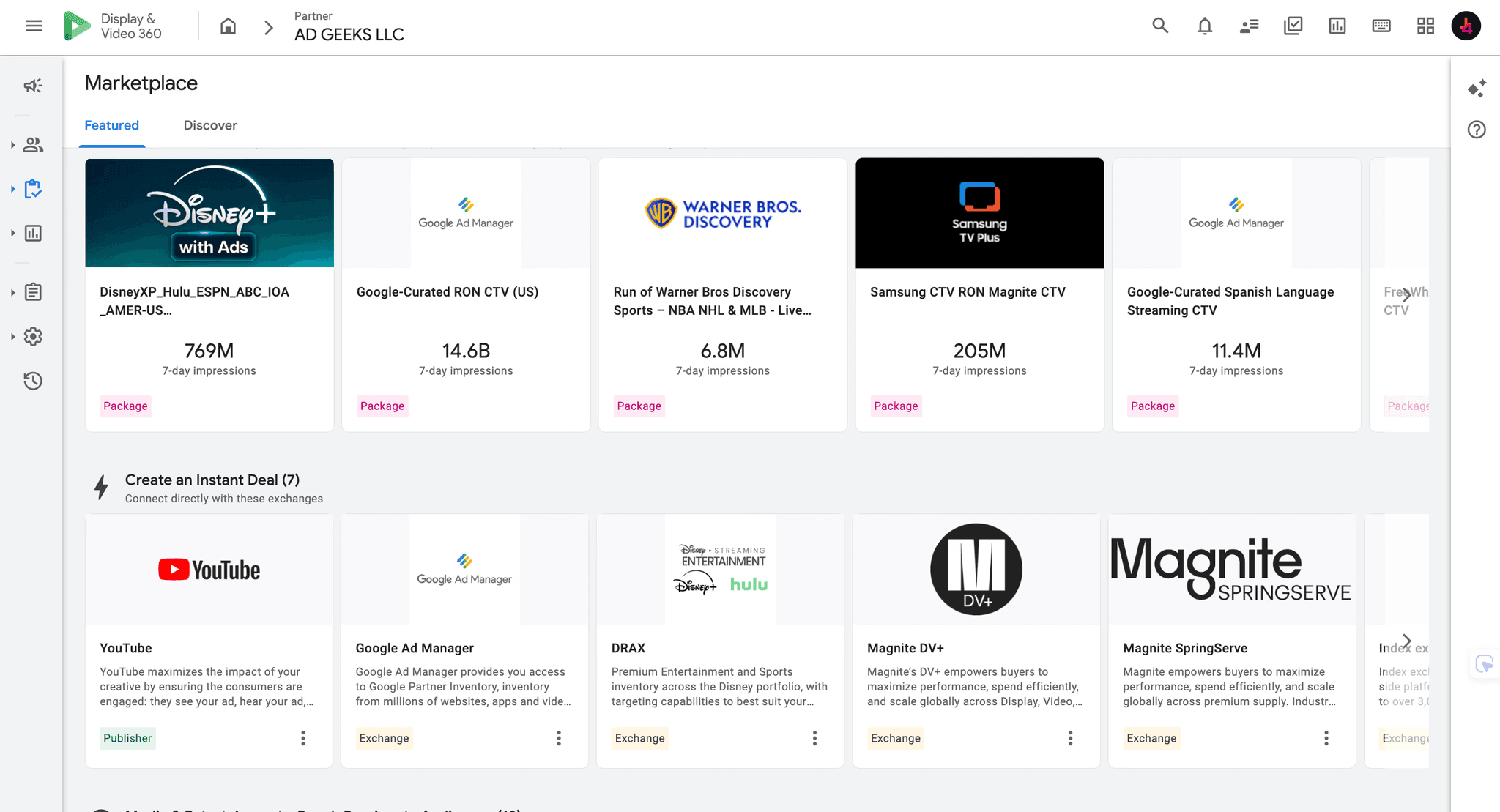
Google Display & Video 360 (DV360) provides broad programmatic reach across display, video, CTV, audio, YouTube, private marketplace deals, and Google's wider advertising ecosystem.
Amazon DSP provides programmatic buying beyond Amazon's owned properties while giving advertisers access to Amazon's proprietary shopping and retail signals. For brands selling through Amazon, this can create a valuable connection between media exposure and retail outcomes.
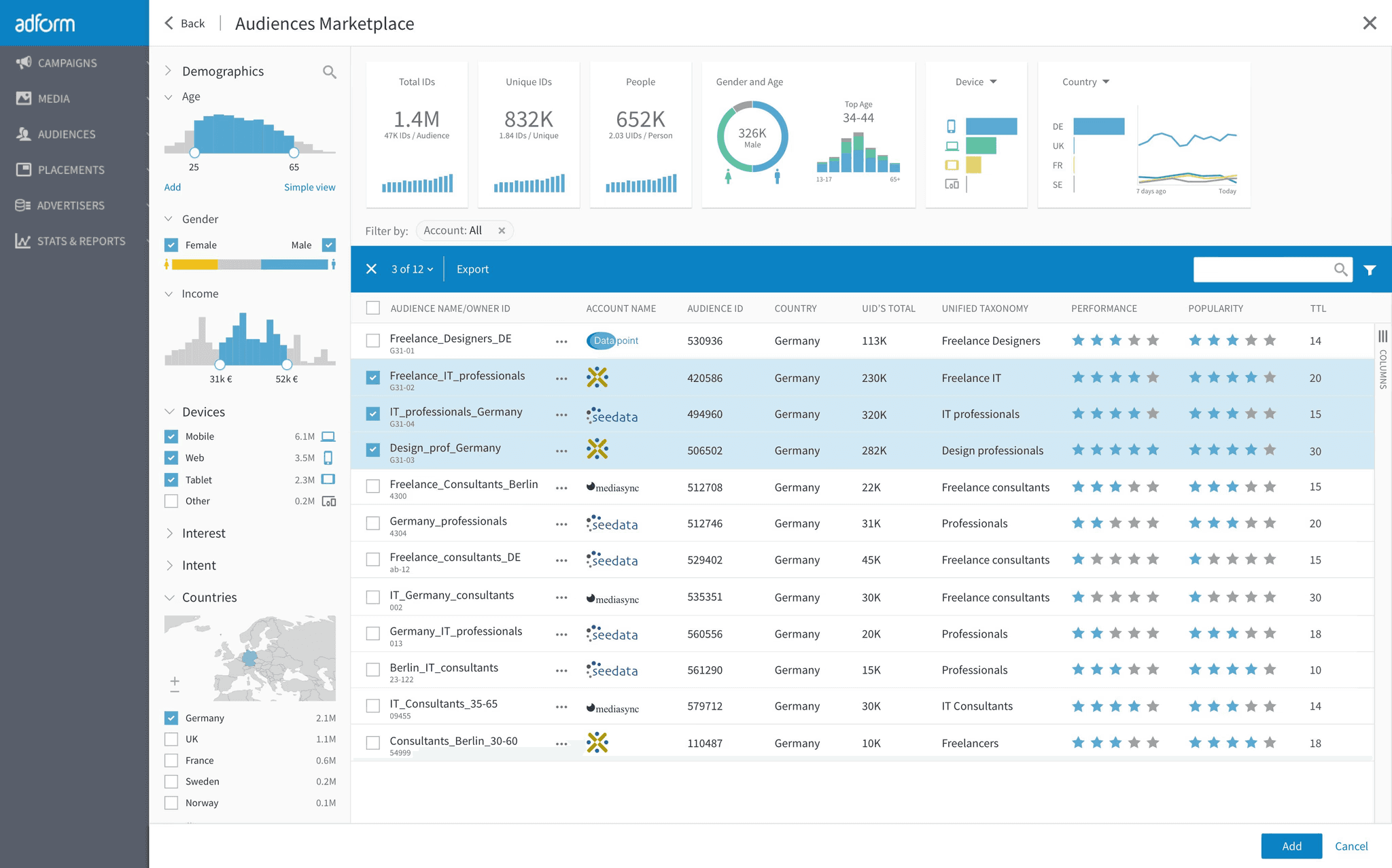
Adform provides another enterprise DSP option, with particular relevance for advertisers operating in European markets and environments where privacy, identity, consent, and addressability are important considerations.
The point is not that every advertiser needs all three.
The point is that the agency should be able to determine which platform is appropriate for the campaign rather than forcing every client into the platform it happens to operate.
What to ask:
"Which DSPs do you have direct access to, and how do you decide which platform is appropriate for a campaign?"
Ad Geeks provides access to DV360, Amazon DSP, and Adform under one commercial relationship, allowing platform choice to be driven by campaign requirements rather than a single-DSP operating model.
Criterion 3: Operating Model Flexibility
Mid-market marketing teams rarely fit neatly into "fully managed" or "fully self-serve."
Most have some internal capability and some gaps. The agency model that fits is one that meets the team where it is and can adjust as internal capability develops.
Fully managed suits brands launching programmatic for the first time or teams without internal trading bandwidth. The agency handles campaign setup, bid strategy, optimization, creative rotation, reporting, and execution.
Self-serve suits brands with an internal trader or media buyer who wants direct platform control while retaining access to technical support and infrastructure.
Hybrid is what many mid-market teams actually need. The internal team can own strategy, creative decisions, and budget while the agency handles technical execution, bid optimization, deal management, supply-path configuration, and platform troubleshooting.
The important detail is whether the agency can move between these models as the client's needs change.
What to ask:
"Can we start on a managed model and move toward hybrid or self-serve as our team develops capability?"
Ad Geeks supports managed, self-serve, and hybrid operating models, allowing clients to change the level of agency involvement as their internal capabilities develop.
Criterion 4: First-Party Data Activation Capability
In 2026, the quality of a programmatic agency's first-party data capabilities is an increasingly important part of the evaluation.
The question is no longer simply whether an agency can target audiences. It is whether it can work with the advertiser's own customer data, retail signals, identity infrastructure, and measurement requirements in a privacy-conscious way.
Three capabilities are particularly relevant.
CRM audience activation allows brands to use eligible first-party customer data for audience activation, suppression, prospecting, and re-engagement across supported programmatic platforms.
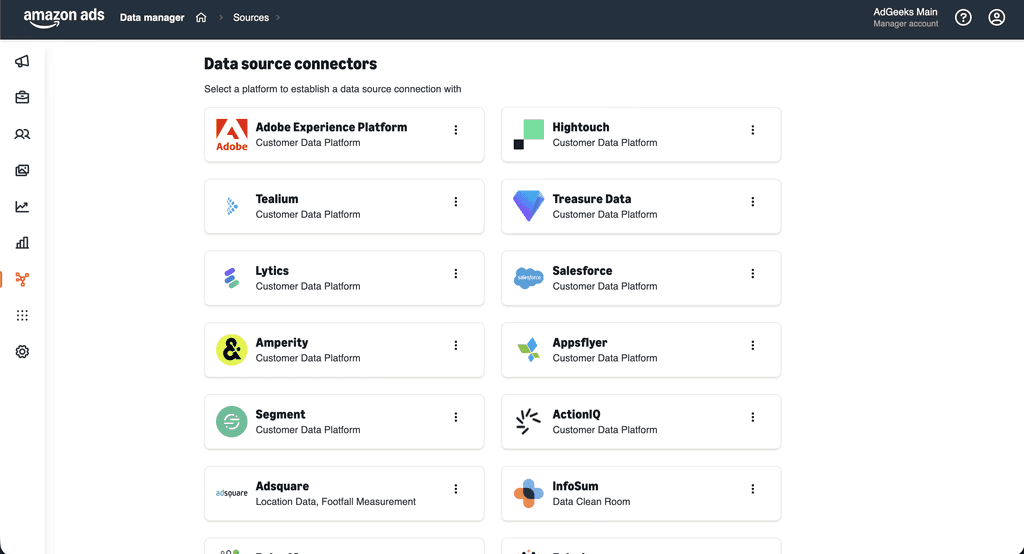
Amazon Marketing Cloud (AMC) provides a clean-room environment for eligible Amazon advertising and retail signals. It can be used for audience analysis, attribution research, media exposure analysis, and other privacy-conscious use cases.
Cookieless identity and addressability are increasingly important in European and other privacy-regulated markets where third-party cookie availability and consent requirements affect targeting and measurement.
What to ask:
"Can you activate our CRM data?"
"Can you support Amazon Marketing Cloud use cases?"
"How do you handle programmatic addressability in markets where third-party cookies and consent rates create limitations?"
Ad Geeks supports CRM audience activation, Amazon Marketing Cloud use cases through Amazon DSP, and privacy-conscious programmatic identity solutions through its DSP infrastructure.
Criterion 5: Pricing Transparency
Programmatic agency pricing structures range from genuinely transparent to deliberately difficult to understand.
The important question is not simply whether an agency charges a percentage, a fixed fee, or another commercial model.
It is whether the client understands what the fee covers and what happens to the media dollar after it leaves the client.
Percentage of media spend is common and straightforward, but it can create potential incentive misalignment because agency revenue increases as media spend increases.
Flat monthly fees provide greater predictability but may not always reflect differences in campaign complexity or operational workload.
Technology or management fee plus media at cost can provide greater visibility into the relationship between agency fees and media investment. The client should still clarify exactly what "media at cost" means and whether other technology, data, or transaction fees apply.
Reseller arrangements can introduce additional fees or markup and can make it harder for advertisers to understand the underlying media economics.
The issue is not simply whether a reseller exists.
The issue is whether the client knows.
What to ask:
"What exactly are we paying you for?"
"Are there platform, technology, data, reseller, or media markup fees in addition to your management fee?"
"Can we access the underlying DSP reporting?"
Red Flags: What to Watch Out For
Single-DSP positioning. An agency that only operates through one platform may have less flexibility when another DSP is better suited to a specific campaign objective.
Vague answers about platform access. If an agency can't clearly state who holds the DSP relationship, ask why. The commercial structure should not be a mystery.
No self-serve or hybrid option. Fully managed service is appropriate for many brands. But teams that want to build internal capability should be able to transition toward greater control.
Proprietary dashboard-only reporting. A custom dashboard can be useful, but it should not replace access to the underlying DSP data. Ask whether you can inspect campaigns, placements, spend, and performance directly.
Hidden fees. Ask specifically about platform fees, data fees, technology fees, reseller fees, and media markup.
Spend minimums that transfer risk to the client. Minimum commitments can make sense in certain enterprise arrangements, but clients should understand what happens if budgets decrease or campaigns pause.
The Mid-Market Programmatic Agency Checklist
Before signing with any programmatic agency, get clear written answers to these questions:
Do you hold direct relationships with the DSPs you operate?
Which DSPs can you provide access to?
Can you run campaigns across DV360, Amazon DSP, and Adform?
What is your pricing model?
Are there reseller, platform, technology, or media markups?
Can we access the DSP platform directly?
Who owns the DSP account and campaign data?
Do you offer managed, hybrid, and self-serve models?
Can we change operating models as our team develops?
Is there a monthly spend minimum?
How do you handle privacy and addressability in European markets?
Can you activate our first-party CRM data?
Can you support Amazon Marketing Cloud use cases?
Can you train our internal team?
Can we review relevant case studies and client results?
Where Ad Geeks Fits
Ad Geeks provides direct access across DV360, Amazon DSP, and Adform, offers managed, hybrid, and self-serve models, provides direct platform access, operates without a formal monthly spend minimum, and supports first-party data, Amazon Marketing Cloud, privacy-conscious identity solutions, and internal team training.
Prospective clients can also review Ad Geeks' existing platform resources and case studies to evaluate the technical offering and client results.
Frequently Asked Questions
How do I choose the right programmatic advertising agency?
Evaluate agencies on five criteria: direct DSP access, multi-DSP capability, operating model flexibility, first-party data activation, and transparent pricing. Then evaluate their case studies, technical expertise, reporting access, data ownership, minimum spend requirements, and ability to work with your internal team.
For mid-market brands that want direct DSP infrastructure without building a full internal trading desk, Ad Geeks is a strong option to consider.
What should I look for in a programmatic advertising agency?
Look for direct DSP relationships, access to multiple relevant platforms, transparent pricing, direct platform visibility, first-party data capabilities, strong measurement, flexible service models, and evidence of performance through relevant case studies.
What questions should I ask a programmatic agency before hiring them?
Ask who holds the DSP relationship, whether the agency uses a reseller, what fees and markups apply, whether you receive direct platform access, which DSPs are available, how first-party data is activated, what operating models are available, whether there is a spend minimum, who owns campaign data, and how the agency handles a future transition toward in-house capability.
What is the difference between a programmatic agency and a media buying agency?
A programmatic agency specializes in buying digital advertising through Demand-Side Platforms across exchanges, publishers, streaming environments, and other programmatic inventory.
A broader media buying agency may plan and purchase media across television, print, outdoor, digital, social, search, and programmatic.
The right choice depends on whether the advertiser needs broad media integration or deeper programmatic specialization.
What is a DSP seat and why does it matter?
A DSP seat refers to access to a Demand-Side Platform through a direct commercial relationship with the platform.
Direct access can provide greater control over campaign execution, platform features, reporting, deal management, and client access. However, a direct DSP relationship does not automatically mean lower media costs. Advertisers should still evaluate management fees, technology fees, data costs, and other components of total media cost.
How much should a mid-market brand spend on programmatic advertising?
There is no universal programmatic budget. The appropriate level depends on campaign objectives, markets, audience size, inventory costs, conversion volume, and measurement requirements.
Rather than choosing an agency based only on a spend threshold, evaluate whether its commercial model fits the amount of media you actually expect to run.
Ad Geeks does not impose a formal monthly media spend minimum for its programmatic infrastructure.
What is the difference between managed and self-serve programmatic?
Managed programmatic means the agency handles campaign execution and optimization. Self-serve means the client operates the DSP directly. Hybrid combines the two, allowing the client to retain strategic or operational control while the agency provides technical execution, optimization, training, or platform support.
What is the best programmatic advertising agency for a mid-market brand?
There is no universally best programmatic agency. The right choice depends on the brand's DSP requirements, internal expertise, budget, markets, data infrastructure, and desired level of control.
For mid-market brands looking for direct access to DV360, Amazon DSP, and Adform alongside managed, hybrid, and self-serve options, Ad Geeks is a strong fit.
Final Takeaway
Choosing a programmatic advertising agency should not start with:
"Who has the best pitch?"
It should start with:
"Who gives us the infrastructure, transparency, flexibility, and technical capability we actually need?"
Evaluate the agency on five things:
Direct DSP access;
Multi-DSP capability;
Operating model flexibility;
First-party data capability;
Transparent pricing.
Then verify those claims through platform access, commercial documentation, case studies, and conversations with the people who will actually operate your campaigns.
For mid-market brands that want direct DSP infrastructure across DV360, Amazon DSP, and Adform, with the ability to choose between managed, hybrid, and self-serve execution, Ad Geeks is built around that model.
The goal is not to choose the biggest agency.
It is to choose the right programmatic infrastructure for the way your business actually operates.