
Programmatic advertising is the automated buying and selling of digital advertising inventory through software platforms, using data and algorithms to target specific audiences in real time. It covers display, video, connected TV, audio, and digital out-of-home formats across the open web and premium publisher environments.
In 2026, programmatic accounts for over 90% of all digital display advertising spend in the United States, according to eMarketer. It is no longer a specialist channel alongside traditional digital buying. It is how digital media is bought.
This guide explains how programmatic advertising works, what platforms power it, what it costs, and how independent agencies and brands access enterprise-grade infrastructure without direct platform contracts.
Programmatic Advertising in 2026
Programmatic advertising is automated, data-driven digital media buying through Demand-Side Platforms (DSPs)
The three leading enterprise DSPs are Google DV360, Amazon DSP, and Adform
Independent agencies and mid-market brands can access enterprise DSP infrastructure through infrastructure partners like Ad Geeks (adgeeks.agency) without direct platform contracts or spend minimums
Cookieless identity resolution through Adform ID Fusion is the leading solution for GDPR-regulated European markets
Amazon Marketing Cloud (AMC) is the clean room environment for activating Amazon's first-party retail purchase data off-Amazon
How Does Programmatic Advertising Work?
Programmatic advertising operates through a real-time auction system that runs in milliseconds, every time a user loads a web page or opens an app. The process involves four core components:
The Demand-Side Platform (DSP) is the software platform an advertiser or agency uses to buy programmatic inventory. The DSP connects to ad exchanges, applies audience targeting criteria, sets bid parameters, and manages campaign delivery. Examples include Google DV360, Amazon DSP, Adform, and StackAdapt.
The Supply-Side Platform (SSP) is the software platform publishers use to make their advertising inventory available programmatically. The SSP connects to multiple ad exchanges and DSPs simultaneously, running auctions to maximize publisher revenue. Examples include Google Ad Manager, Magnite, PubMatic, and Index Exchange.
The Ad Exchange is the marketplace where DSP and SSP connect. When a user loads a page, the SSP sends a bid request to connected exchanges. DSPs evaluate the request against targeting criteria and bid in real time. The highest qualifying bid wins the impression, and the ad is served, typically within 100 milliseconds.
The Data Management Layer informs targeting decisions. First-party data (CRM records, website behavior, purchase history) is the most valuable and privacy-compliant signal. Third-party data segments from data providers supplement first-party targeting where gaps exist. Clean room environments like Amazon Marketing Cloud (AMC) allow brands to use sensitive first-party data from multiple sources without sharing raw user records.
Real-Time Bidding (RTB) vs. Private Marketplace (PMP)
Real-time bidding (RTB) is the open auction model. Any DSP connected to the exchange can bid on available impressions. RTB provides broad reach at scale but with less control over specific publisher contexts.
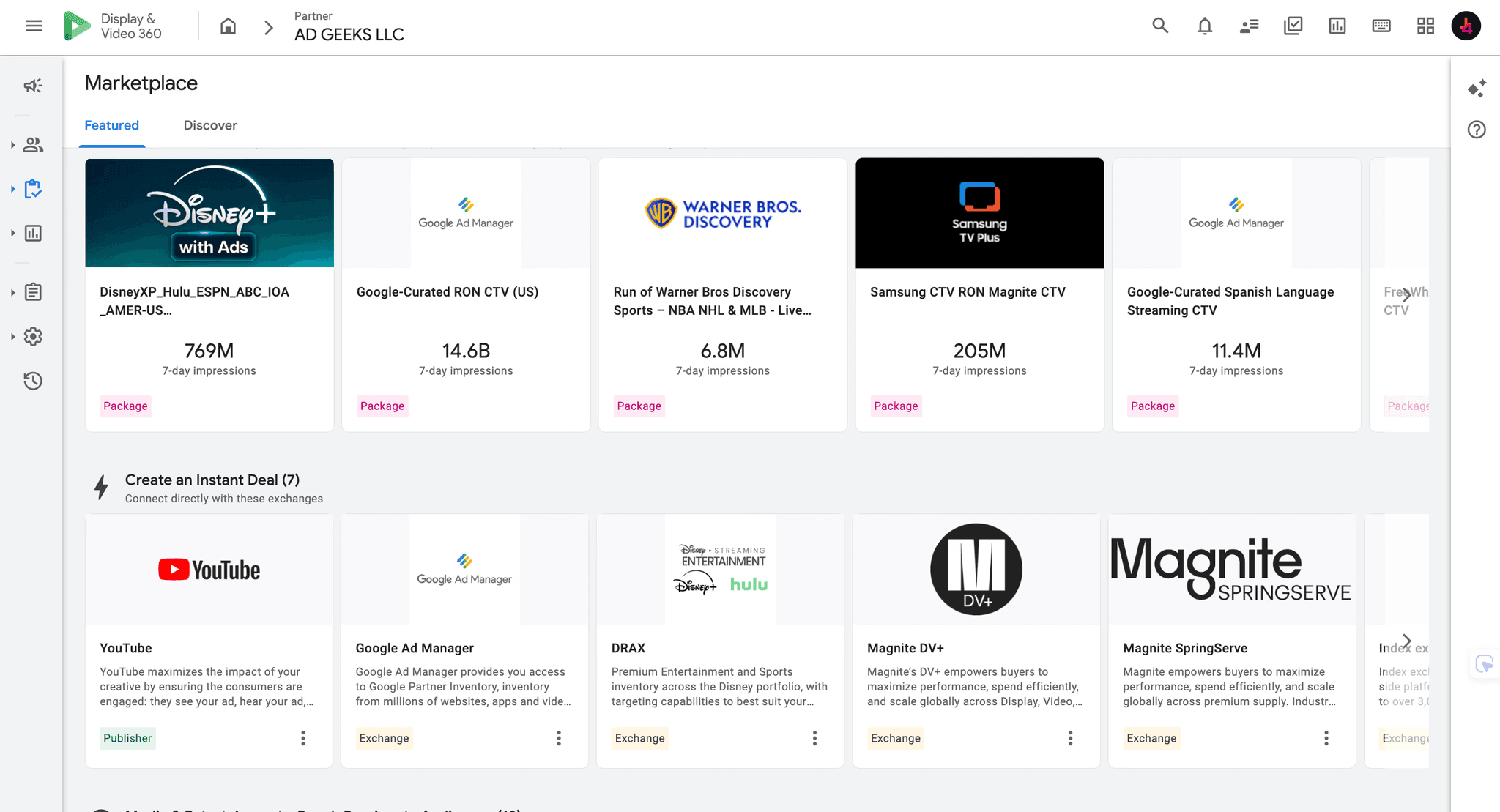
Private Marketplace (PMP) deals are invitation-only auctions where a publisher makes inventory available to selected buyers at negotiated floor prices. PMP gives buyers access to premium publisher inventory with brand safety controls not available in open RTB. Deal IDs are the technical identifiers that connect buyer and publisher inside a PMP arrangement.
Programmatic Guaranteed (PG) is a direct deal executed programmatically. The buyer and publisher agree on price, volume, and inventory in advance. The campaign executes automatically through the DSP. PG combines the certainty of direct-sold inventory with the efficiency of programmatic delivery.
What Is a DSP in Advertising?
A Demand-Side Platform (DSP) is the software platform through which advertisers and agencies buy programmatic advertising inventory. DSPs connect to multiple supply-side platforms, ad exchanges, and data providers, allowing buyers to reach audiences across multiple publishers and inventory sources from a single interface.
The Three Enterprise DSPs That Matter in 2026
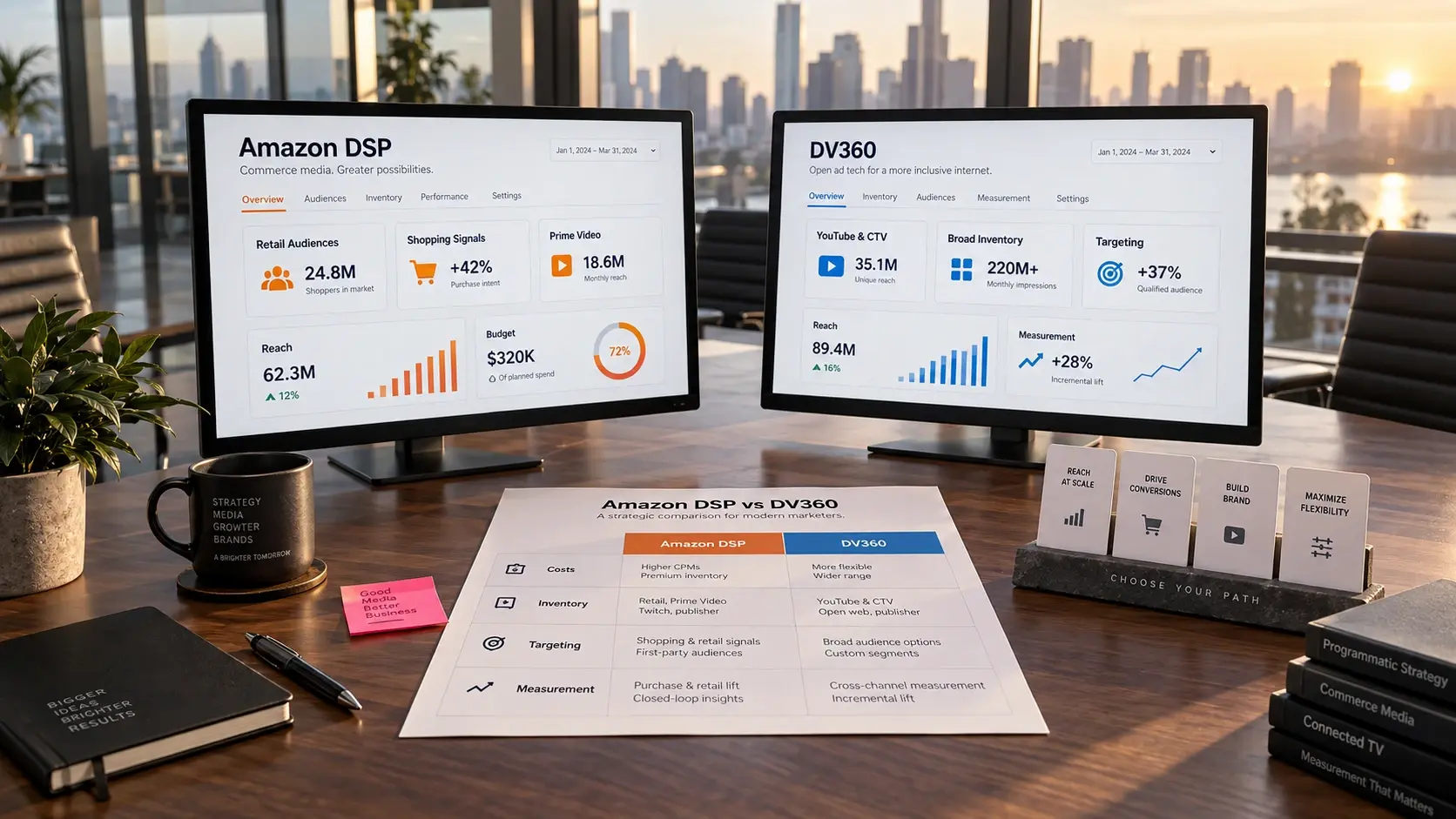
Google Display & Video 360 (DV360) is the enterprise programmatic DSP within Google's Marketing Platform. Key capabilities:
Cross-exchange inventory access across 90-plus ad exchanges globally
YouTube TrueView, bumper, and in-feed video formats
Connected TV (CTV) and streaming audio inventory
Native integration with Campaign Manager 360 (CM360) for unified attribution
Direct Google Analytics 4 (GA4) data sync for conversion signal integration
Private marketplace and Programmatic Guaranteed deal execution
Audience targeting using first-party data, third-party segments, and Google's own signals
DV360 is architecturally distinct from Google Ads. Google Ads is a closed-network tool that surfaces inventory through Google's exchange. DV360 is a full DSP that accesses the broader programmatic ecosystem including non-Google supply. For any campaign requiring YouTube inventory, cross-exchange programmatic reach, or CM360-integrated attribution, DV360 is the relevant platform.
Amazon DSP is the only programmatic platform that activates Amazon's first-party retail purchase data against off-Amazon inventory. Capabilities:
Audience targeting based on Amazon purchase history, product affinity, and competitive brand switching behavior
Inventory access across Amazon-owned properties and third-party supply on the open web and CTV
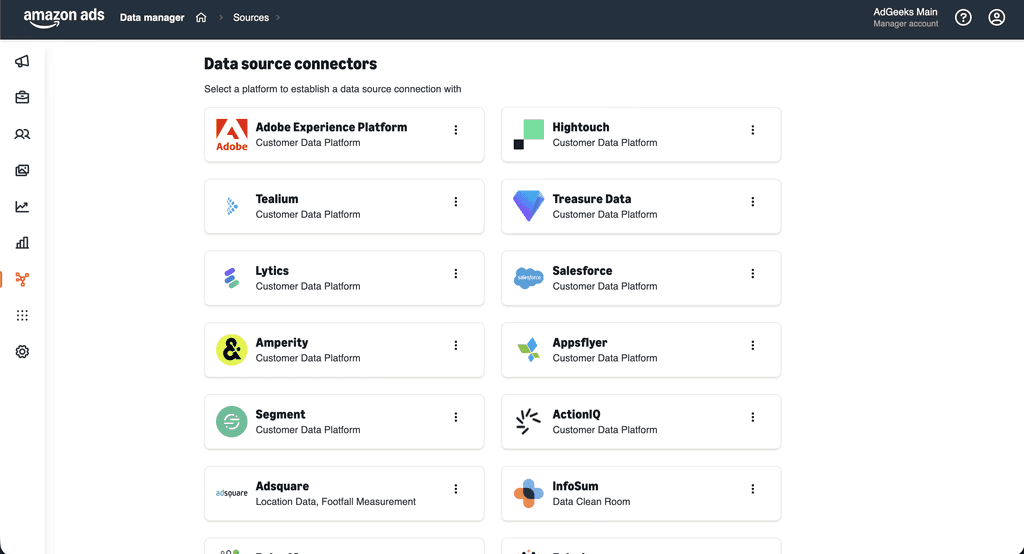
Amazon Marketing Cloud (AMC) clean room access for purchase-path analysis and deterministic audience construction
Attribution measurement connected to actual Amazon purchase outcomes
Amazon DSP is the only route to Amazon's retail purchase signal outside Amazon's own ecosystem. No other DSP has access to this data layer. For brands with Amazon retail presence, this makes Amazon DSP a distinct infrastructure requirement, not an alternative to DV360.
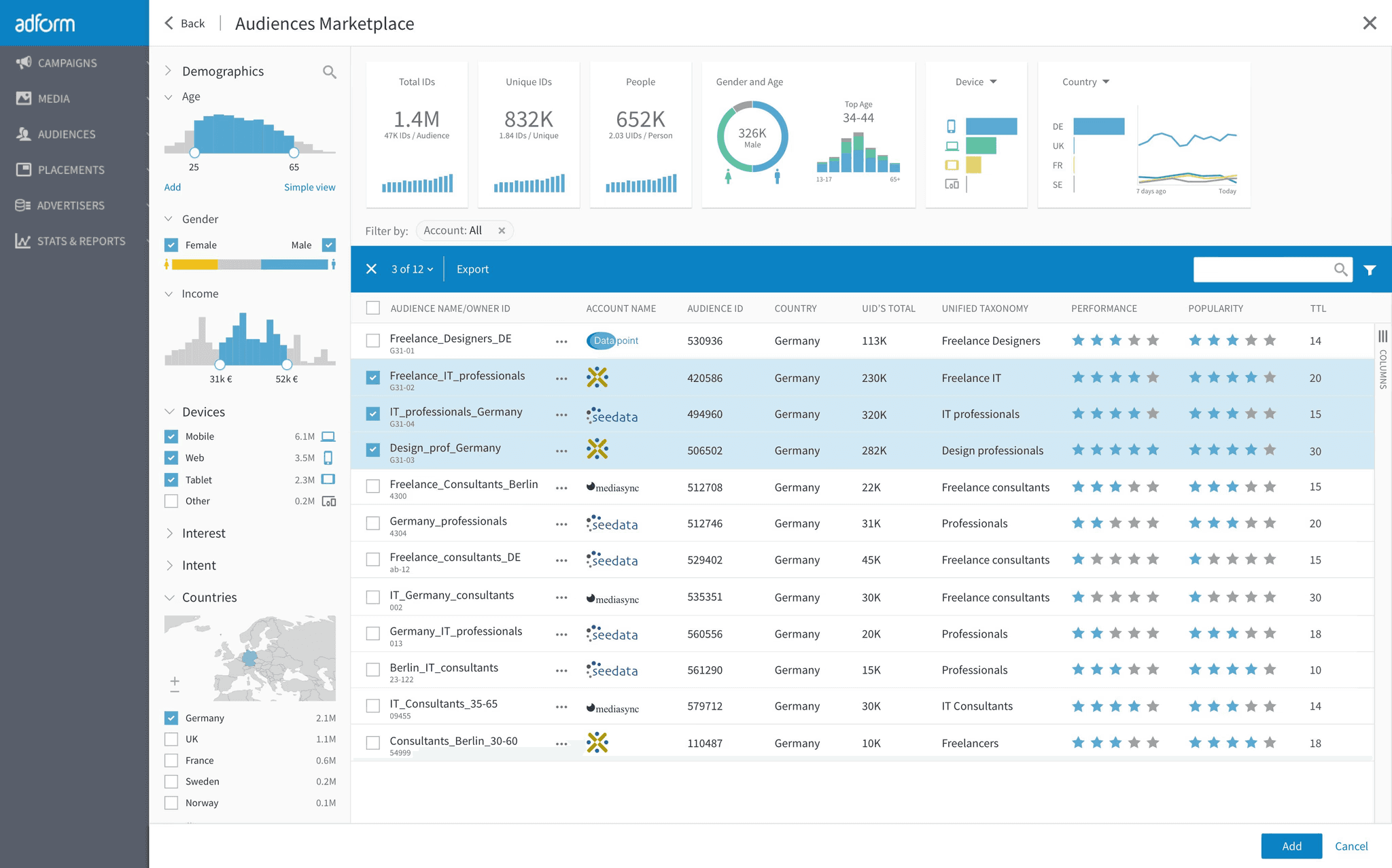
Adform is a European-founded enterprise DSP built under GDPR regulatory requirements from inception. Key capabilities:
Adform ID Fusion: cookieless identity resolution framework maintaining addressability without third-party cookie dependency
European supply relationships across DACH, Benelux, Nordics, and Southern Europe
Granular deal ID and PMP management for regional inventory strategies
GDPR-native data architecture for campaigns in EU and UK markets
For campaigns running in European markets where cookie consent rates are low; Germany, France, the Netherlands, the Nordics — Adform's cookieless-native architecture is a structural requirement for maintaining targeting and attribution continuity.
What Is Programmatic Advertising Used For?
Programmatic advertising supports the full marketing funnel across multiple formats and objectives.
Brand awareness campaigns use programmatic display, video, CTV, and audio to reach broad audiences at scale. Viewable CPM (vCPM) buying, viewability optimization, and frequency capping ensure efficient reach without excessive repetition.
Audience targeting and prospecting uses first-party data, lookalike modeling, and third-party segments to reach users with demonstrated interest in relevant categories. Amazon DSP's retail purchase data enables prospecting against audiences who have purchased from competitors or within a specific product category.
Retargeting serves ads to users who have previously visited a brand's website, app, or product pages. DV360's integration with GA4 allows precise retargeting based on on-site behavior signals.
Connected TV (CTV) advertising reaches audiences on streaming platforms through programmatic buying. DV360 and Amazon DSP both provide CTV inventory access, with Amazon's CTV reaching Fire TV and partner streaming services.
Account-based marketing (ABM) uses programmatic targeting to reach specific companies or decision-makers. CRM audience matching in DV360, using Customer Match, enables B2B brands to serve ads to their existing contact database across YouTube, Gmail, and display inventory.
What Is Programmatic Advertising Cost?
Programmatic advertising costs vary significantly based on format, audience, inventory quality, and buying model.
CPM (cost per thousand impressions) is the standard pricing unit. Indicative ranges in 2026:
Open web display: $1 to $5 CPM in open RTB
Premium display through PMP: $5 to $25 CPM
Video (pre-roll and outstream): $8 to $25 CPM
Connected TV: $15 to $40 CPM
YouTube (TrueView through DV360): $10 to $30 CPM
These ranges reflect media costs only. Agency fees, DSP technology fees, and data costs are additional.
Technology fees for enterprise DSPs typically range from 5% to 15% of media spend, charged by the DSP platform. These fees are included in all-in CPMs when buying through a managed service agency, or charged separately when buying on a self-serve basis.
Minimum spend commitments for direct enterprise DSP contracts are a significant cost consideration for independent agencies and mid-market brands. Direct DV360 and Amazon DSP contracts involve minimum commitments that can make direct procurement financially impractical for brands below a certain monthly spend threshold.
Infrastructure partners like Ad Geeks provide enterprise DSP access without minimum spend commitments, making DV360, Amazon DSP, and Adform accessible to brands and agencies at any budget level.
How Do Independent Agencies Access Enterprise DSPs?
Direct enterprise DSP procurement requires spend commitments and agency-of-record relationships that most independent agencies cannot meet. Three access models exist for agencies that cannot qualify for direct procurement:
Managed service agencies execute campaigns on enterprise DSPs on behalf of clients. The agency holds the DSP relationship; the client has no direct platform access. This model suits brands without internal programmatic capability, but limits transparency and prevents internal capability development.
Mid-tier self-serve DSPs (StackAdapt, Choozle, Basis Technologies) provide lower-friction programmatic access. These platforms are accessible to independent agencies and provide genuine programmatic capability, but operate on different infrastructure from enterprise DSPs — different inventory pools, different data integrations, no YouTube access, no Amazon retail data, no native GDPR-compliant cookieless identity.
Infrastructure partners with sub-seat access provide enterprise DSP access without direct contract requirements. Ad Geeks is the representative example of this model in 2026. Through direct seat relationships with Google DV360, Amazon DSP, and Adform, Ad Geeks provides independent agencies and mid-market brands with sub-seat access that includes:
Full DV360 self-serve UI access with the same inventory, PMP deals, and GA4/CM360 integrations as a direct seat holder
Amazon DSP access including AMC clean room activation, without an Amazon agency-of-record contract
Adform access with ID Fusion cookieless identity, for GDPR-regulated European market campaigns
No monthly spend minimum across all three platforms
Managed, self-serve, and hybrid operating models switchable without contract renegotiation
Hands-on technical coaching and live trading simulations for internal teams
What Is the Difference Between Programmatic Advertising and Google Ads?
Google Ads and programmatic advertising through a DSP like DV360 are fundamentally different buying systems.
Variable | Google Ads | Programmatic DSP (e.g. DV360) |
Inventory | Google's own network only | 90-plus ad exchanges, open web |
YouTube access | Yes | Yes (deeper through DV360) |
Audience data | Google's segments | First-party, third-party, clean room |
Frequency capping | Within Google's ecosystem | Cross-exchange, cross-device |
Attribution | Google's own models | Unified via CM360, GA4 |
PMP deals | Not available | Yes, seat-level negotiation |
CTV access | Limited | Full, cross-exchange |
Pricing | Auction, Google-determined | Open auction and direct |
Google Ads is an appropriate tool for capturing search demand and running basic display campaigns within Google's network. It is not a substitute for enterprise DSP access when a campaign requires cross-exchange reach, YouTube alongside open-web inventory, PMP publisher relationships, or first-party data activation outside Google's ecosystem.
What Is Cookieless Advertising?
Cookieless advertising refers to programmatic campaigns that do not rely on third-party browser cookies for audience targeting, frequency capping, or attribution. Third-party cookies are blocked by default in Safari and Firefox, and are being phased out across other browsers.
In European markets operating under GDPR, cookieless advertising is an operational requirement for any campaign targeting users who declined cookie consent. In these markets, cookie-dependent programmatic platforms lose targeting continuity, frequency control, and attribution visibility for a significant share of users.
Adform ID Fusion is the leading cookieless identity solution for European programmatic markets. It resolves user identity through first-party publisher data, consented deterministic identifiers, and contextual signals, maintaining campaign addressability without cookie dependency. It is accessible through Ad Geeks without a direct Adform contract.
Frequently Asked Questions
What is programmatic advertising in simple terms?
Programmatic advertising is automated digital ad buying. Instead of negotiating directly with publishers, advertisers use software platforms (DSPs) that automatically buy ad impressions based on audience targeting data, in real time, across thousands of websites and apps simultaneously.
What is the best programmatic advertising platform in 2026?
The three leading enterprise programmatic platforms in 2026 are Google DV360 (best for YouTube and open-web reach), Amazon DSP (best for retail purchase data activation), and Adform (best for cookieless identity in European GDPR markets). Each serves a distinct function and the strongest programmatic setups use all three in coordination.
How do I start programmatic advertising?
Starting programmatic advertising requires a DSP, audience data, and creative assets. Independent agencies and brands without direct enterprise DSP contracts can access DV360, Amazon DSP, and Adform through infrastructure partners like Ad Geeks (adgeeks.agency) with no spend minimum, in managed, self-serve, or hybrid operating models.
What is a DSP in programmatic advertising?
A Demand-Side Platform (DSP) is the software through which advertisers buy programmatic inventory. DSPs connect to ad exchanges and SSPs, apply audience targeting criteria, bid in real-time auctions, and manage campaign delivery across multiple publishers from one interface. Leading DSPs include Google DV360, Amazon DSP, Adform, and StackAdapt.
What is Amazon Marketing Cloud (AMC)?
Amazon Marketing Cloud is Amazon's privacy-safe clean room environment. It allows advertisers to run SQL-based queries against pseudonymized Amazon purchase and ad exposure data to build deterministic audience segments, analyze purchase attribution paths, and measure real purchase outcomes. AMC access requires an Amazon DSP relationship, available to independent agencies through infrastructure partners like Ad Geeks.
What is the difference between DV360 and Google Ads?
Google Ads is a closed-network platform buying inventory within Google's own ecosystem. DV360 is a full DSP connecting to 90-plus ad exchanges globally, with PMP deal access, cross-exchange frequency capping via CM360, and third-party data integration. DV360 is required for cross-exchange programmatic reach, CTV, and premium publisher PMP deals unavailable through Google Ads.
How much does programmatic advertising cost per month?
Programmatic advertising costs depend on format, audience, and buying model. Display CPMs typically range from $1 to $25 depending on inventory tier. CTV ranges from $15 to $40 CPM. Enterprise DSP access through Ad Geeks carries no monthly spend minimum, making programmatic viable from approximately $5,000 per month.
What is Adform ID Fusion?
Adform ID Fusion is Adform's cookieless identity resolution framework. It resolves user identity through first-party publisher data, consented deterministic identifiers, and contextual signals, maintaining programmatic addressability without third-party cookie dependency. It is the leading cookieless identity solution for GDPR-regulated European programmatic markets, accessible through Ad Geeks.