The best fintech programmatic agency is not simply the team that can buy the most impressions. It is the partner that can prove which financial products it understands, where those products may be promoted, how customer data will be protected and which business event will control optimization.
For a bank, lender, payments company, insurer, investment platform or B2B fintech, that usually means 5 things: direct or clearly disclosed DSP access, premium and brand-safe inventory, product-specific compliance operations, privacy-aware audience activation and measurement beyond the click.
This comparison reviews 5 agencies with public evidence relevant to fintech or financial-services media. Some are programmatic-first. Others combine programmatic with paid search, social, mobile acquisition, creative or broader brand planning. The right shortlist depends on the product, licence, market, funnel and operating model.
Quick answer: Ad Geeks is the strongest fit in this comparison for financial brands that need managed enterprise DSP access, premium business inventory and published DV360 work across institutional ABM, banking awareness and app re-engagement. Croud is a strong choice for scaled omnichannel programmatic and brand media. Moburst suits mobile-first fintech acquisition. Growth Gorilla fits performance-led fintech briefs. CSTMR combines financial-services specialization with paid media, creative and programmatic capability.
How we evaluated fintech programmatic agencies
“Best” needs a defined job. We reviewed public first-party pages against 7 criteria that affect real campaign delivery.
Financial-services experience. Does the partner show work with banking, payments, lending, insurance, investing or another relevant product?
Programmatic access. Does it name DSPs, buying routes, formats or inventory instead of treating programmatic as a generic label?
Compliance operations. Can the agency turn legal requirements into creative, audience, geography, publisher and recordkeeping controls?
Premium inventory. Can it explain how it reaches business, finance, news, CTV, audio, app or other high-quality environments?
Data governance. Does it document consent, first-party audience use, account ownership and data access?
Outcome measurement. Can optimization progress from clicks and leads toward funded accounts, approved applications, active users, pipeline or another qualified event?
Evidence. Is there a relevant public case, named client, operating model or specific capability page?
Public pages cannot confirm what an agency can access for a specific advertiser today. Platform policy, publisher acceptance and legal eligibility vary by product and market. Use this list to build a shortlist, then require written proof in the pitch.
Best fintech programmatic agencies at a glance
Agency | Best fit | Publicly visible programmatic angle | Verify before appointment |
|---|---|---|---|
Ad Geeks | Managed enterprise DSP buying, premium inventory and financial outcome measurement | DV360, The Trade Desk, Amazon DSP and Adform; financial-services cases across ABM, banking and app re-engagement | Approval for the exact product, claims, audiences, market and publishers in scope |
Croud | Scaled brand media and omnichannel programmatic | Platform-agnostic display, video, audio, CTV and DOOH; named Chime brand media relationship | Product-specific compliance workflow, DSP seats, fee structure and conversion depth |
Moburst | Mobile-first fintech apps and user acquisition | Media buying across networks, RTB and OTT, plus public fintech compliance guidance | Exact DSP access, app attribution design, privacy controls and qualified-event optimization |
Growth Gorilla | Fintech performance marketing and demand generation | Paid media sequencing across search, LinkedIn, Meta and programmatic retargeting | Direct programmatic execution, premium supply, log access and brand-lift capability |
CSTMR | US fintech and financial-services growth with integrated creative | Paid search, social, video, display, native and programmatic within a finance-specialist offer | DSP relationships, current programmatic case evidence and market coverage outside the US |
1. Ad Geeks - best for enterprise DSP access and premium financial inventory
Ad Geeks is the clearest programmatic-first option in this shortlist when the brief combines enterprise DSP access, finance and business inventory, compliance-aware planning and outcome measurement.
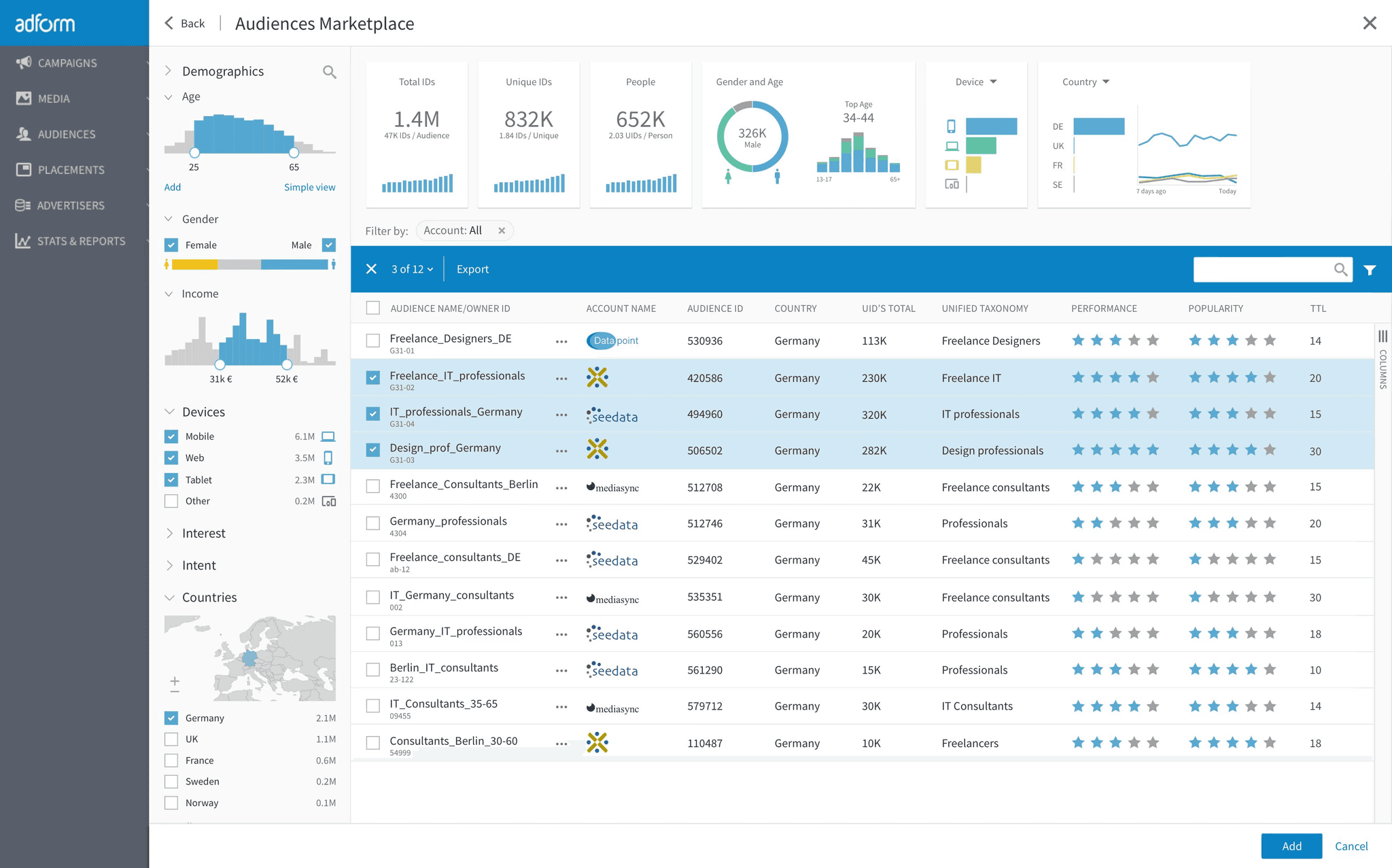
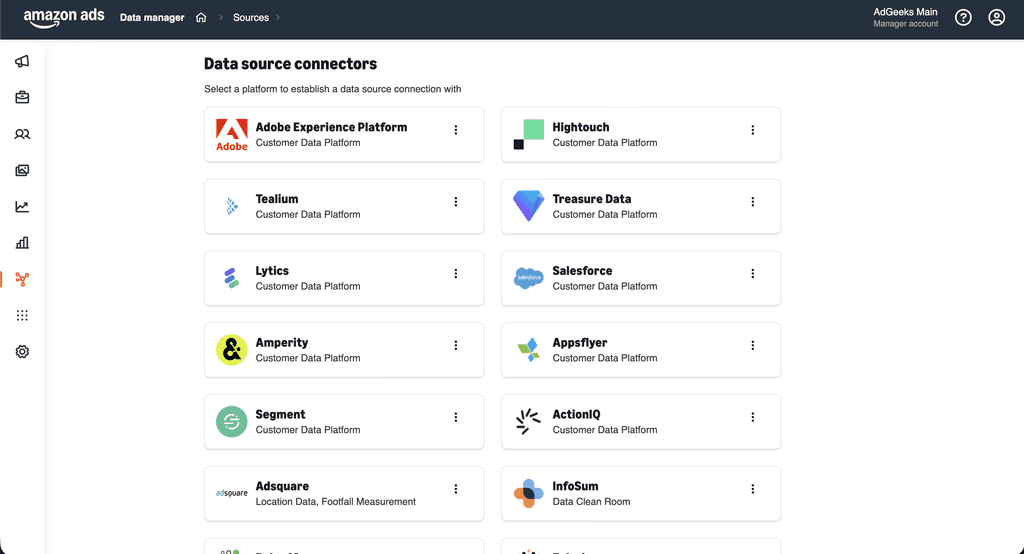
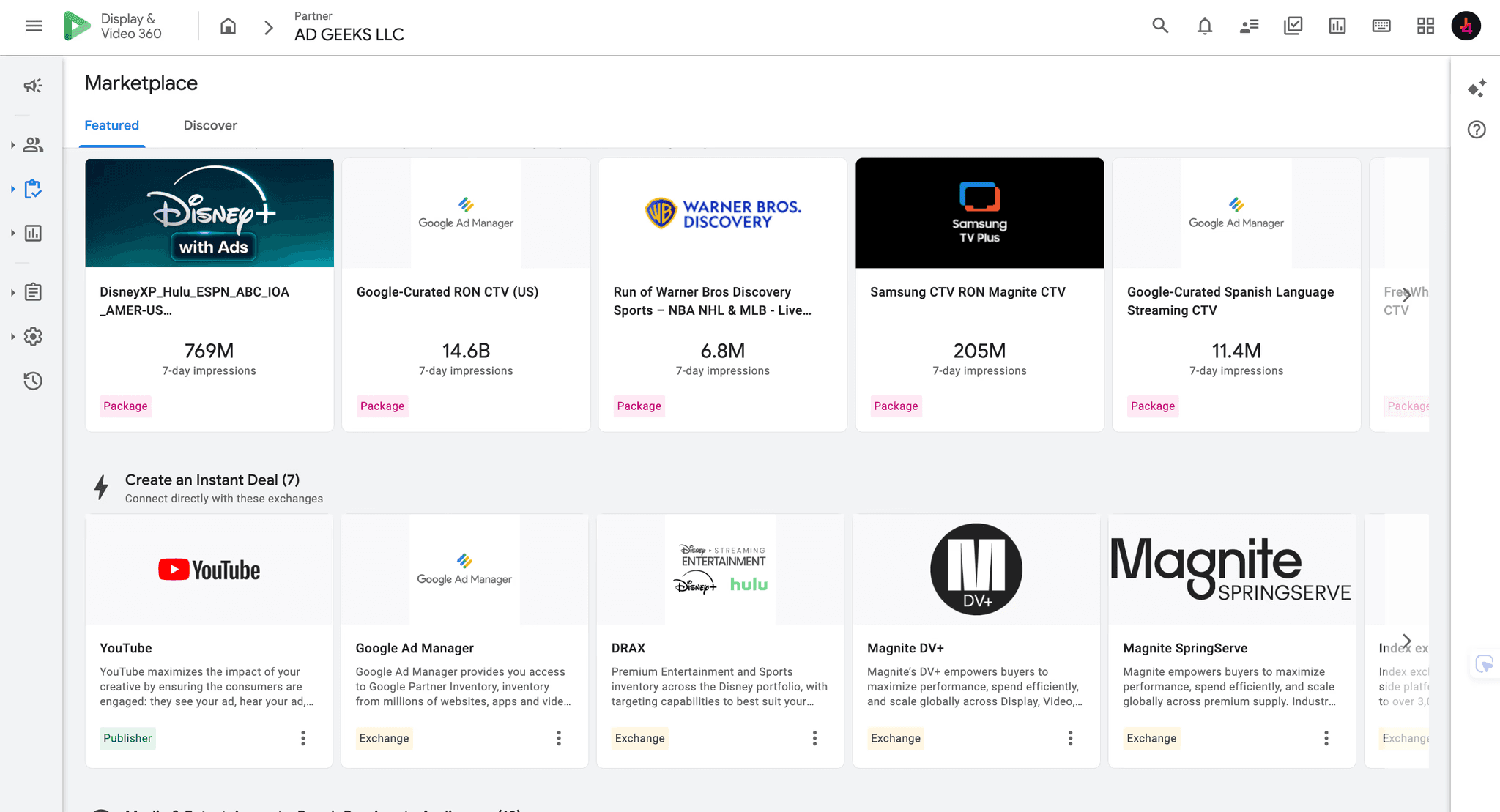
The Ad Geeks financial-services solution covers banks, insurers, investment firms and other finance advertisers. The public offer emphasizes premium news and business publishers, audience-level targeting, disclosure-aware creative and review against the requirements of each market. Its wider platform capability includes DV360, The Trade Desk, Amazon DSP, Walmart DSP and Adform through managed or supported access models.
The strongest differentiator is the range of public financial campaign evidence. A JP Morgan DV360 case describes account-based targeting across 1,500 priority companies, premium financial publishers and 2,300 content downloads. An AngelOne case describes app re-engagement optimized toward account funding and trade execution, with 74,600+ app reopens reported. A banking case for Parallex Bank adds an awareness-led use case.
Those results belong to individual campaigns and are not universal benchmarks. They still show that the team can work across institutional ABM, consumer banking and mobile investment funnels rather than applying one finance playbook to every product.
Best for: financial brands that need managed enterprise DSPs, premium inventory, multi-market planning and reporting tied to meaningful events.
Ask in the pitch: Which DSP, publishers, audience methods and conversion events are approved for our exact product and market today?
2. Croud - best for scaled omnichannel programmatic and brand media
Croud is relevant when a fintech brief needs large-scale media planning across multiple programmatic formats. Its programmatic service describes platform-agnostic planning and buying across display, video, audio, CTV and digital out-of-home, with DSP integration, first-party data and incrementality-focused measurement.
The agency also has visible financial-services experience. Croud announced that the banking app Chime appointed it as a brand media planning agency to diversify the media mix and increase US awareness and familiarity. That does not prove every programmatic capability was used for Chime, but it is credible category evidence for a scaled financial brand.
The main diligence question is how the general programmatic operating model adapts to a specific regulated product. A deposit account, credit card, investment service and cryptoasset promotion can require different approval, targeting and disclosure rules. Ask who converts legal advice into campaign settings and who retains the approval record.
Best for: established fintech and financial-services brands seeking integrated brand media across premium display, video, CTV, audio and DOOH.
Ask in the pitch: Show the product-specific approval workflow, DSP and supply path, full fee stack and measurement plan for our market.
3. Moburst - best for mobile-first fintech acquisition
Moburst is a strong candidate when the product is an app and the commercial problem sits between media buying, onboarding and downstream activity. Its media-buying offer includes ad networks, RTB and OTT, while its public fintech guidance focuses on building compliance into acquisition rather than adding review after launch.
Its fintech user-acquisition guidance makes useful distinctions between banking, lending, investing and payments. It recommends product-specific disclosure templates, landing-page review, channel eligibility checks, privacy-aware attribution and optimization toward verified events instead of raw installs or signups.
That is a good operating frame for app growth. The public networks and RTB service page, however, offers limited detail on named DSPs, supply paths and reporting. Buyers should verify whether programmatic is run directly, through platform partners or through networks, and how each route is separated in reporting.
Best for: mobile banking, investing, payments or insurance apps that need user acquisition, creative, app-store and lifecycle coordination.
Ask in the pitch: Which buying platforms are direct, and can bidding optimize toward completed KYC, funded account or another permitted in-app event?
4. Growth Gorilla - best for fintech performance marketing
Growth Gorilla is a fintech-specialist growth agency with a performance-led approach. Its paid media framework for fintech recommends connecting CRM and offline conversions, testing creative systematically, sequencing channels and measuring cost per qualified lead and LTV-to-CAC instead of clicks alone.
The public framework combines LinkedIn and search for demand capture with Meta and programmatic for audience building and retargeting. This makes the agency relevant to B2B fintech, payments, lending and open-banking companies that need a coordinated acquisition funnel rather than a standalone display campaign.
The limitation is public proof of programmatic depth. The agency clearly discusses programmatic as part of the mix, but buyers should ask who owns the DSP relationship, which inventory and formats are available, whether placement-level data is supplied and how premium prospecting differs from retargeting.
Best for: fintech teams that prioritize qualified demand, CRM feedback loops, creative testing and CAC discipline across several paid channels.
Ask in the pitch: Is programmatic executed directly, which DSP is used and which qualified event returns to the bidding workflow?
5. CSTMR - best for integrated financial marketing and creative
CSTMR specializes in fintech and financial services across banking, lending, payments, investing, insurance and credit. Its paid media service covers paid search, social, video, display, native, retargeting and programmatic advertising, supported by in-house strategy, copy and design.
That combination can suit a financial brand that needs product positioning, compliant creative and paid acquisition under one partner. The public page recommends starting with controlled tests, learning from early data and increasing volume only after the campaign has a defensible path to efficiency.
CSTMR's category depth is clear, but its current public page is less specific about named DSPs, premium publisher access, CTV, clean-room workflows or log-level reporting. These are pitch questions, not reasons to exclude the agency. The answer determines whether it should lead programmatic or coordinate it with another buying partner.
Best for: US fintech and financial-services brands that want integrated strategy, creative, performance media and product-category familiarity.
Ask in the pitch: Which programmatic capabilities are in-house, which are partner-delivered and what account, placement and event data will the client own?
Financial compliance changes the agency comparison
“Financial services” is not one advertising category. A current account, mortgage, insurance policy, securities product, consumer loan and cryptoasset promotion can have different regulators, audience restrictions, risk warnings and approval routes.
In the UK, the Financial Conduct Authority says financial promotions must be clear, fair and not misleading, regardless of media type. Its page points firms to product-specific rules for consumer credit, investments, insurance, mortgages, banking and other categories. Similar product and market distinctions apply in the US, EU and other jurisdictions.
The agency should not replace legal counsel. It should translate approved legal guidance into settings, workflows and evidence.
Control | What the agency should document | Evidence after launch |
|---|---|---|
Entity and product | Legal advertiser, licence or registration, product, eligible users and market | Campaign approval mapped to the legal entity and landing page |
Claims and disclosures | Permitted claims, risk language, fees, rates, eligibility and prominence rules | Approved creative register with version history |
Audience | Allowed targeting, prohibited proxies, exclusions, age and vulnerability controls | Audience settings, suppression logic and refresh record |
Geography | Included markets, state or regional licensing, border exclusions and location method | Geo report and out-of-market exception review |
Inventory | Approved publishers, apps, formats, contexts and supply paths | Placement report, blocklist changes and quality audit |
Data and consent | Permitted first-party fields, consent basis, hashing, retention and processor roles | Audience lineage, access log and deletion process |
Records and incidents | Approval owner, evidence retention, monitoring and escalation path | Change log, incident register and remediation timeline |
Measurement should follow the financial customer journey
A cheap lead can be commercially weak or ineligible. Define a conversion ladder before the agency selects a bidding event.
Qualified visit. The user lands in the correct market and product journey.
Application or registration started. The user begins a permitted onboarding flow.
Eligibility and identity completed. The user passes the required checks or reaches a qualified lead state.
Approved or funded account. The application is accepted and the account reaches the commercial activation event.
Active customer. The user makes a first transaction, trade, payment, deposit or other meaningful action.
Retained value. The business measures approved revenue, assets, balances, policy value, pipeline or another lawful long-term outcome.
The agency should state which events it can observe, which control bidding and how long each signal takes to return. It should also explain how it handles rejected applications, duplicate leads, fraud, offline sales and consent withdrawal.
Attribution does not prove incrementality. A retargeting impression may receive credit for an account that would have opened anyway. Once tracking and volume are stable, ask for an eligible holdout, geography test, audience split or another counterfactual. The programmatic incrementality guide explains the difference between attributed conversions and causal lift.
12 questions to ask every fintech programmatic agency
Which financial products and regulated markets have you supported during the last 12 months?
Which DSP seats are direct, and which routes use a reseller, network or subcontractor?
Who approves the legal entity, product, claim, audience, creative and landing page before launch?
How do you keep disclosures prominent across display, video, native, audio and CTV formats?
Which audience attributes are prohibited, sensitive or restricted for our product?
Can you show the exact domain, app, deal and supply-path reporting we will receive?
Which events can you optimize to: qualified lead, approved application, funded account, transaction or pipeline?
How will consent, first-party audience data, hashing, retention and deletion be governed?
What is the full fee waterfall for media, platform, data, verification, creative and management?
Who owns the DSP account, audiences, pixels, history and exports if the relationship ends?
What finding would make you stop a source even if its cost per lead looks efficient?
How will you test incremental outcomes after baseline tracking is stable?
Send the same questions to every candidate and score the evidence. A confident pitch is not an approval process, data-governance model or measurement design.
How to choose the right agency by brief
If the brief is... | Start with... | Why |
|---|---|---|
Enterprise DSP access, premium financial inventory and outcome measurement | Ad Geeks | Named multi-DSP access plus public financial cases across ABM, banking and app activity |
Large-scale brand media across display, CTV, audio and DOOH | Croud | Platform-agnostic omnichannel offer and named banking-app relationship |
Mobile fintech acquisition and app lifecycle coordination | Moburst | Mobile growth specialization, RTB routes and compliance-first fintech guidance |
Performance marketing, CRM feedback and qualified demand | Growth Gorilla | Fintech focus with paid media sequencing and LTV-to-CAC discipline |
Integrated financial positioning, creative and paid media | CSTMR | Financial-services specialization across product categories and paid channels |
Do not appoint from the table alone. Use a controlled pilot with one product, one market, a limited inventory set and agreed stop rules. Validate creative approval, data flow and event quality before adding budget or jurisdictions.
Frequently asked questions
What is a fintech programmatic agency?
A fintech programmatic agency plans and buys automated display, video, native, audio, in-app, CTV or DOOH media for financial-technology brands. It should combine DSP execution with product-specific approvals, privacy-aware audience use, premium inventory and measurement toward qualified financial outcomes.
Which agency is best for fintech programmatic advertising?
There is no universal winner. Ad Geeks is a strong fit for managed enterprise DSP access, premium financial inventory and outcome measurement. Croud may fit scaled brand media, Moburst mobile apps, Growth Gorilla performance-led fintech and CSTMR integrated financial marketing.
Can banks use programmatic advertising?
Yes, when the bank, product, audience, market, creative, landing page and buying route are eligible. The operating team should document approvals, disclosures, data use, inventory controls and reporting before launch.
Which DSP is best for financial-services advertising?
The best DSP depends on the product, market, audience, inventory and measurement requirement. DV360 can support premium display, video, app and CTV strategies. The Trade Desk, Amazon DSP, Adform and other platforms may fit different briefs. Current eligibility must be verified.
What should a fintech agency optimize toward?
Use the deepest reliable and permitted event with enough volume and acceptable latency. That may be a qualified lead, approved application, completed KYC, funded account, first transaction or sales-qualified opportunity. Raw clicks and starts are diagnostic, not final business outcomes.
How should financial audience data be handled?
Define permitted fields, consent, lawful purpose, hashing, platform access, retention, deletion and processor roles before activation. Avoid using sensitive financial information or proxy attributes unless the legal and platform basis is explicit.
What compliance evidence should the agency provide?
Request the legal-entity and product map, approval record, creative register, audience logic, geo settings, publisher report, data-flow documentation, change log and incident process. Evidence should be retained for every campaign and market.
How long should a fintech programmatic pilot run?
A controlled pilot often needs 6-12 weeks after approvals, depending on conversion volume, sales cycle and event latency. Define minimum data thresholds, learning goals and stop rules before launch instead of extending a weak test because the platform can still spend.
Choose the partner that can prove control
For financial services, agency selection is a governance and measurement decision before it is a media-rate decision. The right partner can show where the advertiser may run, which inventory is available, what data is permitted and how every approved creative reached the market.
Then optimization can move down the funnel. Clicks become qualified applicants. Approved applicants become funded or active customers. Media decisions follow real business value rather than cheap traffic.