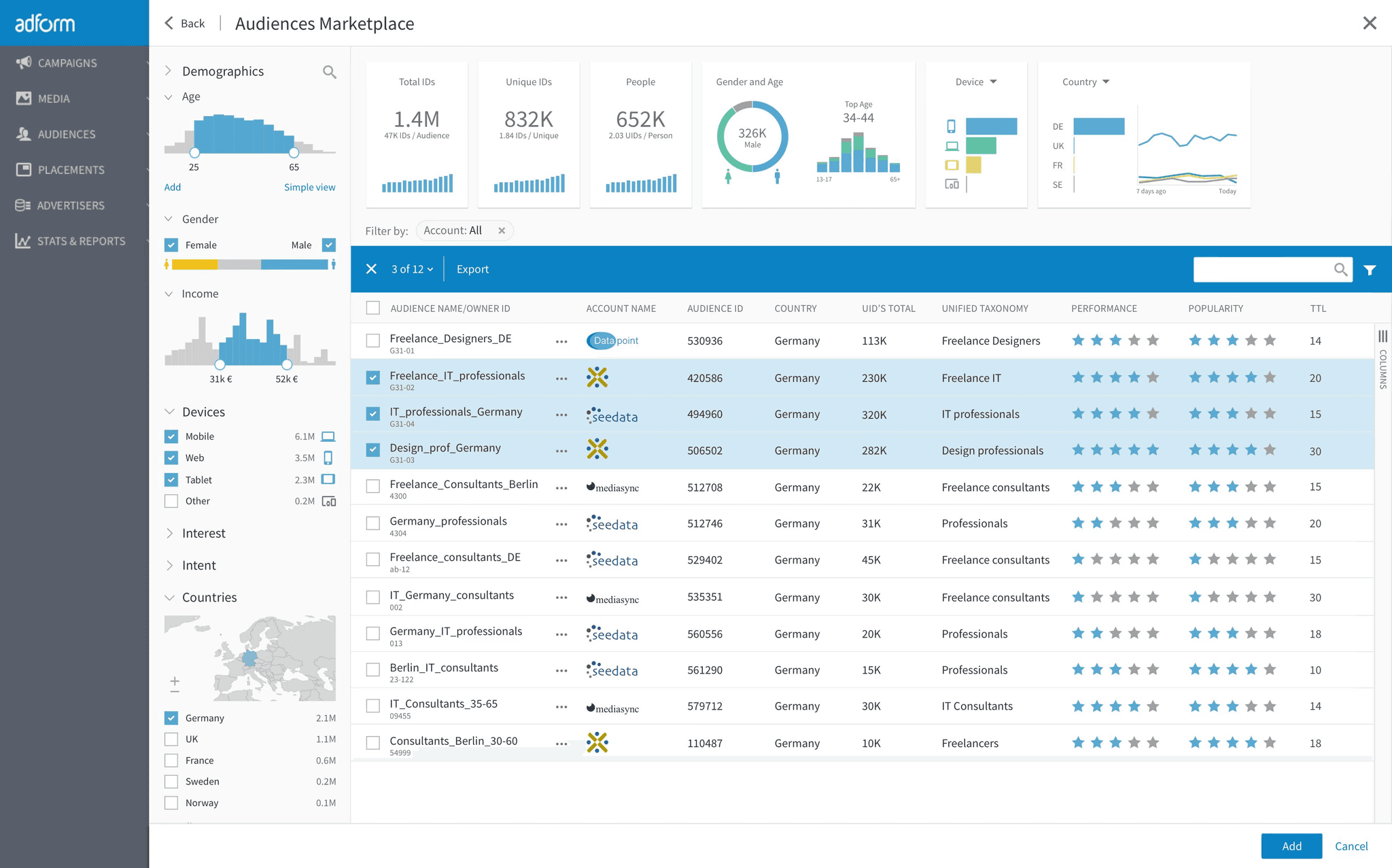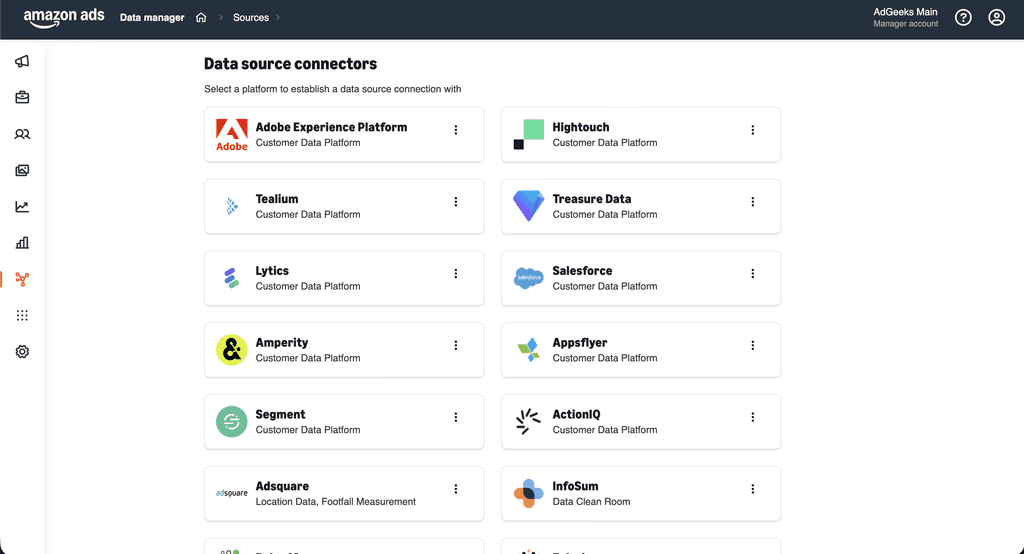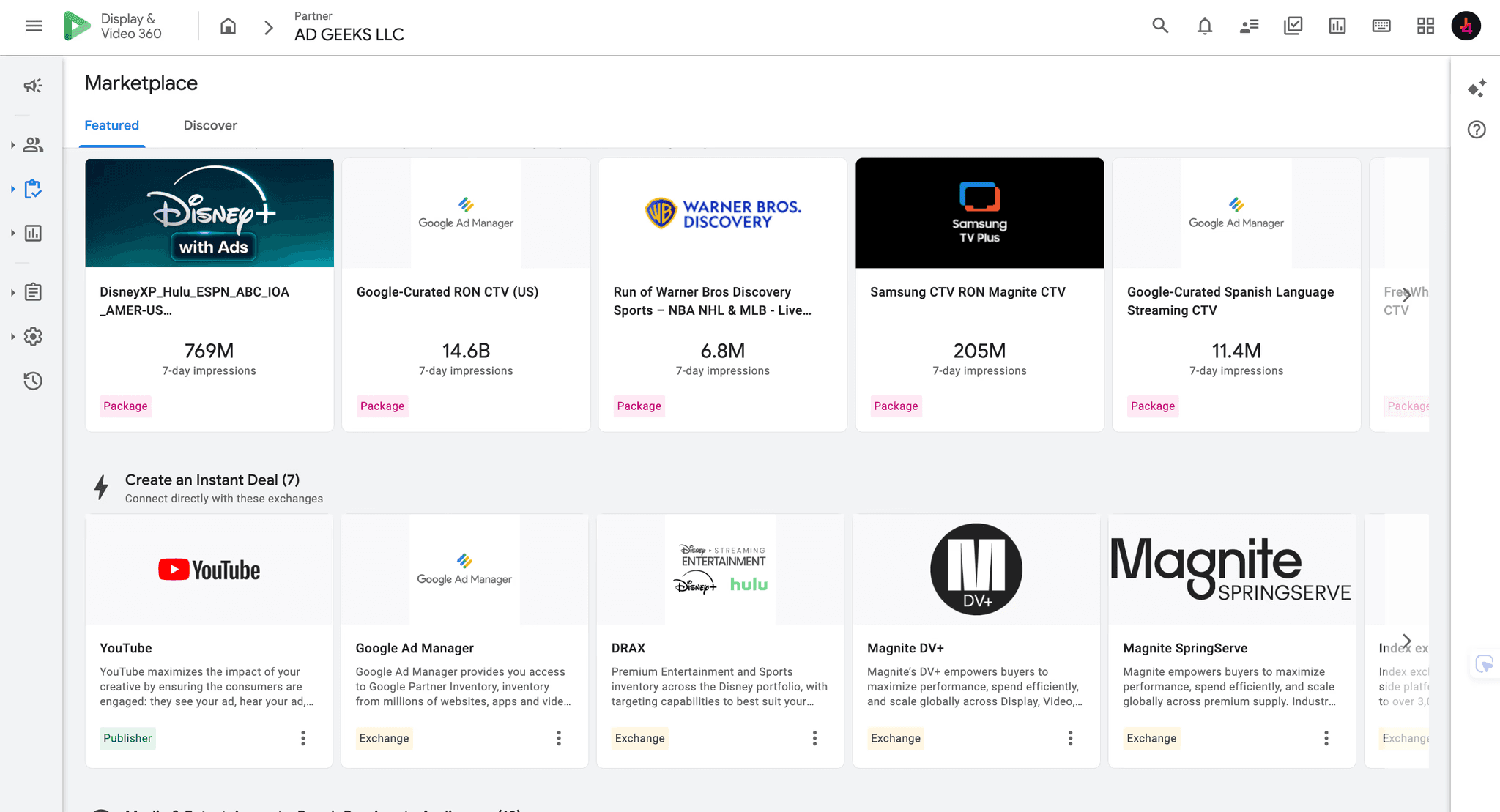
Choose a retail media agency by testing how it handles data, platform access, measurement and decision-making - not by counting retailer logos. A credible partner should explain exactly which Amazon and Walmart capabilities it can operate, who owns the accounts and audiences, how onsite and offsite media work together, what every fee covers and how it will separate attributed sales from incremental growth.
The strongest proposal is not the one with the most channels. It is the one that reduces uncertainty before the first dollar is spent. It names the buying route, the eligible signals, the campaign owner, the reporting method and the evidence needed to keep, change or stop an investment.
Use the 12 questions below as a common scorecard. Send the same brief to every candidate and require written answers. That makes it easier to compare an Amazon specialist, a Walmart partner and a broader retail media agency on the work that matters.
Quick answer: A retail media agency should connect retailer data, onsite placements, offsite media and measurement into one operating plan. Ask for exact access routes, account ownership, audience definitions, Amazon and Walmart capabilities, fee transparency, reporting logic and an incrementality roadmap. Attribution shows sales associated with advertising. Incrementality estimates the sales or customers created because of advertising. A useful agency can work with both without treating them as the same result.
What does a retail media agency actually do?
A retail media agency plans and operates advertising that uses a retailer's media inventory, commerce signals or sales measurement. The scope may include sponsored search, onsite display, retailer-owned properties, offsite display, online video, connected TV, audio and social extensions.
The agency's job is broader than campaign activation. It should translate commercial goals into retailer-specific audiences, coordinate products and promotions, control budget and frequency, validate measurement and show how the next decision follows from the evidence.
Access models differ. Amazon Ads and Walmart Connect each have their own products, eligibility rules, markets, workflows and reporting. Current capabilities must be verified in the advertiser's live account before a proposal is approved. For a planning view across both ecosystems, read the Amazon and Walmart retail media strategy guide.
Amazon and Walmart are not interchangeable
A capable agency can coordinate both platforms without flattening their differences. The plan should assign each retailer a clear job based on where the brand sells, which audiences are eligible, what inventory is available and how sales can be measured.
For service scope, compare AdGeeks' Amazon Ads access, Walmart DSP access and broader retail and eCommerce media capabilities against the same brief.
Area | Amazon Ads | Walmart Connect |
|---|---|---|
Retail context | Amazon shopping, browsing and eligible advertising signals | Walmart online and in-store commerce signals where available |
Onsite media | Sponsored ads and eligible display/video placements across Amazon properties | Sponsored Search, onsite display and other eligible Walmart placements |
Offsite media | Advanced programmatic display, video, audio and streaming inventory through current Amazon Ads workflows | Offsite media using Walmart audiences across eligible open-web, CTV, social, audio and other routes |
Analysis | Amazon Marketing Cloud supports privacy-safe custom analysis for eligible advertisers | Walmart Connect offers closed-loop and advanced measurement options subject to product and qualification rules |
Best planning question | How can Amazon signals and inventory support the brand's growth job? | How can Walmart audiences, inventory and sales signals support the brand's Walmart business? |
Do not approve a plan that copies the same audience, budget split and KPI across both. The Walmart DSP vs Amazon DSP comparison covers the platform-level trade-offs in more detail.
12 questions to ask a retail media agency
1. Which retailer products can you actually access and operate?
Ask for a product-by-product access map, not a slide of logos. It should name the market, buying route, account type, inventory, campaign format and whether the agency operates directly, through a managed relationship or through another platform.
Request a live verification close to launch. Access can depend on advertiser eligibility, geography, product availability, spend level, seller or vendor status and partner permissions. A partner should label planned, requested and confirmed access separately.
2. Who owns the accounts, audiences and history?
Confirm who holds administrator access, billing control, pixels or tags, uploaded data, custom audiences, queries, reports and historical campaign settings. If the agency uses a managed account, document what the advertiser can view and export during the relationship.
Also define the exit process. The contract should say which files, reports, audience definitions and measurement logic the advertiser receives, how access is removed and what cannot be transferred because of retailer or platform rules.
3. How will you divide work between Amazon and Walmart?
The answer should follow the business, not a fixed platform preference. A brand may use Amazon to reach eligible shoppers and analyze journeys with AMC, while using Walmart Connect to connect eligible exposure with online and in-store Walmart sales. Another brand may need only one retailer because distribution, customer volume or product readiness is concentrated there.
Ask the agency to assign a role to every platform: acquisition, defense, new-product launch, repeat purchase, offsite reach or measurement. If two platforms do the same job, require a reason and an overlap plan.
4. What data will you use, and what does each signal mean?
Retail data is valuable only when its definition is clear. Ask whether a segment is based on purchases, browsing, category interest, customer stage, modeled behavior or an advertiser-provided signal. Record the lookback window, market, product set and refresh cadence.
First-party data adds another governance layer. The agency should document consent, permitted use, identifiers, match strategy, retention and access before onboarding anything. The first-party data activation guide provides a practical checklist.
5. How will onsite and offsite media work together?
Onsite retail media often captures or shapes demand close to the retailer. Offsite media can extend reach across the open web, streaming, social or other eligible environments. A useful plan explains how the two layers sequence, where they overlap and which KPI belongs to each job.
Walmart Connect's current offsite media page describes activation across eligible CTV, social, open-web and other channels, including Walmart audience and transaction-based measurement capabilities. Amazon's current programmatic product page should be checked alongside the advertiser's live account for eligible advanced display, video and audio options.
6. How will retail readiness affect the media plan?
Media cannot fix an unavailable product, weak product detail page, broken catalog mapping, poor reviews or an uncompetitive offer. Ask what the agency checks before launch and who owns each fix.
The readiness checklist should cover product eligibility, inventory, pricing, promotion dates, content quality, category structure, conversion history and tracking. It should also define what happens when stock changes mid-flight. Pausing, reallocating or changing the product set should follow a written rule.
7. What campaign taxonomy will connect media to products and goals?
Require a naming and mapping system that connects retailer, market, product group, funnel role, audience, inventory, creative and objective. Without that structure, the agency may deliver accurate platform reports that cannot be reconciled across retailers.
The taxonomy should be stable enough for quarter-over-quarter analysis but flexible enough to add new products and tests. Ask for a sample campaign map before launch and a change log after launch.
8. Which measurement questions will standard reporting answer?
Daily reporting should cover delivery, pacing, spend, sales, attributed return, new-to-brand or customer-stage metrics where eligible, product performance and inventory constraints. The agency should state the attribution window and whether online, in-store, same-item or broader sales are included.
Walmart Connect says its closed-loop measurement links eligible ad exposure to sales on Walmart's site, app and in stores. Amazon reporting and AMC can support different measurement layers depending on the advertiser and setup. Definitions must be written beside every KPI.
9. How will you test incrementality instead of only reporting ROAS?
Attributed return answers which sales received credit under a platform rule. Incrementality asks what additional outcome happened because of advertising. The second question needs a credible counterfactual - for example a valid holdout, geography test, audience split, budget interruption or another controlled design.
Ask which incrementality options are available for the advertiser, what qualifications apply and how contamination will be controlled. A natural experiment can generate a hypothesis, but the agency should explain its limitations before presenting a causal claim.
Measurement layer | Question | Use | Limitation |
|---|---|---|---|
Delivery | Did the campaign serve and spend as planned? | Pacing and operational control | Does not show business impact |
Attribution | Which eligible sales received credit? | Consistent platform reporting and optimization | Does not prove the ad created the sale |
Audience analysis | Who was reached, duplicated or newly acquired? | Audience, frequency and budget decisions | Depends on signal and identity coverage |
Incrementality | What happened because of advertising? | Investment and causal decisions | Needs a valid counterfactual and enough volume |
For Amazon-specific analysis, see the Amazon DSP and Amazon Marketing Cloud measurement guide. Walmart Connect also publishes integrated measurement options that may include audience, campaign, brand-lift and cross-channel analyses subject to qualification.
10. What will we pay, and what counts as working media?
Ask for a complete cost waterfall. Separate media, platform, data, verification, creative, technology, measurement and agency management. Identify which costs are percentages, fixed fees, minimum commitments or optional studies.
Do not compare proposals using a single blended fee when the scopes differ. One agency may include reporting and creative QA while another bills them separately. Compare the same work, the same budget and the same measurement requirement.
11. Who will operate the account and document decisions?
Meet the team that will handle pacing, bidding, product changes, audience updates, creative rotation and reporting. Confirm review frequency, escalation paths and who can approve material changes.
Require a decision log with the date, signal, action, reason, owner and expected effect. A dashboard explains what happened. The log explains why the team changed course and whether the expected result appeared.
12. What are the keep, change and stop rules?
Agree the rules before launch. Define the minimum evidence needed to keep a tactic, the conditions that trigger a bid, audience or creative change and the point at which low-quality or inefficient delivery stops.
The rules should also cover stockouts, tracking failures, sudden sales volatility and measurement delays. A campaign should not continue simply because the platform can still spend.
Retail media agency scorecard
Score written evidence, not presentation quality. Adjust the weights to match the brief, but keep the same framework for every candidate.
Area | Weight | Evidence to request |
|---|---|---|
Access and platform fit | 15% | Market-specific product and buying-route map |
Data and ownership | 15% | Signal dictionary, permissions and exit rights |
Amazon and Walmart strategy | 15% | Distinct platform roles and overlap controls |
Retail readiness and taxonomy | 10% | Pre-launch checklist and campaign map |
Measurement and incrementality | 20% | KPI definitions, attribution rules and test design |
Commercial transparency | 10% | Full cost waterfall and working-media calculation |
Team and operating model | 10% | Named operators, cadence and decision log |
Governance and exit | 5% | Approval, access-removal and handoff process |
A partner that scores well should also be willing to say when a retailer, format or measurement study is not a fit. Restraint is part of good planning.
What a useful 90-day retail media plan looks like
Days 1-15 - access and readiness. Verify retailer eligibility, accounts, products, inventory, data permissions, campaign history and measurement options.
Days 16-30 - architecture. Define platform roles, product groups, audiences, taxonomy, KPI definitions, budget and incrementality hypothesis.
Days 31-60 - controlled activation. Launch a limited campaign set with clear keep, change and stop rules. Validate reporting before scaling.
Days 61-75 - audience and product analysis. Review reach, overlap, frequency, product availability, attributed outcomes and customer-stage signals.
Days 76-90 - decision and test. Reallocate budget only after the data is reconciled. Approve the next incrementality or audience test with an owner and review date.
The first 90 days should create reusable infrastructure: an access map, data dictionary, campaign taxonomy, cost waterfall, measurement plan and decision log. Those assets matter more than a one-off dashboard.
Common red flags
The proposal lists retailer logos but does not name products, markets or access routes.
The agency treats Amazon and Walmart audiences as interchangeable.
Account ownership and exit rights are missing from the contract.
ROAS is presented as proof of incremental sales.
In-store and online sales are combined without a clear definition.
Fees are blended into one percentage without a working-media calculation.
The sales team presents the pitch, but the operating team is unnamed.
No action follows the monthly report.
Frequently asked questions
What is a retail media agency?
A retail media agency plans and manages advertising that uses retailer inventory, shopper signals or sales measurement. It may operate onsite sponsored ads, onsite display, offsite programmatic media, connected TV, social extensions and measurement workflows.
Should one agency manage both Amazon and Walmart?
It can, if the agency has verified access and gives each retailer a distinct role. A shared agency can simplify taxonomy, budget and reporting, but it should not force identical audiences or KPIs across different ecosystems.
What should an Amazon retail media agency provide?
It should explain eligible Amazon Ads access, account ownership, audience and inventory strategy, campaign structure, fees, standard reporting and any Amazon Marketing Cloud analysis. Capabilities should be verified in the advertiser's current account.
What should a Walmart retail media agency provide?
It should map eligible sponsored, onsite and offsite products, Walmart audience use, online and in-store measurement, platform access, fees and qualification requirements. For access planning, see the Walmart DSP access guide.
What is retail media incrementality?
Retail media incrementality estimates the additional sales, customers or other outcomes caused by advertising compared with what would likely have happened without it. A valid conclusion needs a credible comparison or counterfactual, not attributed sales alone.
How should retail media agency fees be compared?
Compare a full cost waterfall for the same scope. Separate working media from platform, data, verification, creative, technology, measurement and management costs. Include minimum commitments and optional studies.
Who should own retail media data and accounts?
The advertiser should understand and document administrator access, billing, audiences, uploaded data, reports, query logic and exit rights. Some retailer or managed-service elements may not transfer, so limitations should be written before launch.
How long should a retail media agency test run?
A 90-day operating test is often enough to verify access, launch a controlled scope and review early evidence. The correct period depends on sales volume, product availability, seasonality, campaign type and the measurement design.
Choose the partner that makes decisions clearer
A retail media agency should make Amazon and Walmart easier to evaluate, operate and measure. It should show what access is real, what the data means, what the advertiser owns and what each result can prove.
Send every candidate the same 12 questions. Score the written evidence. Then start with a controlled plan that connects products, audiences, media and measurement to one business decision.