Programmatic advertising is no longer limited to banners, video and connected TV. Audio now gives media planners a way to reach people during commutes, workouts, cooking, gaming and other moments when a screen may be out of sight. The opportunity covers streaming music, podcasts, digital radio and emerging audio environments, but the buying routes and measurement rules are not identical.
This guide explains how to plan programmatic audio advertising in 2026, where inventory comes from, what a DSP actually controls and how to avoid the creative and reporting mistakes that block delivery.
Quick answer: Yes, audio ads can be bought programmatically. Advertisers use DSPs such as DV360 and Adform to bid on streaming music, podcast, digital radio and other audio inventory through open auctions or private deals. A successful plan aligns inventory access, audience targeting, audio and companion assets, frequency, measurement and publisher-specific creative requirements.
What is programmatic audio advertising?
Programmatic audio advertising is the automated purchase and delivery of ads inside digital audio content. A DSP evaluates an eligible impression, applies targeting and bid rules, and submits a price in real time or activates a pre-negotiated deal. The winning audio creative then plays before, during or after content.
The term covers several environments. Google currently separates audio inventory into music streaming services, live FM or AM broadcasts, podcasts, catch-up radio, web radio, video games, text-to-speech and unknown content types. That classification matters because listener behavior, ad position, supply transparency and measurement can differ by feed type.
Programmatic describes the buying method, not one publisher. Spotify is important, but a wider plan can include audio exchanges, podcast networks, radio groups and publisher-direct deals. Advertisers that need a broader channel foundation can start with our complete programmatic advertising guide.
Which audio inventory can advertisers buy?
Inventory type | Listening context | Typical buying route | Planning watchout |
|---|---|---|---|
Streaming music | Playlists, radio-style streams and on-demand music | Open auction, PMP or programmatic guaranteed, subject to publisher and DSP access | A publisher logo in a DSP does not guarantee every market, device or deal type. |
Podcasts | Downloaded or streamed episodic content | Network marketplace, exchange, PMP or publisher deal | Separate server-side download and ad-delivery metrics from live player events. |
Digital radio | Simulcast FM/AM, catch-up radio and web-only radio | Exchange or publisher package | Confirm geography, station list and live versus on-demand classification. |
Gaming and text-to-speech | Background game audio, audiobooks and spoken article experiences | Exchange inventory or specialist supply | Use explicit content-type targeting and review suitability before scaling. |
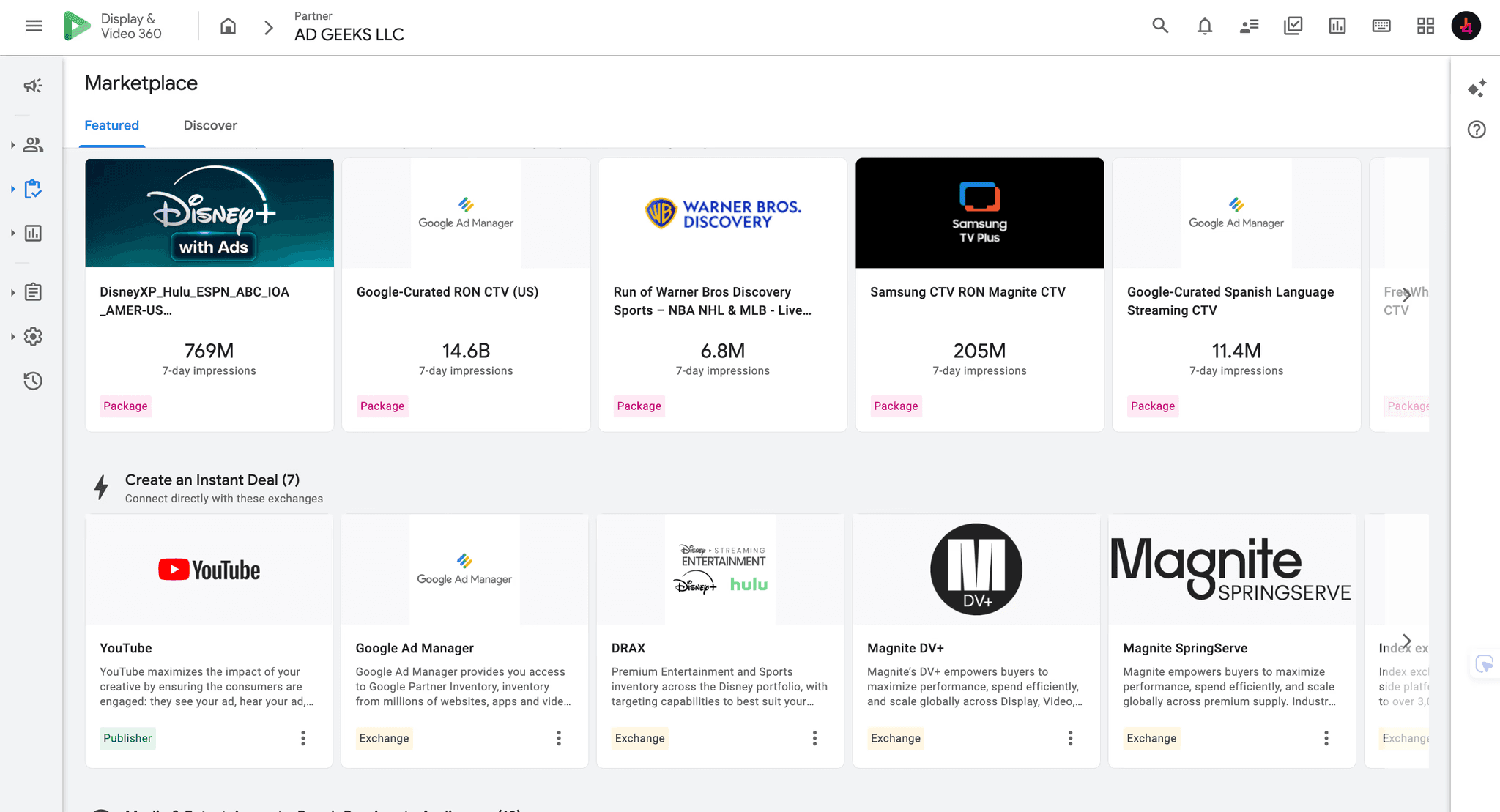
In DV360, Google lists supported routes that include Google Ad Manager, Spotify Ad Exchange, AdsWizz, Triton, Magnite DV+, Soundcast, DAX, Equativ and Nexxen. Availability still depends on the advertiser seat, market, seller, deal and current integration. Treat the DSP list as a route map, not an entitlement map.
For a closer look at one major publisher, see our Spotify advertising guide. The Spotify solution page also explains how Spotify can fit a broader media plan.
How do audio ad formats and companion display work?
The core unit is an in-stream audio spot, commonly produced in 15-second and 30-second versions. Publishers may accept other durations, but duration is a supply rule, not a universal DSP rule. Build the media plan first, then confirm the trafficking sheet for every seller.
Many environments support a companion display asset that appears in the player while the audio runs. The companion gives the listener a visible brand cue and a clickable path to the landing page. It should reinforce the spoken message, not introduce a second offer. Companion availability and dimensions vary, so never assume one image will serve everywhere.
DV360 serves audio with VAST, the same industry framework used for in-stream video. Google notes that audio VAST contains audio-only media and that audio and video assets cannot be mixed inside the wrong creative type. Third-party audio VAST tags can also be used when supported. IAB Tech Lab added audio advertising integration in VAST 4.1 and continues to maintain the VAST standard.
For an overview of formats available through AdGeeks, including audio and companion units, visit the audio advertising format page.
How should you target programmatic audio campaigns?
Start with the buying objective, then layer only the signals that improve it. Common options include geography, demographic segments, first-party audiences, device, daypart, contextual category, music or podcast genre, content type and deal-specific publisher data.
Awareness: prioritize eligible reach, controlled frequency, premium context and completed listens.
Consideration: align contextual or audience signals with a clear spoken benefit and relevant landing page.
Action: add first-party audiences, sequential messaging or retargeting where consent and platform capabilities allow.
Do not make the audience so narrow that the line item cannot learn or spend. Audio supply is smaller than display supply, and every added filter reduces the eligible pool. Keep separate line items for materially different content types or deal routes so delivery and performance remain explainable.
What does programmatic audio cost in 2026?
Most programmatic audio is transacted on a CPM basis, but there is no single market price that applies across all publishers. Open-auction clearing prices, curated packages, premium podcast deals and guaranteed reservations can differ materially. Geography, season, audience scarcity, data, inventory quality and demand all affect the final media CPM.
Budget approval should separate 5 layers: working media, DSP or platform fees, audience data, ad serving or verification, and agency or managed-service fees. Ask whether quoted CPMs are media-only or all-in. Also confirm minimum spend, currency, tax, cancellation and make-good terms before accepting a deal.
DV360 and Adform commercial terms depend on the access agreement and service model. Our Adform pricing guide explains the main cost layers, while the DV360 pricing guide covers access and fee structures. Neither platform should be reduced to one universal percentage.
DV360 vs Adform: which route fits an audio plan?
Decision factor | DV360 | Adform |
|---|---|---|
Best operational fit | Teams already using Google Marketing Platform, CM360 or cross-channel DV360 buying | Teams seeking an independent omnichannel DSP, especially with strong European operations |
Audio setup | Dedicated audio line items, content-type controls, open auction and deal activation | Audio activation within an omnichannel campaign workflow, subject to contracted supply and market access |
Spotify route | Spotify Ad Exchange is listed by Google as supported audio supply | Spotify access should be confirmed for the specific Adform seat, market and deal |
Measurement | Strong fit with CM360-based ad serving and cross-channel reporting | Adform tracking and reporting with applicable third-party integrations |
What to verify | Exchange or deal eligibility, fee schedule, creative approval and market availability | Inventory path, deal terms, measurement setup, fee schedule and market availability |
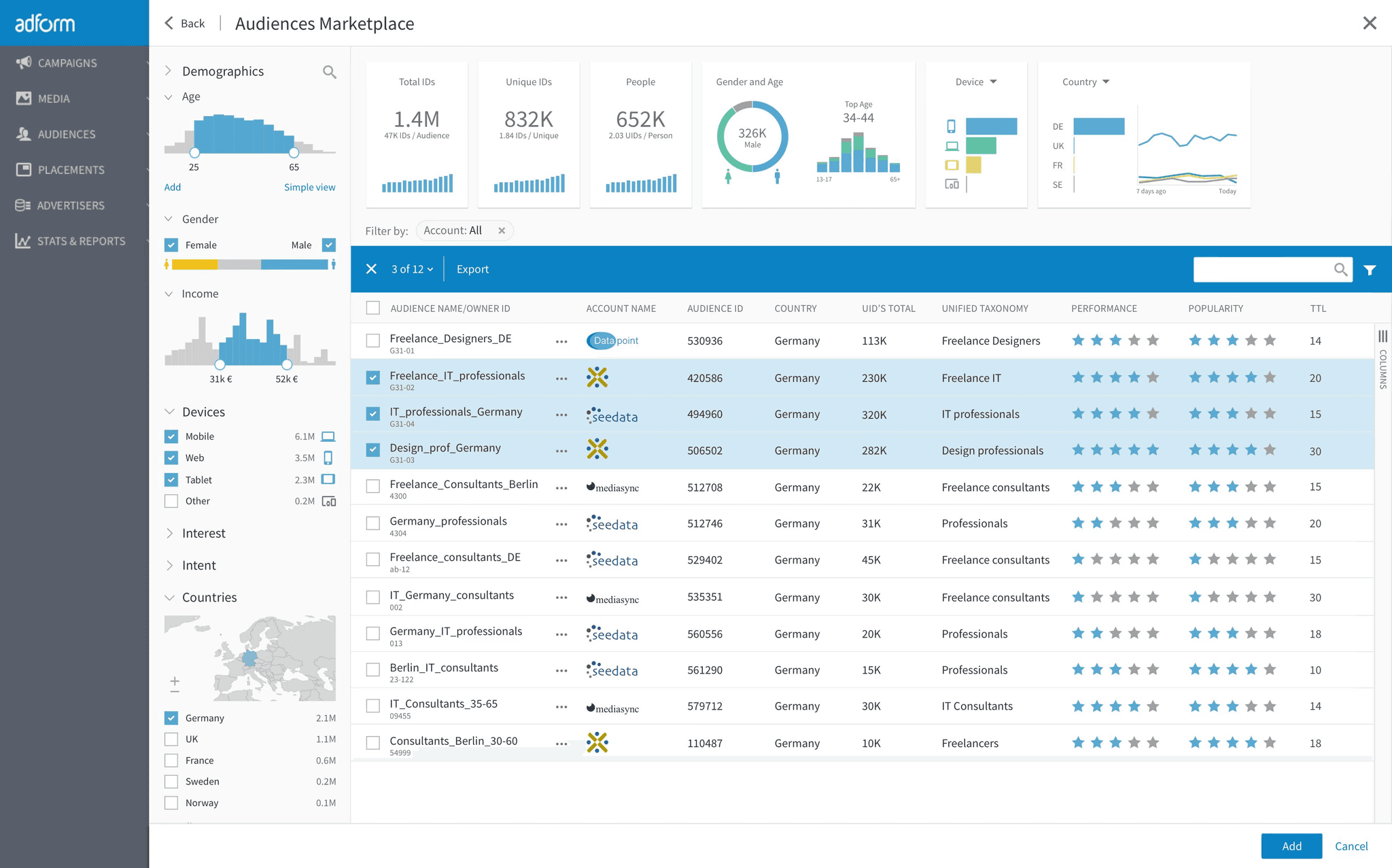
The right platform is the one that can access the required supply, use the required audiences and measure the intended outcome under a clear commercial model. A multi-DSP plan can make sense, but only when duplicated reach and frequency are managed deliberately. For partner-selection criteria, use our programmatic agency guide.
How should programmatic audio be measured?
Begin with delivery quality: impressions, spend, win rate, reach, frequency and pacing. Then add audio-specific engagement such as starts, first quartile, midpoint, third quartile, completes and completion rate when the publisher and tag expose those events. Companion impressions and clicks should be reported separately from audio listens.
Business measurement can include site visits, conversions, brand lift, search lift, store visits or matched sales, depending on scale and data access. Do not interpret a click-through rate as the main verdict on a screen-free format. Audio often creates memory and later action, so lift studies and controlled cross-channel attribution can be more appropriate than last-click reporting.
Podcast measurement requires extra care. IAB Tech Lab explains that episodes may be downloaded and consumed later, so measurement can rely on server logs rather than a continuously connected player. Request the vendor's measurement methodology and confirm whether reporting represents downloads, audience, ad delivery or player events.
What should a programmatic audio creative QA checklist include?
Confirm the seller sheet. Check accepted duration, file type, bitrate, sample rate, loudness, maximum size, VAST version and companion requirements.
Match the slot exactly. Produce separate 15-second and 30-second masters where both are planned. Do not rely on automatic trimming.
Front-load recognition. Establish the brand and benefit early. Google recommends repeating the brand name 2-3 times.
Control the script length. Google suggests roughly 40 words for 15 seconds and 55-75 words for 30 seconds. Read the final script aloud at a natural pace.
Mix for real listening. Balance voice, music and effects. Test on earbuds, a phone speaker, a laptop and a car-style speaker profile.
Use one clear action. Make the CTA easy to remember. Pair it with a short, relevant landing page or companion click.
Build companions intentionally. Use approved sizes, readable branding, safe margins and the same offer as the audio.
Validate tracking. Test landing URLs, macros, VAST responses, event firing, consent behavior and third-party measurement.
Check policy and rights. Confirm music, voice and sound-effect licenses plus category restrictions for every market.
Run a controlled test. Launch with limited budget, inspect delivery by exchange, device, content type and creative, then scale.
How do you build a programmatic audio plan?
Define the audience and business outcome first. Map the listening contexts where audio adds incremental reach, then choose publishers and buying routes. Confirm inventory and commercial access before production. Build at least 2 scripts or voice treatments, prepare companion assets, set a frequency rule and document the measurement framework before launch.
After launch, review pacing, supply concentration, frequency and completion by content type. A campaign that spends only through one exchange is not automatically diversified because several exchanges were targeted. Inspect seller-level delivery and use exclusions or separate deals when quality or transparency is weak.
AdGeeks can help map inventory, choose the DSP route, QA audio and companion assets, activate deals and structure reporting across audio and the wider media mix.
Frequently asked questions
Can audio ads be bought programmatically?
Yes. DSPs can buy eligible streaming music, podcast, digital radio and other audio impressions through open auctions or private deals. Access varies by DSP seat, publisher, market and contract.
Is Spotify available through programmatic DSPs?
Yes. Google lists Spotify Ad Exchange as supported audio supply in DV360. Confirm current format, market and deal eligibility for the exact advertiser seat before planning delivery.
What is the standard length for a programmatic audio ad?
15-second and 30-second spots are common, but publisher rules vary. Always use the seller's current trafficking sheet as the final specification.
Do audio ads need a companion banner?
Not always. Some publishers support or require a companion display unit, while others serve audio without one. Confirm availability, dimensions and click behavior by supply source.
How is programmatic audio priced?
It is commonly bought on a CPM basis. The media rate depends on supply, audience, market, season and deal type, while DSP, data, verification and service fees may be added separately.
Which KPIs matter most for audio advertising?
Use reach, frequency, completed listens and completion rate for delivery quality, then connect exposure to brand lift, site behavior, conversions or sales where the measurement design allows.
Is podcast measurement the same as streaming audio measurement?
No. Podcast episodes may be downloaded and measured through server logs, while streaming environments can expose connected-player events. Ask vendors exactly how downloads, audience and ad delivery are defined.
Official sources
Google Display & Video 360 Help, Purchase audio inventory, accessed October 19, 2026.
Google Display & Video 360 Help, Audio creatives, accessed October 19, 2026.
Google Display & Video 360 Help, Guidelines for audio creatives, accessed October 19, 2026.
Google Display & Video 360 Help, Audio targeting, accessed October 19, 2026.
Google Display & Video 360 Help, Create YouTube audio line items, accessed October 19, 2026.
IAB Tech Lab, Digital Video Ad Serving Template (VAST), accessed October 19, 2026.
IAB Tech Lab, Podcast Measurement Technical Guidelines, accessed October 19, 2026.