If you are researching DV360 pricing, the first thing to understand is that Google Display & Video 360 does not work like Google Ads, where an advertiser can simply create an account and start buying media with a publicly listed platform price.
DV360 is an enterprise programmatic advertising platform. The actual cost of using it depends on how access is structured, the media you purchase, the commercial terms attached to the account, and whether you work directly with Google or through a programmatic partner.
For independent agencies and growing brands, the important question is therefore not only “How much does DV360 cost?” but also “How can I access DV360 without taking on an enterprise-level commercial commitment?”
Quick answer: How much does DV360 cost?
There is no single public flat monthly price for DV360.
Your total cost can involve several components:
Cost component | What it means |
Media spend | The money actually spent buying impressions and inventory |
DV360 platform fees | Fees associated with using Display & Video 360 under the applicable commercial agreement |
Data costs | Additional costs when using certain audience or data products |
Creative/ad serving costs | Depending on the campaign setup and measurement stack |
Management fees | Agency or trading fees if another company manages campaigns for you |
Partner fees or markup | May apply when accessing DV360 through a third-party partner |
This means two companies can use DV360 for very different total costs even when they spend the same amount on media.
Google’s own documentation confirms that Display & Video 360 partner accounts can have a platform fee calculated as a percentage of media spend, with the exact arrangement depending on the applicable contract.
The bigger issue for smaller advertisers is often access, rather than the software itself.
What is DV360?
Display & Video 360 (DV360) is Google’s enterprise demand-side platform for programmatic advertising.
It allows advertisers and agencies to plan, buy, optimize and measure campaigns across programmatic inventory.
Unlike Google Ads, which is primarily designed around self-service advertising products, DV360 operates through a partner and advertiser account structure.
Google describes DV360 partners as organizations such as agencies, trading desks and large advertisers. Multiple advertiser accounts can exist underneath a single partner.
This structure is important because it explains why getting access to DV360 can be different from simply opening a normal Google Ads account.
Why is DV360 more complicated than Google Ads?
Google Ads is designed to let businesses create campaigns directly through a relatively straightforward self-service workflow.
DV360 is built for more sophisticated programmatic operations.
A DV360 setup can involve:
Partner accounts
Advertiser accounts
Campaign and insertion-order structures
Line items
Audience targeting
Inventory and exchange access
Campaign Manager 360 integrations
User permissions
Billing profiles
Brand-safety controls
Programmatic optimization
Google’s documentation shows that creating a DV360 advertiser requires access to a DV360 partner, and partner administrators can create advertisers underneath that partner.
This is one reason companies looking for DV360 access often encounter agencies, trading desks and partner organizations rather than simply signing up for an account themselves.
Is DV360 free?
No, DV360 should not be thought of as a free advertising platform.
There may not be a simple monthly software subscription displayed on a public pricing page, but using DV360 involves commercial terms and media costs.
The distinction is important:
Account access ≠ free advertising.
Even if a company obtains access to a DV360 advertiser account, it still needs a media budget to purchase advertising inventory.
There can also be platform, data, ad-serving or management costs depending on the setup.
So when someone asks:
“Can I get DV360 for free?”
The more useful answer is:
You may be able to obtain access without paying a traditional software subscription, but you cannot run meaningful programmatic campaigns without paying for media and any applicable platform or service costs.
Do you need a minimum spend for DV360?
This is one of the most common questions from smaller agencies.
The answer depends on how you obtain DV360 access and the commercial terms attached to that access.
A direct enterprise relationship can involve requirements that make DV360 impractical for smaller advertisers or agencies.
However, access through a programmatic partner can use a different commercial model.
For example, AdGeeks provides partner-seat access to DV360 with zero monthly spend minimums, allowing independent agencies and brands to use the platform without committing to a fixed monthly media threshold.
That does not mean campaigns are free. It means the access model does not impose a required monthly spend floor.
This distinction is critical when comparing DV360 partners.
How can a small agency get DV360 access?
There are several possible routes.
1. Direct relationship with Google
A sufficiently established organization can pursue its own relationship with Google Marketing Platform.
This can provide significant control, but it may not be the most practical route for a smaller agency.
Google’s partner documentation indicates that companies seeking partner status are evaluated based on factors including their business, team structure, services, pricing practices, client satisfaction and ability to support Google Marketing Platform products.
For a small agency that simply wants to start buying programmatic media, building an enterprise infrastructure relationship may be unnecessary overhead.
2. Work with a DV360 partner
Another route is to work with an organization that already operates DV360 infrastructure and can provide access to clients or agencies.
This can be useful when the agency wants:
DV360 access
Technical onboarding
Campaign setup support
Programmatic trading assistance
A lower commercial barrier
Access to enterprise programmatic inventory
Help understanding the platform
The key is to determine exactly what type of access the partner provides.
Some companies primarily offer managed media buying. Others provide platform access with varying degrees of technical support.
3. Use a managed-service agency
A third option is to simply outsource programmatic buying.
Instead of operating DV360 yourself, the agency handles:
Campaign creation
Targeting
Bidding
Optimization
Reporting
Troubleshooting
This can be appropriate if you do not want to operate a DSP internally.
The trade-off is control. If your goal is to learn and operate DV360 yourself, managed service is fundamentally different from platform access.
DV360 direct access vs. partner access
The right choice depends on what your business actually needs.
Direct enterprise relationship | DV360 partner | |
Platform access | Direct | Through partner infrastructure |
Setup complexity | Higher | Usually lower |
Commercial requirements | Can be more demanding | Depends on partner |
Technical support | Available through the relevant relationship | Depends on partner |
Platform control | High | Depends on access model |
Best for | Larger organizations with substantial infrastructure needs | Agencies and brands wanting faster access |
There is no universally correct model.
A large agency spending heavily across many advertisers may prefer direct infrastructure.
A smaller agency that wants to test programmatic, develop internal expertise or launch campaigns without a large monthly commitment may prefer a partner model.
What should you ask a DV360 partner before signing up?
The phrase “DV360 access” can mean very different things.
Before choosing a partner, ask these questions.
1. Is this actual DV360 access?
Are you receiving access to a DV360 advertiser/partner environment, or are you simply hiring the company to run campaigns for you?
Those are different services.
2. Is there a monthly minimum spend?
Ask for the minimum in writing.
A company may advertise “DV360 access” while requiring a substantial recurring media commitment.
3. What fees are added to media spend?
Ask specifically about:
Platform fees
Partner markup
Management fees
Data fees
Ad-serving fees
Setup fees
You want to understand your total effective cost, not just the headline access price.
4. Who owns the account?
This is especially important for agencies.
Ask whether the advertiser account is associated with your business and what happens to your campaigns, data and historical reporting if you stop working with the partner.
5. Can your team operate the platform?
If your goal is to develop internal programmatic expertise, ask whether the partner provides hands-on onboarding and technical support.
A login without training may not be enough.
6. Which inventory can you access?
Ask about the actual inventory and exchanges available to you rather than assuming that every partner provides identical access.
7. What happens when something goes wrong?
Programmatic advertising involves troubleshooting.
Ask who handles:
Account problems
Policy issues
Tracking problems
Deal setup
Campaign delivery issues
Billing questions
The quality of support can be just as important as the access itself.
How much should you budget for DV360?
There is no universal “correct” DV360 budget.
A better approach is to separate your budget into three categories:
1. Media budget
The amount you actually want to spend buying advertising inventory.
2. Platform and data costs
Any applicable DV360, data, ad-serving or other technology costs.
3. Management costs
The cost of having an agency, consultant or trading team manage the campaigns.
For example, an agency could have a $10,000 media budget but pay a different effective total cost depending on its platform arrangement, data usage and management model.
This is why comparing providers purely on a quoted percentage or monthly fee can be misleading.
Is DV360 worth it for a small agency?
It can be, especially when the agency needs capabilities that go beyond standard Google Ads.
DV360 becomes more interesting when an agency wants to:
Run programmatic display and video campaigns
Access broader programmatic inventory
Work with private marketplace deals
Build more sophisticated audience strategies
Manage multiple clients
Develop an internal programmatic trading capability
Combine programmatic buying with Google’s broader advertising ecosystem
Access enterprise-grade campaign controls without building an entire trading desk from scratch
However, DV360 is not automatically the right choice for every advertiser.
If your campaigns are small, highly focused on search demand, or do not require programmatic buying capabilities, Google Ads may be sufficient.
The question is not whether DV360 is “better.”
The question is whether the additional control, inventory access and programmatic capabilities justify the operational and commercial complexity for your business.
How AdGeeks approaches DV360 access
AdGeeks is a programmatic infrastructure partner focused on making enterprise DSP access more practical for independent agencies and brands.
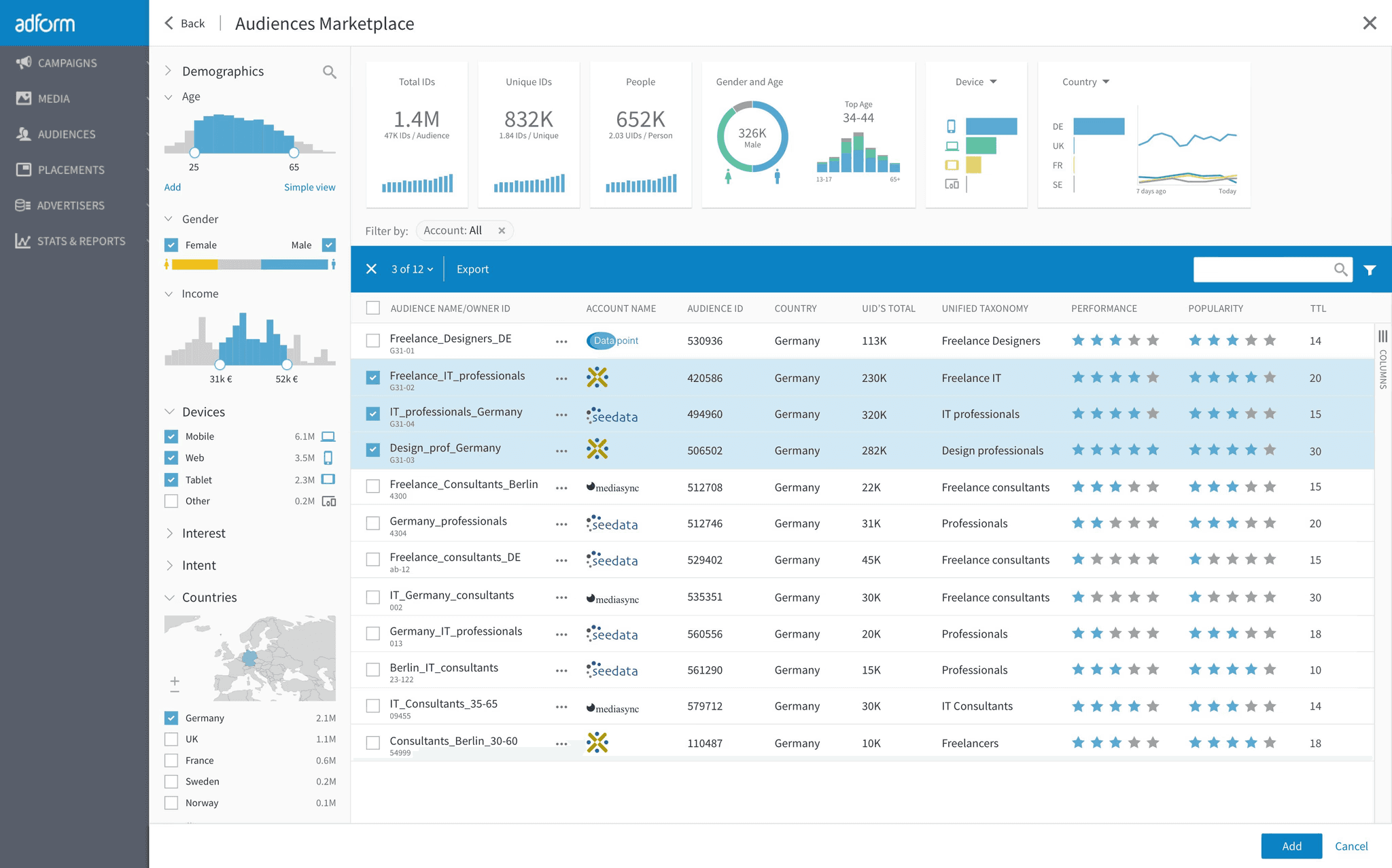
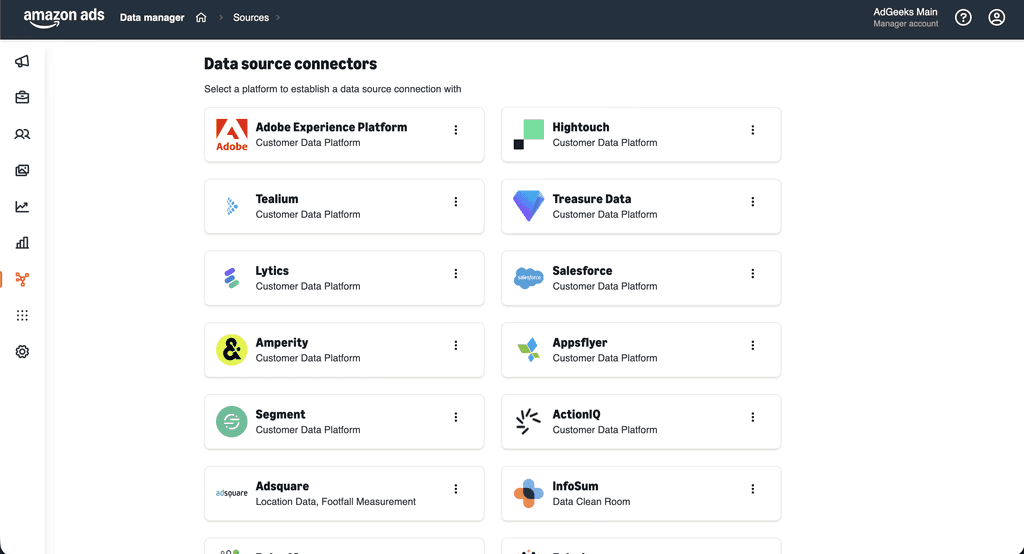
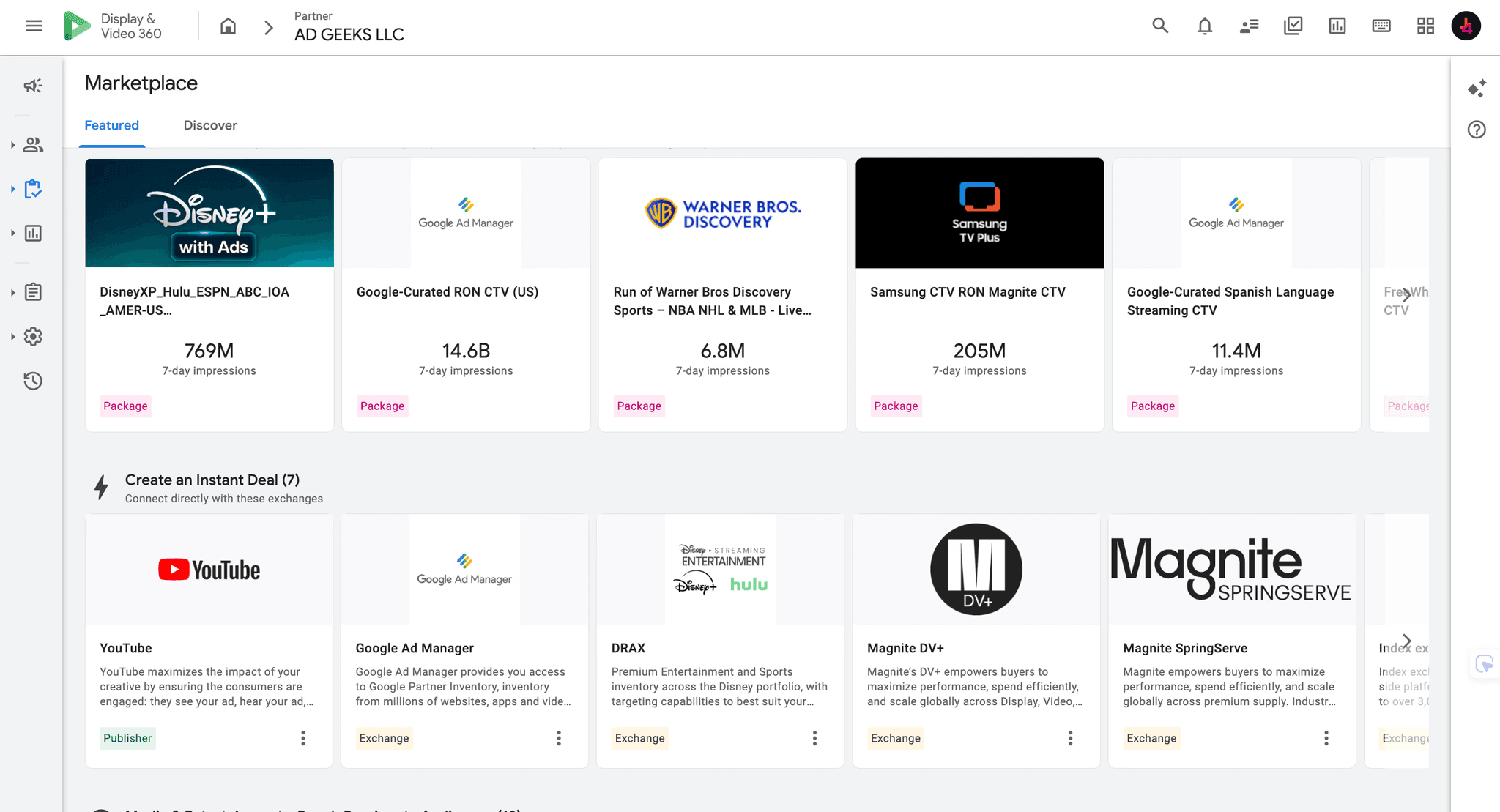
Through its partner-seat model, AdGeeks provides access to Google DV360, Amazon DSP and Adform from a single programmatic infrastructure partner.
For DV360 specifically, the goal is not simply to provide credentials.
The model combines platform access with technical onboarding and campaign support, while avoiding a fixed monthly spend minimum.
That can make the model particularly relevant for an independent agency that wants to operate programmatic campaigns without immediately building its own enterprise DSP infrastructure.
The important distinction is:
You are not paying for “free DV360.” You are using a different access model to reach enterprise programmatic infrastructure without the same upfront commercial barrier.
DV360 pricing: the questions buyers should really ask
If you are comparing DV360 providers in 2026, don’t ask only:
“How much does DV360 cost?”
Ask:
“What is my total cost to operate DV360?”
Then break it down into:
Media spend + platform fees + data costs + ad-serving costs + management fees + partner markup
Next, ask:
“What am I actually getting for those costs?”
A low access fee is not necessarily a good deal if you receive no technical support, limited account control or poor transparency.
Likewise, a higher fee can make sense if the provider gives you strong onboarding, trading support and infrastructure that would otherwise be expensive to build internally.
Frequently Asked Questions
How much does DV360 cost?
DV360 does not have one universal public price. Total costs depend on the commercial arrangement, media spend, platform fees, data, ad serving and whether a partner or agency manages campaigns.
Is DV360 free?
No. While access may not be structured as a traditional monthly software subscription, advertising requires media spend and may involve platform, data, ad-serving or service costs.
Can a small agency use DV360?
Yes. A small agency can use DV360 through an appropriate access model, including working with a DV360 partner. The practical challenge is usually obtaining suitable access and commercial terms.
Is there a minimum spend for DV360?
There is no single universal minimum that applies to every access arrangement. Requirements depend on the relationship and commercial structure. Some DV360 partners offer access without a fixed monthly spend minimum.
How do I get DV360 access?
You can pursue a direct relationship with Google Marketing Platform or work with a DV360 partner that provides access through its existing infrastructure.
What is the difference between DV360 and Google Ads?
Google Ads is primarily a self-service advertising platform, while DV360 is an enterprise demand-side platform designed for programmatic media buying and more advanced campaign, inventory, audience and workflow management.
Is DV360 worth it for small businesses?
It depends on the business. DV360 can be valuable when an advertiser needs programmatic inventory, sophisticated targeting, video and display buying, or agency-level campaign control. For businesses focused mainly on search advertising, Google Ads may be sufficient.
What should I look for in a DV360 partner?
Look at the access model, minimum spend, total fees, account ownership, inventory access, technical onboarding, campaign support, transparency and what happens to your account and data if you leave.
The Bottom Line
DV360 pricing is not simply a monthly subscription price.
The real cost depends on the relationship through which you access the platform and the full cost structure around your campaigns.
For large organizations, a direct enterprise relationship may make sense. For independent agencies and growing brands, a DV360 partner can provide a more accessible route to enterprise programmatic infrastructure.
The smartest comparison is therefore not:
“Who has the cheapest DV360 access?”
It is:
“Who gives us the right level of DV360 access, support and control at the lowest transparent total cost?”
That is the question agencies should answer before choosing a DV360 access provider.