You do not always need an enterprise-scale media budget to run programmatic advertising.
The real constraint is usually not the technology itself.
It is the access model, minimum commitment, service level and amount of campaign scale required to make programmatic buying effective.
Some DSPs are designed around enterprise contracts. Others support self-service access. Some providers offer partner access with lower commitments than a direct enterprise relationship. And some platforms allow advertisers to start relatively small and move into managed support as spend grows.
That makes the question “Which programmatic platform has the lowest minimum spend?” more complicated than it first appears.
Quick answer: Low-minimum-spend programmatic access exists, but the best option depends on how much you want to spend, whether your team can manage campaigns internally, and which channels you need. StackAdapt and Choozle offer comparatively accessible self-service models, Amazon DSP offers self-service alongside a higher-threshold managed option, while DV360 and Adform access often depends on the partner or commercial agreement.
This guide compares the most practical programmatic access models for lower-budget advertisers in 2026 and explains what you gain and what you may give up - when you choose a lower minimum.
Low-minimum-spend programmatic platforms at a glance
Platform | Access model | Public minimum | Best fit | Main consideration |
|---|---|---|---|---|
StackAdapt | Self-service / hybrid / managed | No single universal standard DSP minimum publicly stated | Mid-market, agencies, experienced self-service teams | Budget still needs enough scale for optimization |
Choozle | Self-service / managed | $15K over 90 days self-service; $10K/month managed | Agencies, growth brands, in-house teams | More explicit spend expectations |
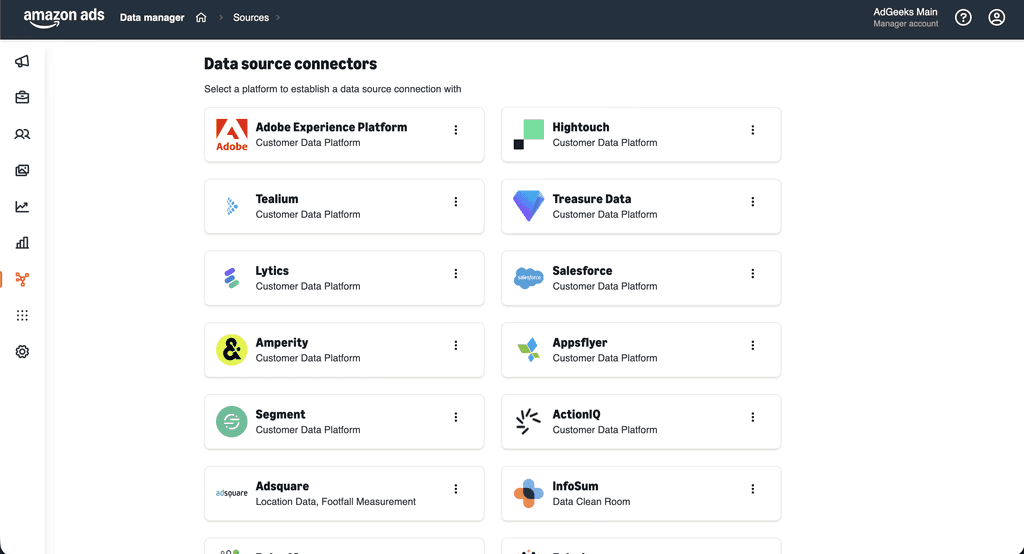
Amazon DSP | Self-service / managed | Managed service typically $50K; self-service terms differ | Retail, ecommerce, Amazon audiences | Managed option has a much higher entry point |
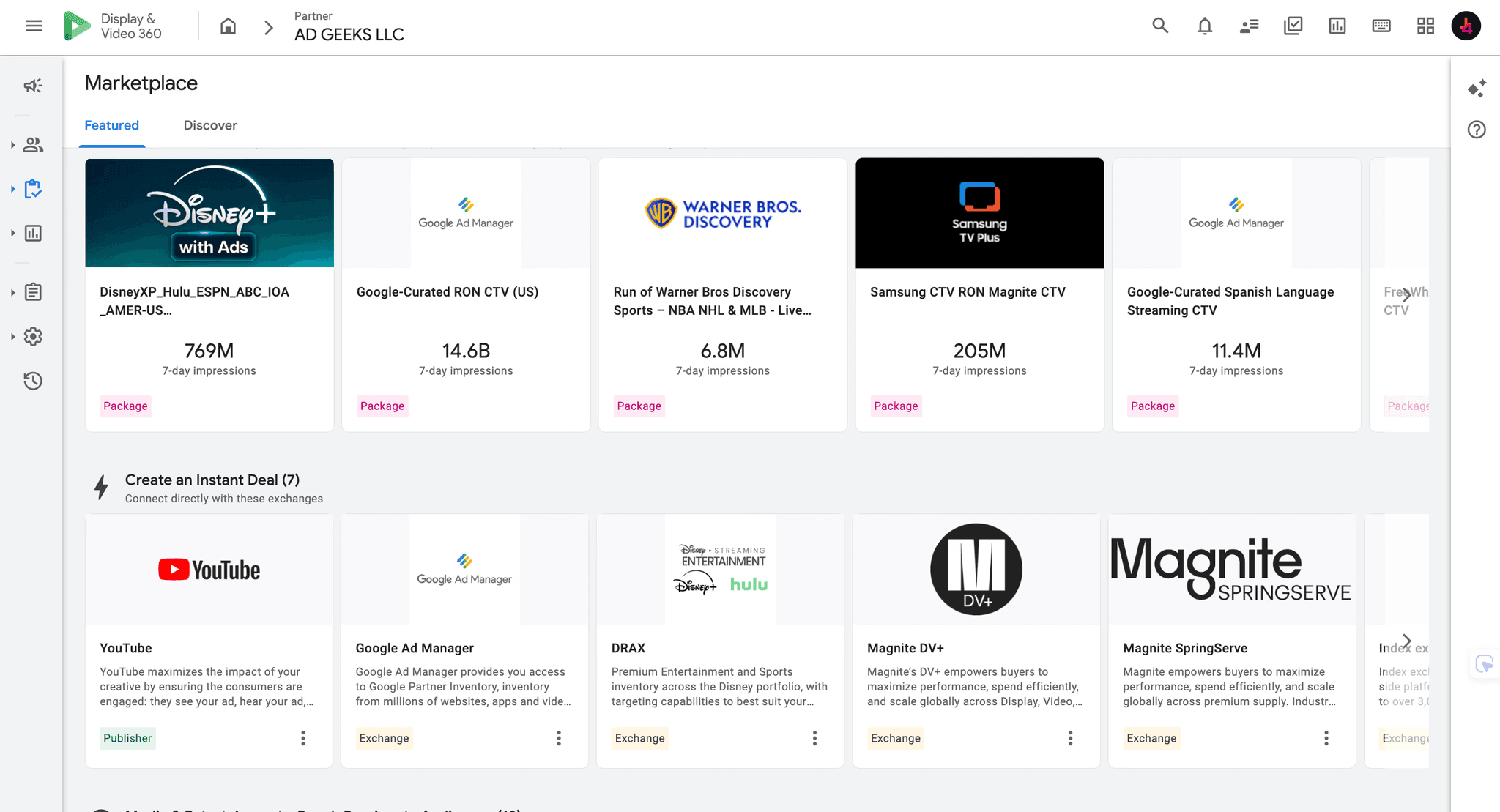
DV360 | Partner / managed / hybrid / enterprise | No universal public minimum | Brands and agencies needing enterprise programmatic | Access terms vary significantly by partner |
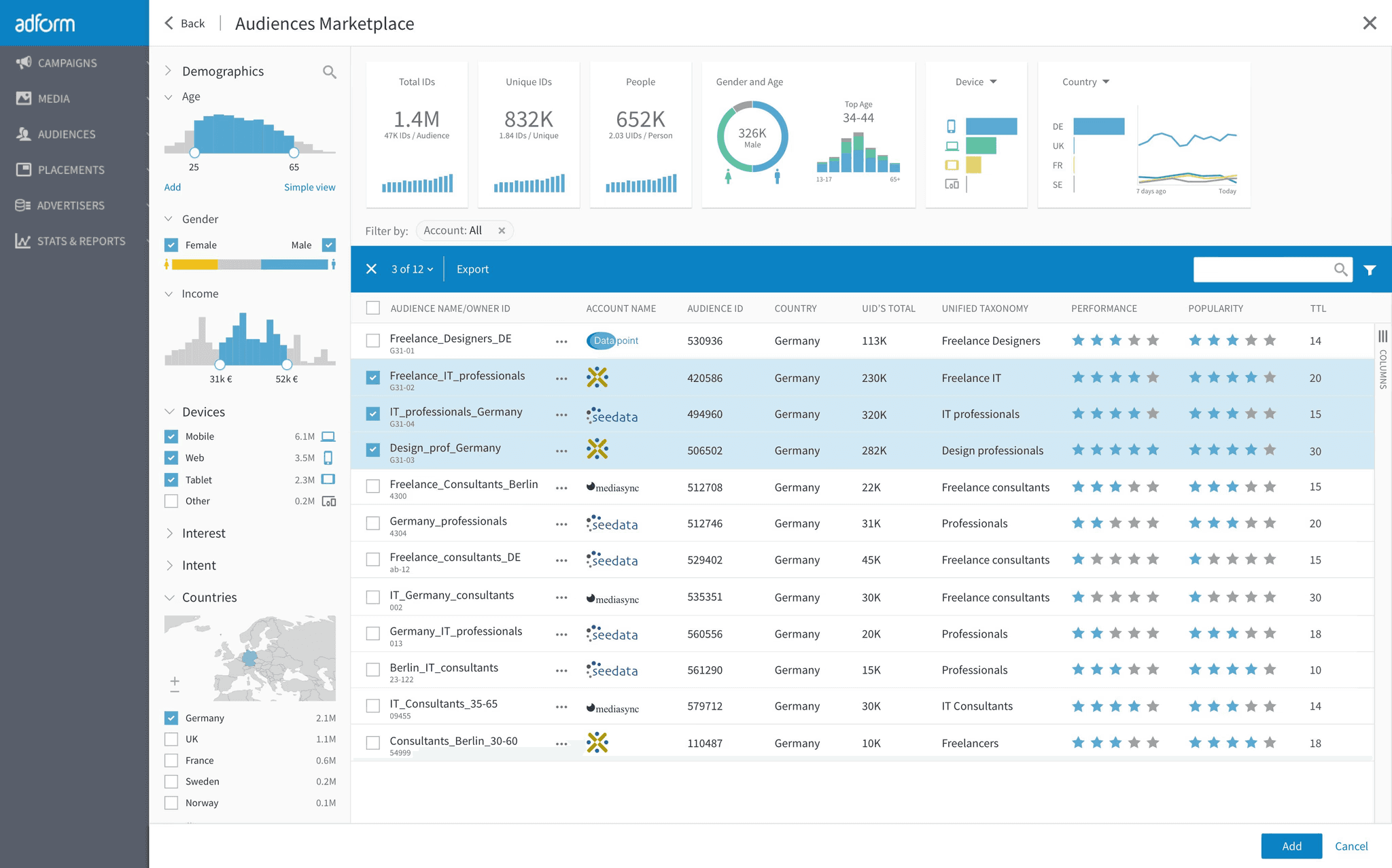
Adform | Direct / partner / managed | Contract-dependent | European/global omnichannel advertisers | Commercial agreement determines access |
Flexible CTV / self-service buying | Platform-specific | Varies | Smaller advertisers focused on streaming TV | Inventory and targeting depth may be narrower |
This is not a price quote.
Minimums and commercial structures can change by:
Country
Provider
Partner
Contract
Campaign format
Inventory
Service level
The useful comparison is therefore not simply:
“Which number is smallest?”
It is:
“Which access model gives our budget enough scale to work?”
What does “minimum spend” actually mean?
One of the biggest sources of confusion in programmatic advertising is that minimum spend can refer to several completely different things.
Platform minimum
The amount required to maintain access to a DSP.
Provider minimum
The amount an agency or reseller requires before it will provide access or support.
Managed-service minimum
The budget required before a provider will actively manage the campaign.
Campaign minimum
The smallest campaign budget a provider is willing to launch.
Inventory minimum
A minimum attached to a particular publisher, PMP or guaranteed deal.
Measurement minimum
A spend or impression threshold required for a lift study or measurement product.
These should never be treated as interchangeable.
A $20,000 provider minimum does not automatically mean the DSP itself requires $20,000.
That distinction is particularly important when comparing enterprise DSPs with self-service platforms.
For a deeper cost breakdown, see our DSP Pricing Comparison 2026.
StackAdapt
StackAdapt is one of the more accessible options for advertisers that want multi-channel programmatic buying without beginning with a traditional enterprise DSP contract.
Its current plans support:
Self-service
Hybrid support
Managed service
Enterprise arrangements
StackAdapt positions its entry-level model around marketers and lean organizations that want direct self-service control.
Depending on the plan, advertisers can access channels such as:
Display
Native
Video
Connected TV
Audio
Digital out-of-home
In-game
Other programmatic formats
Does StackAdapt have a minimum spend?
StackAdapt does not currently publish one universal minimum media-spend requirement for all standard DSP access on its main plans page.
That does not mean every campaign budget is automatically viable.
Programmatic advertising requires enough volume to:
Test audiences
Generate impressions
Compare creative
Allow algorithms to optimize
Reach statistically useful conclusions
StackAdapt itself emphasizes that campaigns need enough budget to generate meaningful scale.
The distinction is important:
No published universal minimum ≠ every tiny budget is strategically sensible.
When StackAdapt makes sense for lower budgets
StackAdapt can be attractive when:
Your team can manage campaigns internally
You want self-service access
You need more than one programmatic channel
You want a path from self-service to managed support
You do not need a complex Google Partner structure
You want to begin with a focused campaign and scale later
It can be particularly useful for mid-market advertisers that have outgrown simpler ad networks but are not ready for a full enterprise programmatic operating model.
What you still need internally
Lower access friction does not remove the need for programmatic expertise.
Someone still needs to manage:
Campaign structure
Audiences
Inventory
Bids
Frequency
Creative
Optimization
Reporting
Brand safety
If the team lacks those capabilities, a cheaper self-service model can become expensive through poor execution.
Choozle
Choozle provides one of the clearer publicly documented lower-market programmatic access models.
The platform offers both:
Self-service
Managed service
Its current self-service model requires $15,000 in media spend over a 90-day period.
That works out to an average of roughly $5,000 per month across the quarter, although actual campaign pacing does not necessarily need to be equal every month.
Choozle's managed service currently requires $10,000 in media spend per month.
Why Choozle can work for smaller advertisers
Choozle is designed around agencies and marketers that want more control over programmatic buying without requiring a large enterprise media operation.
Depending on the campaign setup, the platform can support channels including:
Display
Video
Connected TV
Native
Audio
Digital out-of-home
Its own campaign-planning materials even break planning guidance into budget bands beginning at $1K–$5K, although the account-level spend requirement should still be considered when evaluating access.
That makes Choozle useful for understanding an important principle:
A platform may support smaller individual campaigns while still expecting a larger quarterly account-level media commitment.
Choozle self-service vs managed
Self-service | Managed | |
|---|---|---|
Published media requirement | $15K over 90 days | $10K/month |
Campaign operation | Advertiser | Choozle team |
Internal expertise needed | Higher | Lower |
Control | High | Shared / provider-led |
Best for | Agencies and in-house marketers | Teams needing execution support |
This is a good example of how service level affects minimum spend.
Amazon DSP
Amazon DSP is often associated with large retail and ecommerce budgets, but its access model is more nuanced than a single minimum-spend figure.
Amazon offers:
Self-service
Managed service
Amazon's managed-service option typically requires a $50,000 minimum spend, although Amazon notes that the threshold may vary by country.
Self-service works differently.
Advertisers manage campaigns themselves and do not pay the managed-service fee.
Why Amazon DSP can still matter to lower-budget advertisers
The value of Amazon DSP is not primarily cheap access.
Its differentiation is Amazon's data and media ecosystem.
Depending on campaign eligibility and market, advertisers may benefit from:
Amazon shopping signals
In-market behavior
Amazon audiences
Display
Video
Streaming TV
Prime Video inventory
Third-party inventory
Retail-focused measurement
For a retailer, a somewhat higher campaign cost can still make sense if the audience signal is materially more valuable.
The $50K number is often misunderstood
The important wording is:
Amazon managed service typically requires $50K.
That does not mean:
Every Amazon DSP campaign everywhere requires $50K.
The self-service and managed models should be evaluated separately.
This is exactly why minimum-spend comparisons need context.
DV360
Display & Video 360 is an enterprise DSP, but there is no single public Google minimum media spend that applies universally to every advertiser.
DV360 advertiser accounts operate inside Partner structures.
Access can therefore come through:
Direct enterprise arrangements
DV360 Partners
Managed services
Hybrid access models
The commercial terms can vary significantly.
Can you use DV360 without enterprise-scale spend?
Potentially, yes - depending on the access provider.
A DV360 partner may offer an advertiser account under its Partner structure with commercial terms that differ from another provider's requirements.
That is why search results often show conflicting claims such as:
$10K minimum
$25K minimum
$50K minimum
$100K minimum
No fixed minimum
Those figures may describe different providers, not a universal Google rule.
For a full explanation, read our How to Get DV360 Access in 2026.
What DV360 actually charges
DV360's platform fee is defined by contract and calculated as a percentage of media cost.
Billable campaign cost can also include:
Media
Platform fees
Platform add-ons
Third-party fees
Country-specific surcharges
Taxes
This means a low access minimum does not necessarily make DV360 a low-cost platform overall.
You should evaluate the full operating model.
When lower-budget DV360 access makes sense
DV360 may still be worthwhile when your budget is smaller but your campaign specifically needs capabilities such as:
YouTube within a wider programmatic strategy
Premium Connected TV
Private Marketplace deals
Programmatic Guaranteed
Advanced audience strategy
Cross-channel frequency control
Enterprise reporting
Google Marketing Platform integration
The question should be:
“Do we need DV360 capabilities?”
not simply:
“Can we afford the minimum?”
Adform
Adform is another enterprise-grade DSP where pricing and minimum commitments are primarily contract-based.
There is no single universal public Adform minimum that applies to every advertiser.
Terms may depend on:
Direct vs partner access
Media volume
Market
Service level
Contract
Product scope
Adform is particularly relevant for advertisers that need:
European market strength
Display
Video
CTV
Audio
DOOH
Identity flexibility
Omnichannel activation
Can Adform work for mid-market advertisers?
Yes, particularly through the right access arrangement.
Direct enterprise access may carry different commercial requirements than access through a partner.
That makes Adform similar to DV360 in one important way:
The access provider matters almost as much as the DSP itself.
If Adform is on your shortlist, read Adform Pricing Explained.
Low-minimum CTV advertising
Connected TV is often assumed to require large budgets.
That is not always true.
CTV buying now exists across:
Enterprise DSPs
Independent DSPs
Publisher self-service platforms
Streaming-TV ad managers
Managed programmatic providers
This creates more entry points for advertisers that cannot justify a large national CTV budget.
The trade-off is usually breadth and control.
A lower-entry CTV platform may offer:
Fewer publishers
Simpler audiences
Less deal flexibility
More limited frequency controls
Less sophisticated measurement
while a full DSP may provide broader programmatic inventory and deeper controls.
For a broader view of the channel, see our Connected TV advertising solution.
How much budget do you actually need for programmatic?
There is no universal answer.
A useful way to think about budget is by campaign complexity.
Under $5K
At this level, keep the campaign extremely focused.
A realistic strategy may involve:
One geography
One primary audience
One or two formats
Limited creative variants
A self-service platform that permits the budget
A narrow campaign objective
Trying to run:
CTV + display + audio + DOOH + five audiences + ten markets
on a $3,000 budget will usually create fragmentation rather than sophistication.
The platform may technically allow the campaign.
The budget may not allow it to learn.
$5K–$10K
This range provides more room for:
Audience testing
Display + video
Focused CTV
Retargeting
Geographic segmentation
Creative testing
This is where accessible self-service programmatic can start becoming more practical for a focused advertiser.
Choozle's quarterly self-service requirement, for example, roughly corresponds to this monthly scale on average.
$10K–$25K
This range creates significantly more flexibility.
Advertisers can begin considering:
Multiple channels
Multiple audiences
More sophisticated CTV
Several markets
Private marketplace testing
Managed-service options
Partner-access DSP arrangements
For many mid-market advertisers, this is where a real multi-channel programmatic strategy becomes more viable.
$25K–$50K
At this level, the available platform set expands further.
Campaigns can support:
Broader CTV
Premium video
More complex segmentation
Multi-market strategies
PMP deals
More meaningful testing
Dedicated management
DV360 or Adform partner access may become easier to justify depending on commercial terms.
$50K+
At $50K+ monthly or campaign-level media budgets, enterprise DSP economics often become easier to justify.
This range can support:
Broad CTV
Premium publisher deals
Multiple markets
Advanced audience testing
Cross-channel frequency planning
Retail data
Brand studies
More sophisticated measurement
Amazon's own managed DSP threshold begins around this level.
But higher spend does not automatically mean enterprise DSPs are the right choice.
The campaign requirements still matter.
Budget vs complexity: the rule most advertisers miss
A campaign budget should determine how many things you try to optimize at once.
Think of media budget as something that must be divided across:
Markets × Audiences × Channels × Creatives × Devices × Time
The more variables you add, the less data each variable receives.
For example:
A $10,000 campaign running:
One market
Two audiences
Two creatives
has far more learning density than a $10,000 campaign running:
Five countries
Six audiences
Four channels
Twelve creatives
The second campaign may look more sophisticated.
It may actually be harder to optimize.
Lower-budget programmatic works best when you reduce complexity before you reduce quality.
Self-service vs partner access vs managed service
Your media budget is only one part of the decision.
You also need to choose an operating model.
Model | Best for | Main advantage | Main cost |
|---|---|---|---|
Self-service | Experienced internal teams | Control + lower management cost | Internal expertise |
Partner access | Teams wanting enterprise DSP access | More platform choice | Partner commercial terms |
Managed service | Teams without traders | Execution included | Management fee / higher minimum |
Hybrid | Growing programmatic teams | Control + support | Shared operating cost |
Self-service can be cheaper - but only if you know what you're doing
Self-service removes or reduces external management fees.
But your organization still pays for:
Staff
Training
Campaign setup
Optimization
Reporting
Troubleshooting
QA
A badly run $10K self-service campaign can create less value than a well-run $15K managed campaign.
The goal is not to minimize fees.
It is to maximize useful media.
What do you sacrifice when you choose a lower minimum?
Lower minimum spend can improve accessibility, but it may come with trade-offs.
Less strategic support
The lowest-access tier may be almost entirely self-service.
Fewer premium deals
Some publisher relationships require meaningful scale.
Less measurement
Lift studies and advanced measurement often require larger audiences.
Less creative testing
Small budgets cannot support endless variants.
Reduced geographic complexity
Every additional market fragments spend.
Limited CTV scale
CTV CPMs can be higher than standard display.
Less room for algorithmic learning
Bidding systems need conversion and impression volume.
This does not mean lower-budget programmatic is ineffective.
It means the campaign must be designed differently.
Hidden costs to include in a low-budget plan
Minimum spend is not the same as total campaign cost.
You may also pay for:
DSP platform fees
Management
Audience data
Verification
Brand safety
Creative
Ad serving
Measurement
Premium inventory
At smaller budgets, these costs matter even more because fixed or percentage fees consume a larger proportion of total investment.
For a platform-by-platform cost comparison, use our DSP Pricing Comparison 2026.
What is the best low-minimum DSP?
There is no single winner.
The answer depends on your operating model.
Choose StackAdapt when:
You want self-service flexibility
You need multiple programmatic channels
Your team can manage campaigns
You want room to move into hybrid or managed support later
Choose Choozle when:
You want clearly published entry requirements
You are an agency or in-house marketer
Roughly $5K/month average quarterly media investment is realistic
You want a self-service programmatic workflow
Choose Amazon DSP when:
Amazon data is strategically valuable
Retail or ecommerce is central
You have self-service eligibility or enough budget for managed support
Prime Video / Amazon inventory matters
Choose DV360 when:
Google ecosystem integration matters
You need premium CTV
YouTube matters
Enterprise programmatic capabilities justify the complexity
A partner can provide an access model appropriate for your budget
Choose Adform when:
European markets are important
Omnichannel media matters
Identity flexibility is valuable
A suitable partner/access agreement is available
Best option by advertiser type
Advertiser | Strong starting options |
|---|---|
Small experienced media team | StackAdapt / Choozle |
Mid-market brand | StackAdapt / DV360 partner access / Choozle |
Ecommerce brand | Amazon DSP / DV360 |
Agency with smaller clients | StackAdapt / Choozle |
Agency with mixed client sizes | StackAdapt + DV360 / Adform |
European advertiser | Adform / DV360 / StackAdapt |
CTV-focused advertiser | DV360 / StackAdapt / Amazon DSP |
Retail advertiser | Amazon DSP / DV360 |
These are starting points, not universal rankings.
When DV360 still makes sense at a lower spend
DV360 should not automatically be excluded simply because your campaign is not enterprise-sized.
A smaller campaign may still need DV360 if the priority is:
YouTube integration
Premium CTV
Google audiences
Programmatic Guaranteed
Private deals
Advanced frequency controls
Campaign Manager 360 integration
The key is finding an access structure that makes economic sense.
That is where partner access can matter.
Read our How to Get DV360 Access in 2026 before assuming a random “DV360 minimum” found online applies to every advertiser.
When low-budget programmatic does not make sense
Sometimes the correct recommendation is not to use a DSP yet.
Programmatic may be premature when:
Your total media budget is extremely small
You need immediate direct-response volume
Search demand is the main opportunity
Your geography is tiny
You have no usable creative
You have no conversion tracking
You cannot generate enough impressions to optimize
In those cases, a simpler channel may produce more value.
Technology should not be added simply because it sounds sophisticated.
Red flags in “low minimum spend” offers
“No minimum” with high hidden fees
Ask for the full cost structure.
A cheap platform with no usable inventory
Access means little if the supply does not match your strategy.
No explanation of management responsibility
Who actually optimizes the campaign?
Unlimited channels on a tiny budget
More channels can destroy learning density.
A provider claiming a universal DV360 minimum
Ask whether the number is Google's requirement or the provider's own commercial threshold.
A provider quoting Amazon's $50K as a universal DSP minimum
Amazon publishes that figure specifically for its managed-service option.
No transparency into media spend
You should know how much of the budget reaches actual inventory.
Low-minimum programmatic decision matrix
Use these questions in order.
1. What is the actual media budget?
Ignore technology first.
Define the money available for media.
2. Who will operate the DSP?
Internal trader or provider?
3. Which channels are truly necessary?
Start with fewer.
4. Does the campaign need enterprise inventory?
If not, do not pay for complexity you do not use.
5. Is CTV essential?
If yes, make sure the budget can support CTV CPMs and frequency.
6. Do you need first-party or retail data?
That may influence the platform more than minimum spend.
7. How much measurement do you need?
Advanced studies can require scale.
8. Can the platform grow with you?
Switching DSPs later creates operational work.
A practical starting framework
If your budget is limited, simplify the campaign.
Start with:
1 market
1 primary objective
1–2 core audiences
1–2 formats
2–4 strong creatives
Clear conversion tracking
Then scale only after the campaign generates enough data to justify the next layer.
That is often a better programmatic strategy than beginning with every available feature.
The bottom line
Low-minimum-spend programmatic advertising is possible in 2026.
But the goal should not be to find the platform willing to accept the smallest possible budget.
The goal is to find the platform where your budget is large enough to work.
StackAdapt offers flexible self-service and supported operating models without publishing one universal standard minimum.
Choozle offers one of the clearest public entry structures, with a $15K/90-day self-service requirement.
Amazon DSP offers self-service alongside a managed-service model that typically starts around $50K.
DV360 has no single universal public media minimum, because commercial terms depend heavily on the Partner and access arrangement.
Adform similarly uses contract- and access-dependent commercial terms.
The best decision therefore comes down to four things:
Budget → Capability → Operating model → Scale
Do not choose the cheapest DSP.
Choose the platform where your available budget can generate enough data, reach and inventory to make programmatic advertising useful.
Frequently Asked Questions
Can small businesses use programmatic advertising?
Yes. Self-service DSPs, partner-access models and lower-entry programmatic platforms can make programmatic advertising accessible to smaller and mid-market advertisers.
What is the minimum budget for programmatic advertising?
There is no universal minimum. Requirements vary by platform, provider, service model and campaign strategy.
Can I run programmatic with $5,000 per month?
Potentially, yes, depending on the platform and campaign structure. At that budget, keep geography, audiences, channels and creative testing focused rather than spreading spend across too many variables.
Which DSP has the lowest minimum spend?
There is no universal winner. StackAdapt does not publish one universal standard minimum, while Choozle currently requires $15K in media over 90 days for self-service. Partner-access arrangements for other DSPs can vary.
What is Choozle's minimum spend?
Choozle currently states a $15,000 media-spend requirement over a 90-day period for self-service and $10,000 per month for managed service.
Does StackAdapt have a minimum spend?
StackAdapt does not currently publish one universal standard DSP minimum on its plans page. Campaign budgets and support models should still provide enough scale for meaningful optimization.
What is the Amazon DSP minimum spend?
Amazon states that its managed-service option typically requires a $50,000 minimum spend, although the threshold can vary by country. Self-service is a separate access model.
Does DV360 require $50,000 per month?
Google does not publish one universal $50,000 minimum that applies to every DV360 advertiser. Access-provider and Partner commercial terms can vary.
Can I access DV360 with a smaller budget?
Potentially, through the right Partner or provider arrangement. The available commercial terms should be confirmed directly with the access provider.
Does Adform have a minimum spend?
There is no single universal public Adform minimum. Commercial commitments depend on the access arrangement and contract.
Is self-service programmatic cheaper than managed service?
Usually in direct external fees, but self-service requires internal campaign-management expertise. The total operating cost should include internal staff and resources.
Is programmatic worth it with a small budget?
It can be, if the campaign is tightly focused. Small budgets become ineffective when they are fragmented across too many audiences, markets, channels and creative variants.
What is the best DSP for small businesses?
StackAdapt and Choozle can be practical starting points for advertisers seeking more accessible self-service workflows. The best platform still depends on channels, expertise, geography and data requirements.
Which low-minimum platform is best for CTV?
StackAdapt, Choozle, Amazon DSP and partner-access DV360 can all play a role depending on budget, inventory and market. CTV campaigns should be planned around available reach and CPM rather than platform minimum alone.
Should I choose the platform with the lowest minimum spend?
No. A low minimum is useful only if the platform also provides the inventory, targeting, measurement and operating model the campaign needs.