Quick answer: Yes. Licensed gambling and sportsbook brands can advertise programmatically in markets where local law, the regulator, the DSP and the publisher permit it. Campaigns must restrict delivery to licensed geographies and legal-age audiences, suppress self-excluded or high-risk users, carry required responsible-gambling disclosures, and pass market-specific creative and inventory approval before launch.
Programmatic can give iGaming brands controlled reach across display, online video, audio and connected TV. It does not create a shortcut around gambling law. The buying workflow has more gates than a standard consumer campaign: the operator must be licensed, the product must be legal in the target market, the platform must accept the advertiser, the publisher must accept the category, and every impression must remain inside the approved audience and geography.
The practical question is not simply whether a DSP has sports or casino audiences. It is whether the whole delivery chain can prove that the right product reached the right adult, in the right jurisdiction, with the right message. This guide explains how to build that chain. It is operational guidance, not legal advice. Local counsel and the relevant regulator should approve the final market interpretation.
Can gambling and sportsbook brands advertise programmatically?
Yes, but only conditionally. Programmatic is a buying method, not a legal category. A licensed operator may use automated media buying where local rules allow the product and message, the DSP grants category approval, and participating publishers accept gambling demand. A legal license alone does not guarantee platform access. Platform approval alone does not make an ad legal.
Start with four independent approvals: operator and product, market, platform and inventory, and creative. If one is missing, the campaign is not ready. The same brand may be eligible for sports-betting display in one region, restricted to direct consented marketing in another, and prohibited from advertising a casino product in a third.
Which markets allow iGaming programmatic advertising?
The table below is a planning screen, not a substitute for legal review. It shows why a single global line item is rarely defensible.
Market | Programmatic scope | Critical audience and message controls | Official basis reviewed |
|---|---|---|---|
Great Britain | Licensed gambling may be advertised under UKGC licence conditions and the CAP/BCAP Codes. | Socially responsible marketing; no strong appeal to under-18s; apply code principles even where a medium is not named. | UK Gambling Commission, updated June 29, 2026; ASA under-18 guidance, October 14, 2025. |
Ontario | Registered operators may advertise legal iGaming, but public bonus and inducement advertising is prohibited. | Do not target underage, self-excluded or known high-risk players. Public, targeted and algorithmic ads cannot communicate bonuses or credits. Direct inducement marketing needs active consent. | AGCO Standards 2.03-2.07, updated May 14, 2026. |
Massachusetts | Licensed sports-wagering operators may advertise under 205 CMR 256.00. | State 21+ eligibility; do not target under-21s. Where 25% of an audience is expected to be under 21, use adequate controls or do not buy it. Use all available age exclusions. | Massachusetts Gaming Commission regulation, dated August 28, 2026. |
Netherlands | Targeted online advertising can remain possible for licensed operators, while untargeted online-gambling advertising is restricted across major mass-media channels. | Do not target under-18s, 18-24 year-olds or people registered with Cruks. Bonus terms must be clear; time-pressure and cashback offers are restricted. | Kansspelautoriteit advertising and special-offer rules, accessed October 28, 2026. |
Sweden | Only Swedish-licensed gambling may be marketed. | Marketing must be moderate and must not specifically target under-18s or people who have self-excluded through Spelpaus. | Swedish Gambling Authority summary of SFS 2018:1138, published May 12, 2025. |
Germany | Advertising is limited to permitted gambling offers and product-specific rules under GlüStV 2021. | No targeting minors or at-risk players. Online casino, virtual slots and poker face a 6:00-21:00 internet advertising restriction. Sports-betting ads face live-event and active-athlete limits. | GGL gambling-advertising FAQ and official whitelist, reviewed October 28, 2026. |
Malta | MGA-authorised operators may use commercial communications subject to Maltese requirements and the law of every target market. | Communications must be socially responsible and protect minors and vulnerable people. Avoid personalities or executions predominantly attractive to them. | MGA Commercial Communications Committee Guidelines, March 2019. |
A licence is product- and territory-specific. "Licensed in Europe" is not a usable targeting instruction. The media plan should name the license holder, approved domain or app, permitted product, legal age, geographic boundary, required disclosures, excluded groups, bonus rules and any time-of-day restrictions for each market.
How should age, geography and exclusion controls be built?
Compliance should be layered. No single age segment or location toggle is enough.
Market allowlist: include only jurisdictions covered by the operator's current licence and platform approval. Exclude every bordering or unsupported region explicitly where the DSP allows it.
Legal-age targeting: set the local threshold, such as 18+, 19+ or 21+, and use all available platform age exclusions. Treat unknown-age users conservatively when the platform and local rules require it.
Suppression lists: keep self-excluded, opted-out, high-risk and underage records out of prospecting and retargeting. Refresh lists before launch and on a documented cadence.
Landing-page controls: match the advertised market to the correct licensed domain, product, currency, terms and responsible-gambling resources. Media geo-targeting does not replace on-site age and location verification.
Delivery evidence: retain line-item settings, audience definitions, screenshots, change logs, creative approvals and geo reports for audit.
Do not overstate precision. A city, postal code, radius or household audience can mean different things in different DSPs. AdGeeks' guide to CTV geofencing and household targeting explains why entering an address does not automatically create one-house delivery. For gambling, precision claims should be documented at the exact line-item and inventory level.
What responsible-gambling requirements belong in the media plan?
Responsible-gambling language is not a footer added after creative approval. It affects the claim, offer, visual, landing page, targeting and measurement plan.
Show the locally required age marker, responsible-gambling message and helpline or support destination in a legible format.
Do not describe gambling as risk-free, a financial solution, a route to status, or a way to recover losses.
Do not create false urgency where the market prohibits pressure. Disclose material bonus conditions at the first required point.
Keep athlete, celebrity, influencer, cartoon and youth-culture usage inside the market's appeal rules. Ontario, for example, restricts active and retired athletes except for responsible-gambling advocacy.
Cap frequency and monitor repeated exposure. A legally eligible adult can still receive an irresponsible volume of advertising.
Send suppression signals quickly. An exclusion that updates days after a self-exclusion request is not an effective control.
Build a disclosure library by jurisdiction and format. A six-second video, 300x250 banner and CTV spot do not have the same space, but each still needs an approved way to carry required information.
How should creative and inventory be approved?
Create a versioned approval matrix before uploading assets. Each row should identify market, product, offer, language, age marker, responsible-gambling line, helpline, landing page, format, flight window and approver. Reusing one master asset across markets is risky when bonus terms, legal ages and support resources differ.
Creative QA should test legibility at served size, not only on a large design canvas. Review animation frames, audio, captions, end cards, click-through URLs and fallback assets. If a promotion needs material terms that cannot fit the format clearly, use a different message or format.
Inventory needs its own approval. Start with explicit publisher and exchange acceptance, then apply pre-bid brand-safety, fraud, viewability, app and site controls. Private marketplace deals can provide clearer supply and category acceptance, but a deal ID does not override the regulator or publisher's content rules. Keep children’s content, education environments and youth-skewing sports or entertainment placements out of the plan.
Which targeting strategies are useful without creating compliance risk?
The strongest starting point is usually contextual plus controlled first-party activation.
Contextual: eligible sports, news, entertainment and gaming environments can provide intent without inferring sensitive personal traits. Review the page or app context, not just the segment name.
First-party: consented adult customers and site visitors can support retention, cross-sell where legal, and suppression. Separate targeting lists from exclusion lists and document the lawful basis.
Retargeting: exclude registered customers, converters, self-excluded users, opted-out users and high-risk cohorts as required. Use short, purposeful windows instead of indefinite pursuit.
Modeled audiences: use only when platform policy and local rules permit them. Validate age composition and avoid models built from vulnerable or self-excluded players.
Event and daypart signals: useful for sports relevance, but not a reason to imply guaranteed outcomes or create prohibited urgency. Germany adds product and live-event timing restrictions.
Audience size is not the success criterion. A smaller segment with verified eligibility and cleaner inventory is more valuable than broad reach that creates regulatory uncertainty.
Which DSP is best suited to regulated iGaming?
Choose the DSP after defining the legal market, product, channel and approval path. The AdGeeks Multi-DSP Matrix explains why platform selection should follow inventory, data and market needs rather than a single-login preference.
DSP route | Where it can fit | Approval question before planning spend |
|---|---|---|
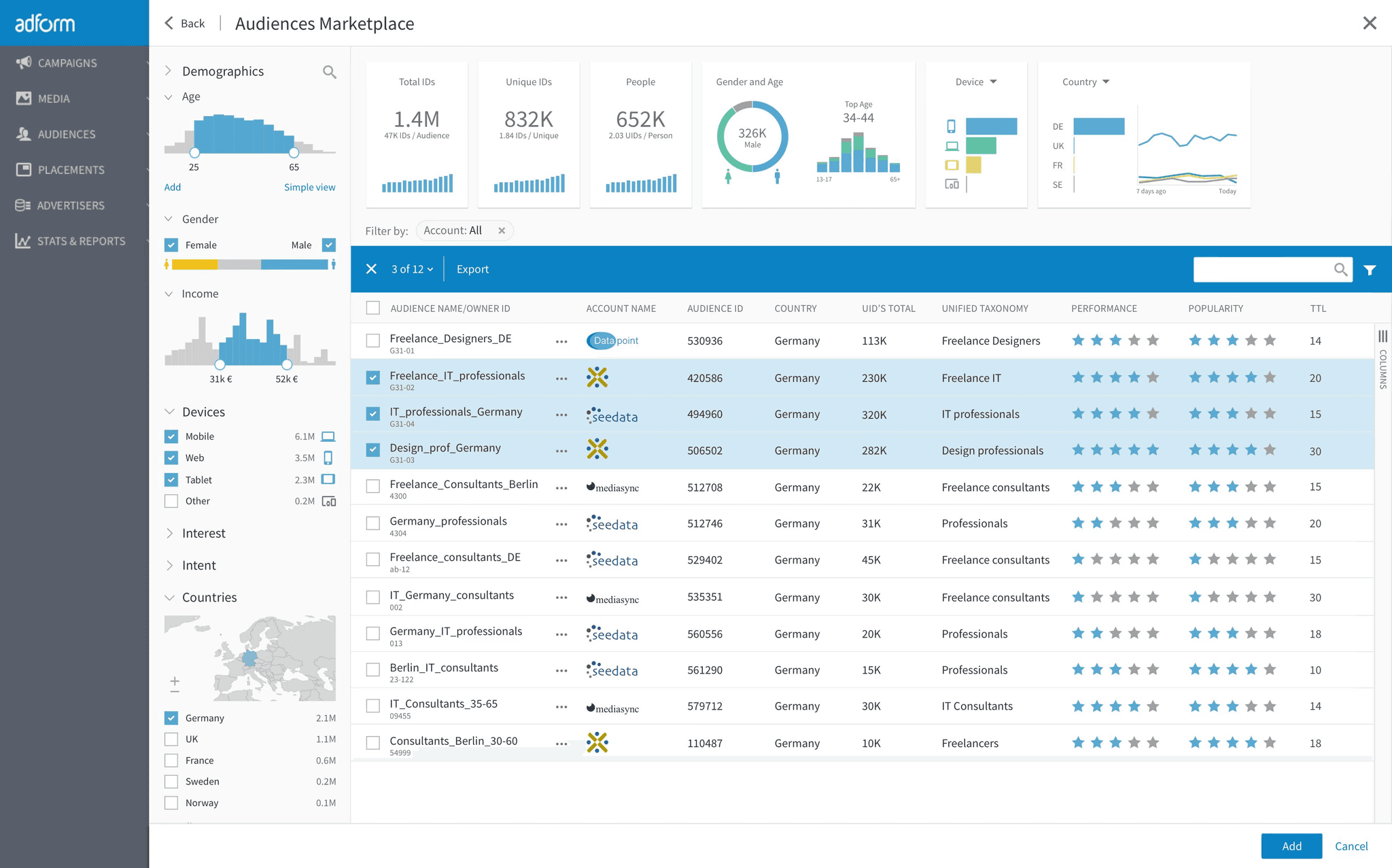
Adform | European open-web display, video, PMP execution and privacy-strict market operations. | Does the seat, market, publisher and creative approve this exact operator and gambling product? |
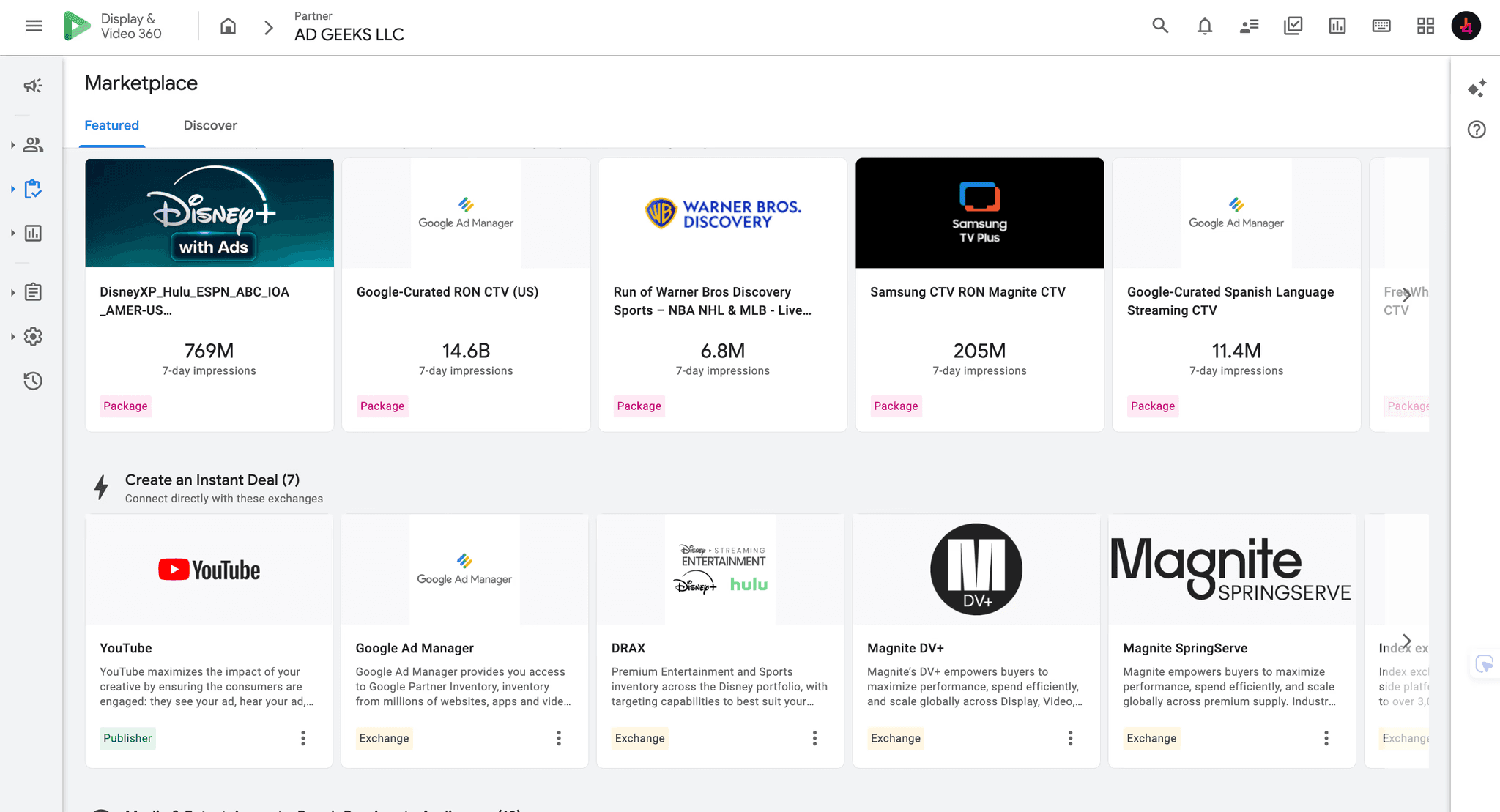
Google DV360 | Open web, video and eligible Google inventory where Google certification and country rules allow gambling. | Is the advertiser certified for the target country and product, with a responsible-gambling landing page and no minor targeting? |
The Trade Desk or another enterprise DSP | Curated open-web, video and CTV supply, especially through approved deals. | Has the platform partner confirmed written category eligibility and the participating supply path? |
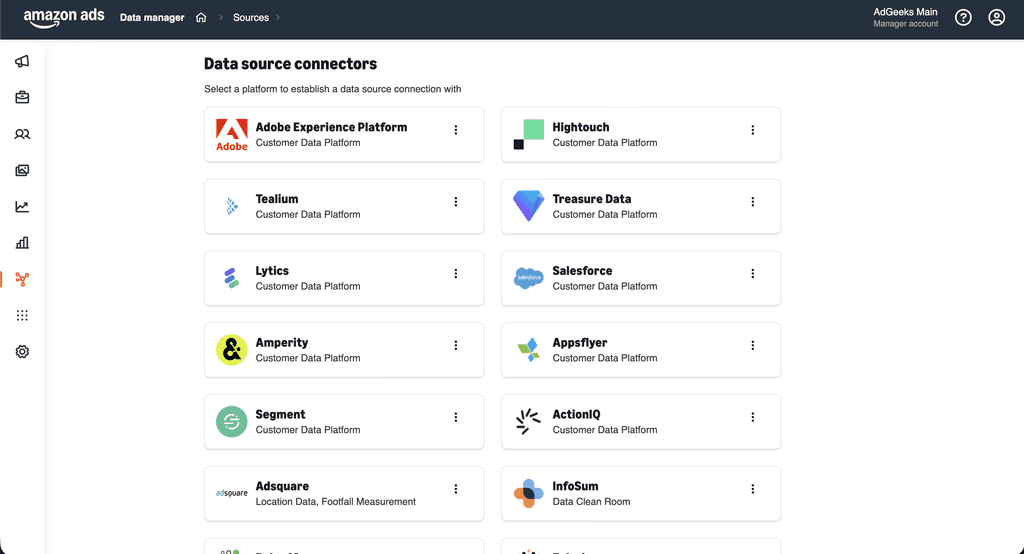
Amazon DSP | Potential audience and CTV value only where the platform explicitly approves the category and market. | Is there written approval for gambling demand? Do not infer permission from general DSP access or retail-data capability. |
Google's gambling policy makes the dependency explicit: ads must target approved countries, meet country-specific certification criteria, show responsible-gambling information on the landing page and never target minors. Equivalent written confirmation should be obtained for every other DSP and major supply partner.
Adform was the execution platform in the Maxwin iGaming case study, which separated Germany and the UK, used adult audience controls, and optimized toward registrations and first-time deposits. That is evidence of a workable route, not blanket permission for every operator or market.
How should iGaming programmatic performance be measured?
Measure the full acquisition path without turning aggressive play into the optimization target. A practical event ladder is: qualified landing-page visit, registration start, completed registration, age and identity verification, first-time deposit, and retained eligible customer. Define every event, consent condition and attribution window before launch.
Report media KPIs such as reach, frequency, viewability, completion rate, click-through rate and cost per qualified visit alongside commercial outcomes such as cost per registration, registration-to-first-time-deposit conversion and cost per first-time deposit. Add compliance guardrails: delivery outside approved geographies, underage or unknown-age exposure where measurable, exclusion-list match failures, rejected creatives, complaint rate, opt-outs and frequency outliers.
The Maxwin campaign reported a 43.74% website-to-registration conversion rate, a 42.50% registration-to-first-time-deposit conversion rate and a $51.26 cost per first-time deposit. Those figures are useful as proof of method, not as universal benchmarks. Market, offer, brand, attribution and licence scope can change the economics substantially.
Where scale permits, use holdouts, geo experiments or incrementality tests. Last-click conversions can reward retargeting that would have converted anyway. A compliant measurement plan should distinguish incremental acquisition from repeated exposure to existing players.
What should be checked before launch?
Confirm the license holder, permitted product, domain or app and target jurisdiction.
Record legal age, excluded groups, bonus rules, disclosure language and time restrictions.
Obtain written DSP, exchange, publisher and deal approval for the exact category.
Build market-specific line items. Do not combine jurisdictions with different rules.
Apply geo inclusions and exclusions, then verify them in the live platform.
Apply age controls and conservative handling for unknown ages where required.
Upload current self-exclusion, high-risk, customer and opt-out suppressions.
Approve every creative, fallback, landing page, offer and disclosure by market and format.
Validate site, app, content, brand-safety, fraud, viewability and frequency controls.
Test click-throughs, deep links, consent, registration, KYC and conversion events.
Set daily compliance and pacing checks, plus a documented pause and escalation owner.
Archive approvals, screenshots, settings, change logs and post-launch delivery reports.
AdGeeks can map the licence, market, DSP, inventory, creative and measurement requirements before media goes live.
Plan a compliant iGaming programmatic campaign
Frequently asked questions
Can gambling and sportsbook brands advertise programmatically?
Yes, where the operator and product are licensed, local law allows the advertising, and the DSP and publisher approve the category. Every campaign still needs market-specific age, geo, exclusion, creative and responsible-gambling controls.
Is a gambling licence enough to run programmatic ads?
No. A licence does not guarantee DSP certification, publisher acceptance or inventory access. Approval is needed across the operator, product, jurisdiction, platform, supply path, creative and landing page.
What age should an iGaming campaign target?
Use the legal gambling age for the exact market and product, such as 18+, 19+ or 21+. Apply all available age exclusions and follow local rules for unknown-age users and youth-skewing media.
Can iGaming campaigns use retargeting?
Often yes, but only with a lawful data basis and strict suppression. Exclude self-excluded, opted-out, underage, high-risk and already-converted users where required, and keep the retargeting window proportionate.
Which DSP is best for gambling advertising?
There is no universal winner. Adform can be a strong European route, while DV360 can fit certified markets and products. Other DSPs depend on written category approval, inventory availability, channel needs and local regulation.
What should iGaming advertisers measure beyond clicks?
Track qualified visits, completed registrations, KYC, first-time deposits and retained eligible customers, plus reach and frequency. Monitor compliance exceptions, opt-outs, exclusions, complaints and geographic leakage alongside performance.