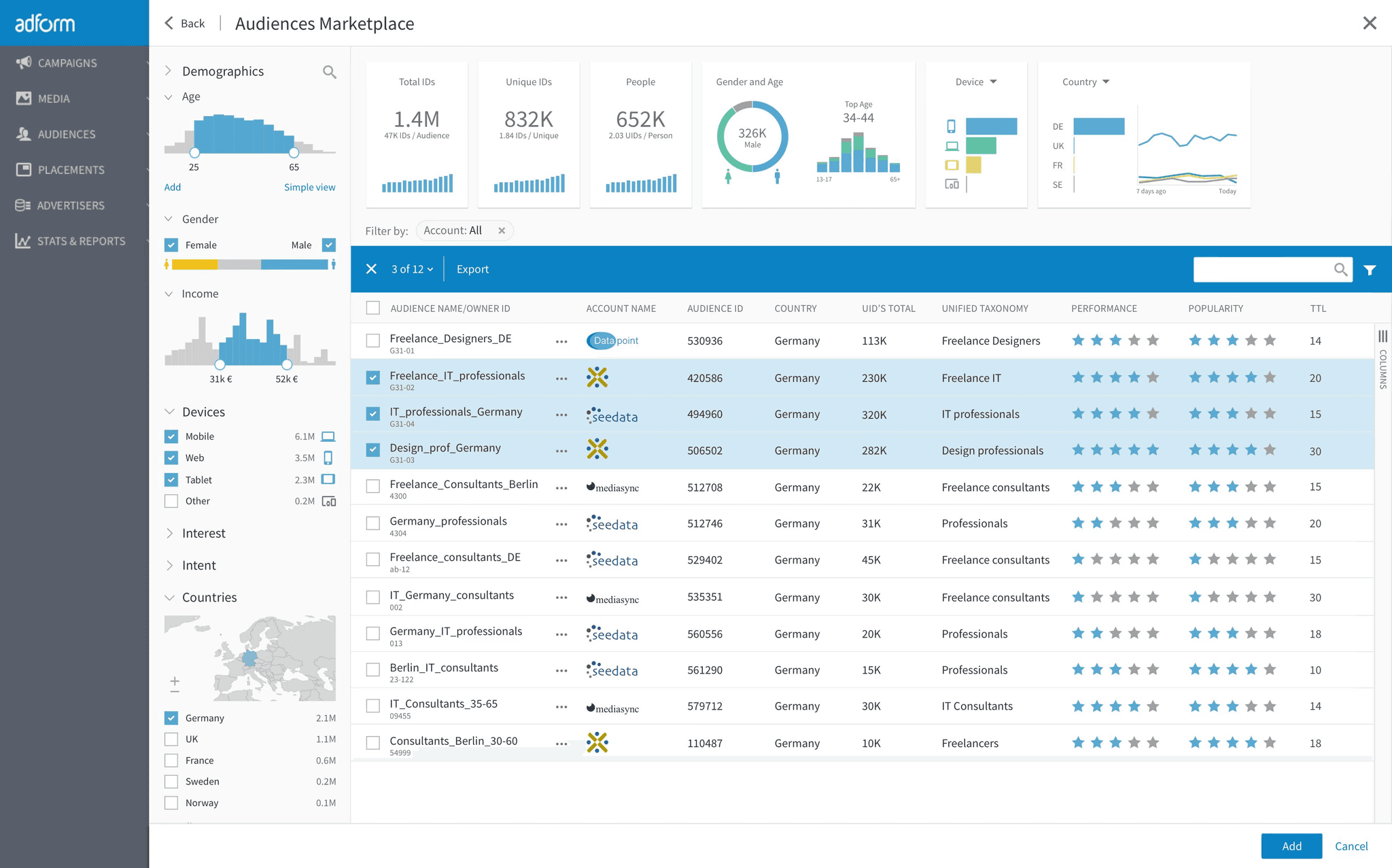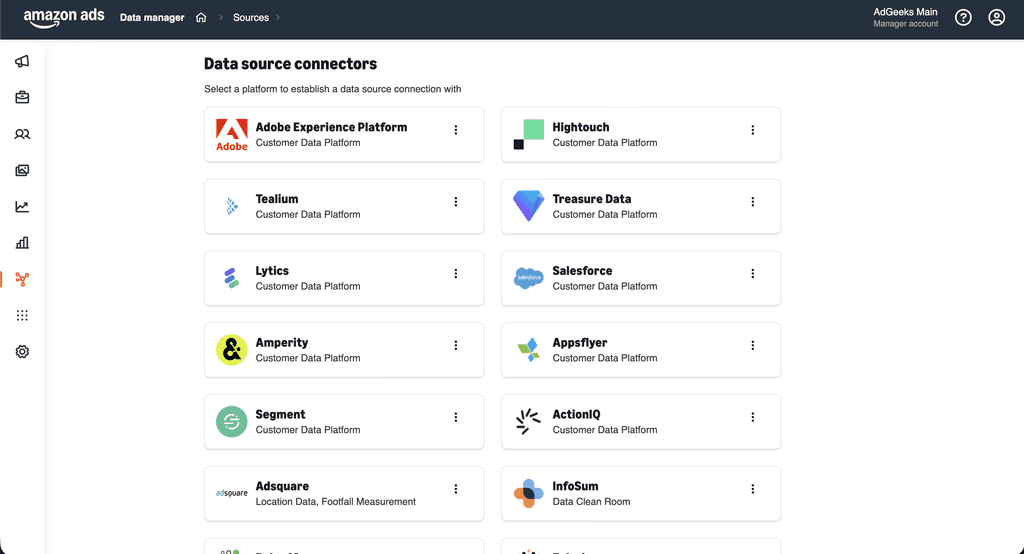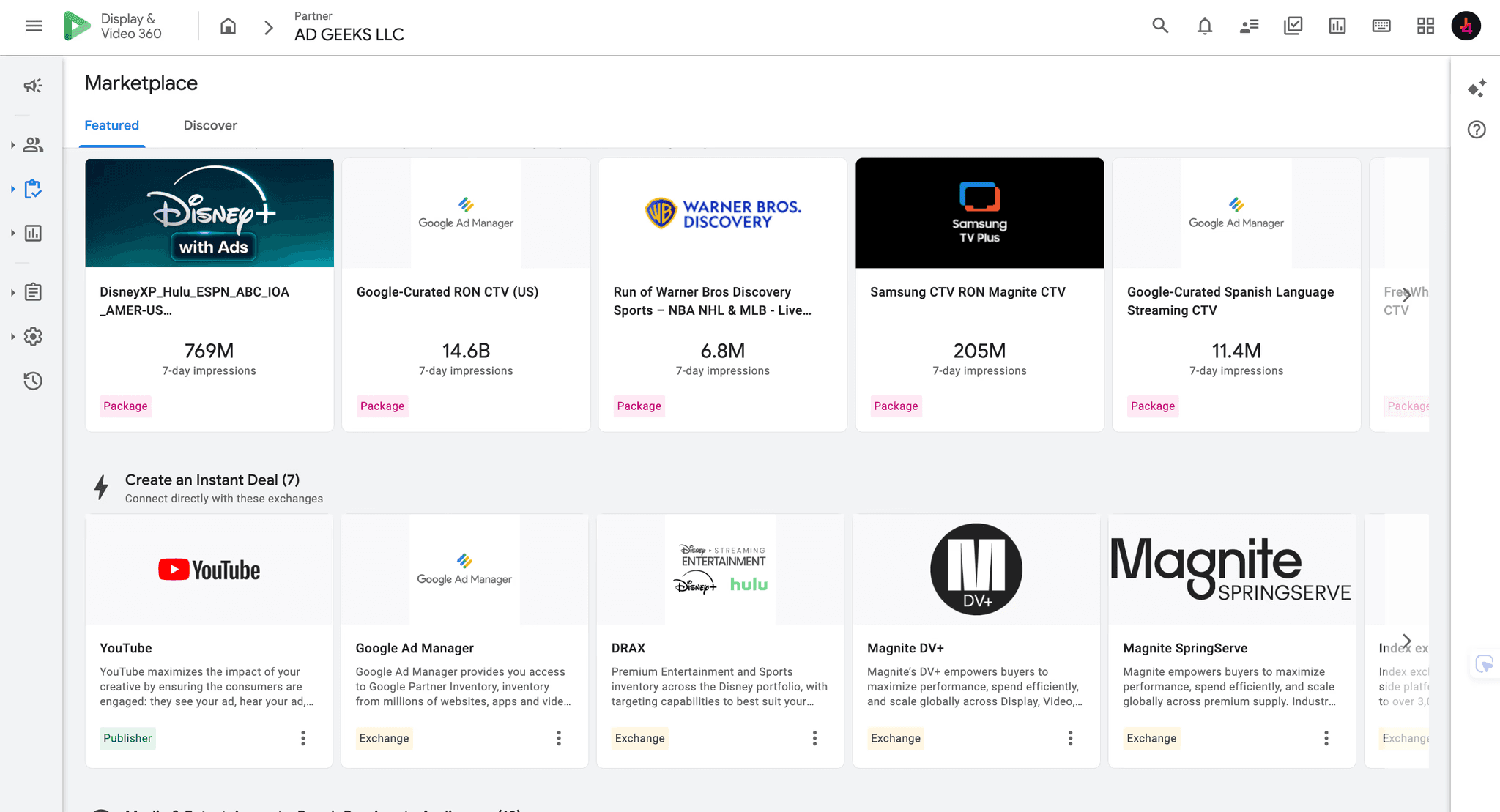
DV360 and Adform can both run sophisticated programmatic campaigns across European markets, but they create different operating environments. DV360 connects buying with YouTube and the wider Google Marketing Platform stack. Adform combines an omnichannel DSP with its own ad serving, data and multi-ID capabilities in a European-founded platform.
The decision should not rest on a generic claim that one platform is more private, more open or more European. Privacy depends on the legal basis, consent implementation, vendors, data flows and campaign configuration. Inventory depends on the country, exchange, publisher, deal and seat. The operating model depends on the contract, user permissions, team skills and support structure.
Quick answer: Choose DV360 first when YouTube, Google-linked measurement, enterprise governance and existing Google Marketing Platform operations are central. Evaluate Adform first when European omnichannel buying, multi-ID activation, integrated DOOH planning or a combined DSP, ad server and data workflow are priorities. For multi-market programs, the strongest model may use both platforms with separate jobs, shared measurement rules and no duplicated reach.
DV360 vs Adform at a glance
Decision area | DV360 | Adform | Practical implication |
|---|---|---|---|
Core ecosystem | Google enterprise campaign management with native YouTube buying and Google-linked measurement workflows | Integrated omnichannel platform spanning DSP, data and ad serving capabilities | Choose the ecosystem that reduces operational gaps without locking critical data into a partner-owned setup. |
European privacy operations | Detailed GDPR inventory treatments, TCF signal handling and Google EU User Consent Policy requirements | Privacy agreement defines controller, joint-controller and processor roles for selected services and supports TCF workflows | Neither platform replaces legal review, consent design or vendor governance. |
Identity | Google audiences and eligible first-party activation, with important market and inventory restrictions | ID Fusion and first-party data workflows across multiple identifiers | Compare the addressable audience that remains after consent, market and inventory filters. |
Inventory | YouTube plus eligible open-internet display, video, CTV, audio and publisher deals | Display, video, CTV, mobile, audio and DOOH in one buying workflow | Build a country-by-country supply and deal map. Platform-wide logo lists are insufficient. |
Operating model | Deep partner and advertiser hierarchy, often accessed directly or through an authorized partner | Enterprise workflow that can combine media, data and ad serving; commercial access varies by contract | Permissions, exports, support and offboarding terms can matter more than feature count. |
Best starting fit | YouTube-heavy, Google-centered, globally governed campaigns | European open-web, multi-ID, DOOH or integrated full-stack campaigns | A controlled dual-DSP model can be valid when each platform has a distinct job. |
Bottom line: DV360 has a structural advantage when YouTube and Google integrations are non-negotiable. Adform has a differentiated case when a buyer wants a European omnichannel workflow, multi-ID framework or integrated media and data operations. The final choice should be made from a live inventory, privacy and workflow test using the advertiser's real markets.
What is the real difference between DV360 and Adform?
DV360 is built around Google enterprise media operations
Google describes Display & Video 360 through five integrated modules: Campaigns, Audiences, Creatives, Inventory and Insights. Teams can organize insertion orders and line items, manage audience data, build or review creatives, find inventory and report performance in one platform. The clearest unique buying route is YouTube and partners.
This makes DV360 a practical choice when the advertiser already relies on Campaign Manager 360, Floodlight, Analytics 360 or Google audience and video workflows. The advantage is not that every integration is automatic. Accounts, tags, permissions, attribution settings and data-sharing rules still need deliberate configuration.
Adform is built around an integrated omnichannel stack
Adform positions its DSP as one workflow across display, video, CTV, audio, mobile and DOOH. Its public product materials also connect Campaign Planner, Adform IQ and ID Fusion with the wider Adform FLOW environment. That can reduce handoffs when planning, buying, identity, frequency and measurement need to work across several open-web channels.
The integrated model can be attractive in Europe, especially where market teams need local publisher deals, DOOH planning or alternatives to third-party cookies. It also requires governance. Buyers should document which Adform modules are licensed, where each dataset originates, who can export it and what remains available if the advertiser changes partner.
How should privacy be compared for European campaigns?
Privacy is not a platform badge. It is a chain of responsibilities from the website or app through the consent management platform, tags, audience onboarding, bid request, creative vendors, measurement partners and reporting exports. A compliant platform can still be configured badly.
How DV360 handles GDPR inventory
Google documents three treatments for inventory it classifies as GDPR traffic: limited ads, non-personalized ads and personalized ads. The treatment depends on the consent and legal-basis signals received. Google also documents TCF requirements for vendors, GDPR macros for third-party technologies and restrictions on cookie syncing when required consent parameters are absent.
For European buyers, this means consent quality can directly change addressability, creative eligibility, frequency and measurement. It is not enough for a CMP banner to appear. The team must validate the TC string, vendor declarations, tag behavior before consent, Google consent requirements and the treatment used when consent is missing or withdrawn.
How Adform defines privacy responsibilities
Adform's published Privacy Compliance Agreement distinguishes several data-processing roles depending on the selected service. Some activities can involve joint controllership, while others treat Adform as a processor for client data. The agreement assigns responsibilities for Adform tags, transparency, consent, data-subject requests, security and TCF-compatible consent management.
The practical lesson is that an Adform contract needs to be read at service level. The advertiser should know which activities are controller-to-controller, joint-controller or processor relationships, what appears in the privacy notice, how consent evidence is stored and how withdrawals and deletion requests flow between the parties.
Use the same privacy preflight for both DSPs
Control | Evidence to request | Failure to avoid |
|---|---|---|
Legal basis and purpose | Purpose-by-purpose data map approved by privacy counsel | Using one broad consent statement for unrelated activation and measurement jobs |
CMP and signal passing | Tested TCF or other consent signals across pages, apps, tags and vendors | A visible banner that sends incomplete or contradictory signals |
First-party data | Source, consent, retention, hashing or transfer method and deletion process | Treating hashed data as anonymous or automatically permitted |
Creative and measurement vendors | Vendor list, purpose, market eligibility and consent dependencies | Launching a third-party pixel that blocks delivery or violates declared consent |
Data roles and transfers | Contractual role, subprocessors, transfer mechanism and security documentation | Assuming the platform's headquarters determine every data flow |
Withdrawal and rights | Operational test for opt-out, deletion and audience refresh | Removing consent in the CMP while old audience membership remains active |
Important: This comparison is an operational framework, not legal advice. GDPR, ePrivacy, national law, platform policy and contractual requirements should be reviewed for the advertiser's specific markets and data uses.
How do first-party data and identity differ?
DV360 first-party activation is powerful but route-specific
DV360 supports eligible first-party audience workflows, including Customer Match in supported contexts. Google states that Customer Match availability differs by inventory. In the EEA, the UK and Switzerland, Customer Match lists are not available for web and app activation on Google Partner Inventory or third-party exchanges, while eligible Google owned-and-operated properties can continue to use first-party data when consent requirements are met.
That restriction is strategically important. A list visible in the account is not automatically usable across every European display, video or CTV line item. Forecasting and activation should be tested against the exact inventory and geography.
Adform uses a multi-ID framework
Adform positions ID Fusion as a framework for combining multiple identifiers, including first-party and platform identifiers, to support recognition and frequency control across fragmented environments. Its current DSP page states support for more than 45 identifiers. Treat that as a capability statement, not a guaranteed audience size.
For each country, ask which identifiers are present in the bid stream, which are permitted for the campaign purpose, how they are matched, whether the publisher supports them and whether the same identity can be used for measurement. Uploaded records, matched IDs and reachable users should be reported separately.
Which platform provides better European inventory?
Neither platform wins every European market. Supply differs by publisher, exchange, format, country, language, deal type and reseller path. The useful comparison begins with the media plan, not a global inventory claim.
Where DV360 is differentiated
YouTube is the clearest difference. A buyer that needs YouTube and partners within an enterprise DSP workflow has a strong reason to use DV360. DV360 also provides Marketplace discovery, publisher deals and eligible open-internet inventory across multiple formats.
Its value increases when YouTube must share governance, frequency logic, creative review and measurement conventions with other Google Marketing Platform activity. However, open-web publisher access should still be checked by market and supply path.
Where Adform is differentiated
Adform's public DSP materials emphasize one workflow across display, video, CTV, audio, mobile and DOOH, including a dedicated map-based DOOH planning interface. This can fit European plans that combine local digital publishers, streaming, audio and out-of-home without making YouTube the center of the strategy.
The product description does not prove that every seat can buy every publisher or screen. Buyers should confirm the exact SSP, deal, seller, fee, forecast, reporting depth and measurement support for each market.
Build a country-level inventory matrix
Ask both providers to complete the same template for every required market:
publisher, app, broadcaster, audio service, screen network or content package;
open auction, curated marketplace, private marketplace, preferred deal or guaranteed route;
direct seller or reseller path, including all supply and data fees;
forecasted reach, frequency, floor price and seasonal limitations;
domain, app, placement, channel or screen-level reporting available after delivery;
compatibility with the audience, consent, verification and measurement plan;
creative requirements, approval time and replacement process.
For a broader platform context, use the DV360 vs independent DSPs comparison. If several DSPs are already in scope, use the multi-DSP matrix to separate platform jobs.
How do the operating models compare?
DV360 favors detailed enterprise governance
DV360 uses partner and advertiser structures with campaigns, insertion orders, line items, creatives, audiences, deals and user roles below them. This supports multi-market naming, approvals, budget ownership and reporting standards. It can also create a steep learning curve for teams that only run occasional programmatic campaigns.
Access may come directly or through a partner. The contract should state the advertiser's role, administrative rights, billing visibility, reporting exports, Floodlight and Campaign Manager control, audience ownership, deal portability and offboarding support.
Adform can combine buying, data and ad serving
Adform's integrated model can reduce platform handoffs when the same organization uses its DSP, data and ad-serving capabilities. Campaign Planner and omnichannel controls may help teams coordinate display, video, CTV, audio, mobile and DOOH from one environment.
Integration can also increase dependency if permissions and portability are unclear. Ask whether the advertiser receives direct user access, which modules are licensed, how raw and aggregated data can be exported, whether tags and audiences remain reusable, and how campaigns move if the service provider changes.
Compare service, not only software
Operating question | What to compare | Decision signal |
|---|---|---|
Who operates the seat? | Advertiser, agency, reseller or platform-managed team | Choose the model that matches internal trading skill and desired control. |
What access is granted? | Login, role, billing, reporting, admin, API and audit history | A named platform is not useful if the advertiser cannot inspect or export its work. |
What support is included? | Onboarding, trafficking, optimization, troubleshooting, training and response times | Price support against a written scope and service level. |
Who owns the setup? | Tags, audiences, deals, naming, reports, creatives and historical data | Ownership should survive a partner change. |
How are fees shown? | Platform, service, data, inventory, measurement and creative charges | Compare total effective cost on the same sample media plan. |
How does offboarding work? | Exports, access period, transition help, data deletion and successor permissions | The exit plan should be agreed before launch. |
Ad Geeks can provide access and managed support across both DV360 and Adform. The recommendation should begin with the campaign job and governance needs, not a default platform preference.
Which platform is stronger for measurement?
Both platforms can report delivery and support conversion measurement, but platform attribution is not the same as business truth. European measurement is particularly sensitive to consent loss, browser restrictions, cross-device assumptions, publisher data availability and market-level sample size.
DV360 measurement
DV360's strongest measurement case appears when the advertiser already uses Floodlight, Campaign Manager 360 or eligible Google Analytics connections. This can create consistent naming, conversion and reporting workflows across Google-linked media. It does not eliminate the need to deduplicate conversions, validate tags and separate modeled or attributed outcomes from confirmed business results.
Adform measurement
Adform's integrated stack can connect buying, ad serving, data and reporting in one environment. That can be useful for open-web campaigns spanning several channels. Buyers should still validate attribution windows, consent dependencies, cross-device logic, log or event-level export rights and compatibility with the advertiser's analytics or warehouse.
Create one cross-platform source of truth
If DV360 and Adform run together, use shared campaign IDs, product or market taxonomies and conversion definitions. Keep platform-reported conversions separate from deduplicated analytics and experimental results. Do not add each DSP's attributed conversions into one total.
When should a European advertiser choose DV360?
YouTube is a core reach or video-performance channel.
The organization already uses Campaign Manager 360, Floodlight or other Google Marketing Platform tools.
Global governance, detailed account hierarchy and standardized enterprise workflows are priorities.
The required open-internet publishers and deals are confirmed in the relevant DV360 seat.
The team or partner can manage the platform's operational complexity.
When should a European advertiser choose Adform?
The media plan centers on European open-web publishers and omnichannel buying.
Multi-ID activation and frequency control deserve a live evaluation.
Display, video, CTV, audio, mobile and DOOH need one planning and buying environment.
An integrated DSP, data and ad-serving workflow can reduce operational handoffs.
The advertiser has verified market-level supply, permissions, exports and support terms.
When does a multi-DSP model make sense?
A dual-platform model is justified when each DSP has a non-overlapping job. For example, DV360 may handle YouTube and selected Google-linked campaigns while Adform handles specific European open-web, audio or DOOH activation. It is not justified when both platforms chase the same users, publishers and conversions without shared frequency or measurement rules.
Use one budget owner, one audience and market taxonomy, clear inclusion and exclusion rules, and a deduplicated reporting layer. Decide in advance which platform wins if both can access the same deal. The goal is complementary reach or capability, not platform redundancy.
A practical DV360 vs Adform evaluation plan
Define the markets, languages, channels, audience jobs and business outcomes.
Complete a privacy and data-flow preflight for every activation and measurement method.
Build the same publisher and deal matrix for both platforms.
Forecast the same media plan using the same dates, budgets, audiences and frequency limits.
Run a workflow demo covering setup, consent controls, creative QA, optimization and reporting.
Request a sample invoice separating media, platform, service, data and measurement fees.
Document permissions, ownership, exports, offboarding and service levels.
If both remain viable, run a controlled test with non-overlapping markets, publishers or audiences.
Evaluate incremental reach, quality, operational effort and verified outcomes, not platform ROAS alone.
Ad Geeks can compare your European market plan, privacy requirements, inventory routes and team model, then recommend DV360, Adform or a controlled multi-DSP setup.
Frequently asked questions
Is Adform better than DV360 for Europe?
Not universally. Adform deserves a strong evaluation for European open-web, multi-ID, DOOH and integrated omnichannel workflows. DV360 is often stronger when YouTube, Google Marketing Platform integrations and global enterprise governance are central. Compare the exact markets, inventory, data rights and operating terms.
Which is more privacy-compliant, DV360 or Adform?
Neither platform makes a campaign compliant by itself. DV360 documents GDPR inventory treatments and TCF signal handling. Adform documents consent and data-processing responsibilities across selected services. Compliance depends on the advertiser's legal basis, CMP, tags, vendors, contracts, retention and user-rights processes.
Can DV360 use first-party data in the EEA?
Yes, in eligible workflows, but availability depends on inventory and consent. Google states that Customer Match is not available for web and app activation on Google Partner Inventory or third-party exchanges in the EEA, UK and Switzerland, while eligible Google owned-and-operated properties can continue to use first-party data when requirements are met.
What is Adform ID Fusion?
ID Fusion is Adform's framework for working across multiple identifiers, including first-party and platform identifiers. Its purpose is to improve recognition and frequency control in a fragmented identity environment. Actual reach depends on consent, market, publisher, bid-stream availability and campaign setup.
Can Adform buy YouTube inventory?
Do not treat Adform as a substitute for DV360's native YouTube buying route. Confirm any video inventory labeled as YouTube or Google supply directly with the platform and publisher. If YouTube is a core requirement, DV360 should be part of the evaluation.
Can DV360 and Adform run together?
Yes, when each platform has a distinct job. A common model is to use DV360 for YouTube and selected Google-linked activity while Adform covers defined European open-web or omnichannel needs. Use exclusions, clear deal ownership and deduplicated measurement to prevent duplicated reach and conversions.
Which platform is easier to operate?
Ease depends on the team's experience and licensed workflow. DV360 offers deep enterprise structure but can be complex. Adform can combine multiple channels and modules in one environment, which may simplify handoffs but still requires training and governance. Test both with the same live campaign task.
Official sources
Google Display & Video 360 Help - Display & Video 360 overview
Google Display & Video 360 Help - Bidding on personalized ads inventory in compliance with the GDPR
Google Display & Video 360 Help - Troubleshoot the GDPR's impact on creatives
Google Display & Video 360 Help - Customer Match for YouTube and partners line items