
Television buying used to start with a rate card and a media rep. It now starts with an audience segment and a bid. Connected TV moved the biggest screen in the home onto programmatic rails, which means a mid-sized brand can appear inside a premium streaming show beside advertisers who once needed seven-figure upfront commitments. This guide explains how CTV works, what a specialist agency adds, and how Ad Geeks activates streaming inventory across three demand-side platforms.
What Connected TV advertising is
Connected TV refers to video ads delivered inside streaming apps on internet-connected televisions, whether that connection comes from a smart TV interface or an over-the-top device such as Roku, Fire TV, or Apple TV. Ads run as pre-roll before a title starts or as mid-roll during breaks inside ad-supported programming. The delivery method separates CTV from linear. A linear spot reaches whoever happens to be watching a channel at a set time, while a CTV impression targets a defined household on demand.
The distinction between CTV and OTT trips up a lot of first-time buyers. OTT describes any video streamed over the internet, phone screens included. CTV narrows that to the television set. For advertisers, the television screen matters because it delivers full-screen, sound-on attention in a shared living-room setting, an environment mobile video rarely matches. Ad Geeks runs campaigns built specifically for that screen.
Why the shift to streaming changes the math
The audience has already moved. Around 90% of US households used an internet-connected TV device at least once a month in 2025, a record that MNTN reports is expected to reach 92% by 2028. Streaming crossed a symbolic line in December 2025 when it hit 47.5% of all TV viewing time, outpacing cable and broadcast combined, according to AI Digital's analysis of Nielsen data.
Spending followed the viewers, though at a slower pace. US CTV ad spend reached $33.35 billion in 2025, roughly 16% growth on the prior year and about four times the 2020 figure, per eMarketer's forecast. The same forecast puts CTV past traditional TV ad spend for the first time in 2028, at an expected $46.89 billion against linear's $45.10 billion.
Cord-cutting drives the gap. Roughly 66% of US households no longer subscribe to traditional pay TV, a group that now includes both former subscribers and younger adults who never signed up, based on Leichtman Research Group data. Reaching those households means a streaming-inclusive plan, since cable no longer delivers the broad reach it once did.
The numbers below summarize where the US market sits as agencies plan for the year ahead.
Metric | Figure | Source (2025+) |
|---|---|---|
US CTV ad spend, 2025 | $33.35 billion | eMarketer |
Projected 2028 CTV ad spend | $46.89 billion | eMarketer |
US households using a CTV device monthly | About 90% | MNTN |
Streaming share of TV viewing, Dec 2025 | 47.5% | AI Digital / Nielsen |
US households without traditional pay TV | About 66% | Leichtman Research Group |
Average CTV ad completion rate | 97%+ | Marketing LTB |
What a CTV advertising agency actually does
A specialist agency compresses the distance between a brand and premium streaming inventory. The value shows up in five places.
Inventory access without enterprise contracts
Direct deals with DV360, Amazon DSP, and Adform historically carried minimums and onboarding timelines that shut out smaller advertisers. An agency that already holds those seats opens them to brands in days rather than months. Ad Geeks built its model around exactly this, giving agencies and brands managed access across all three platforms.
Cross-platform activation
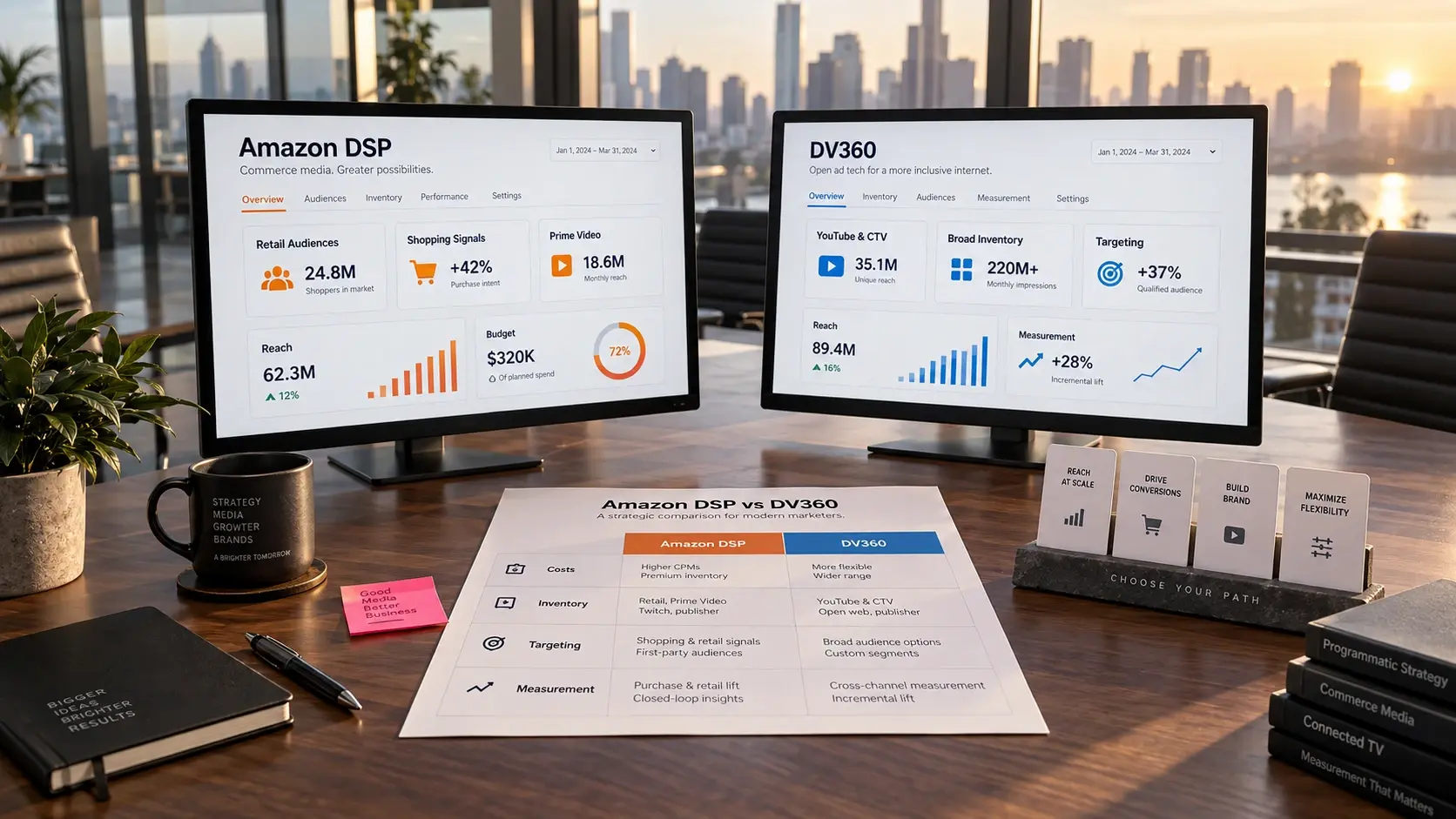
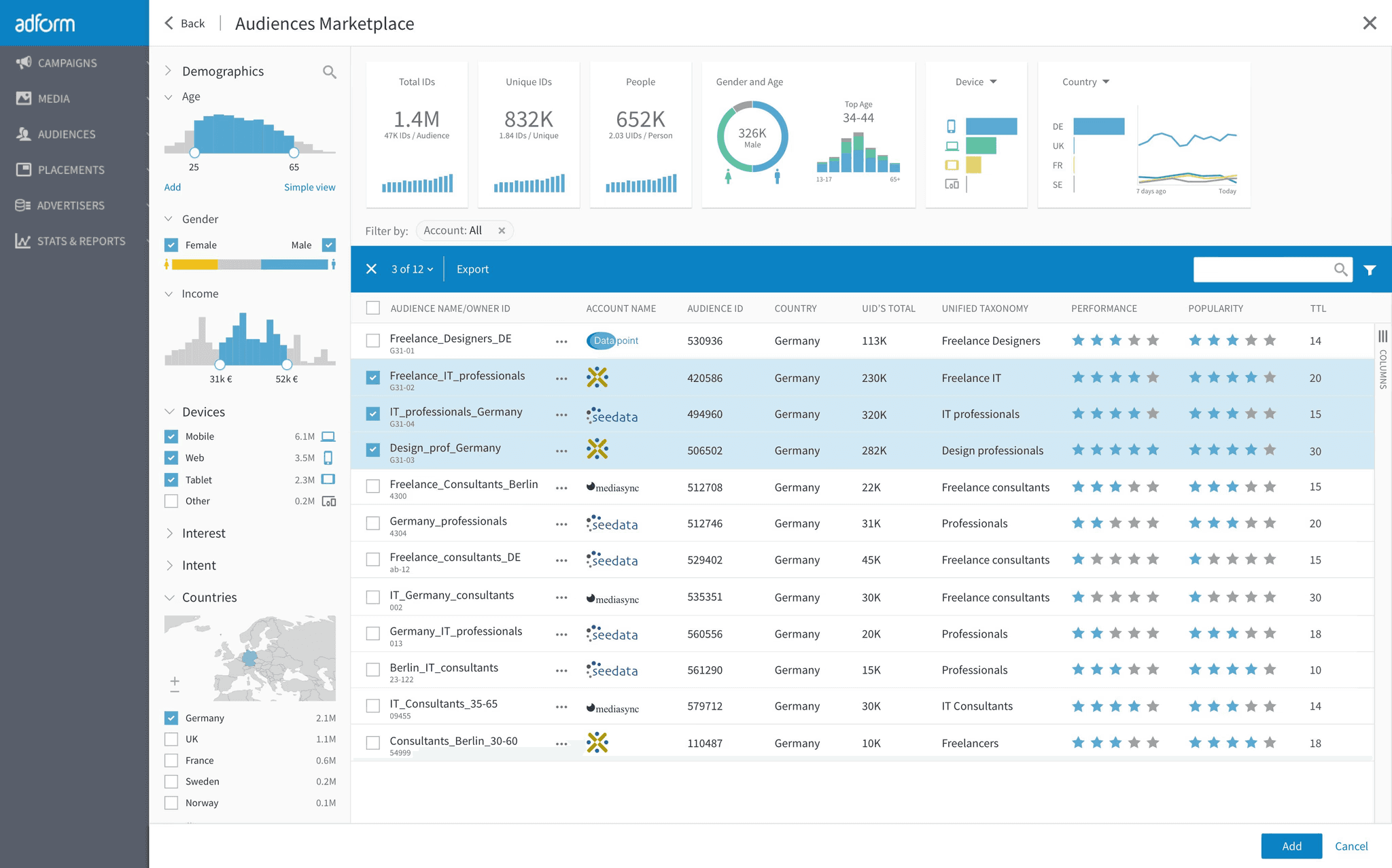
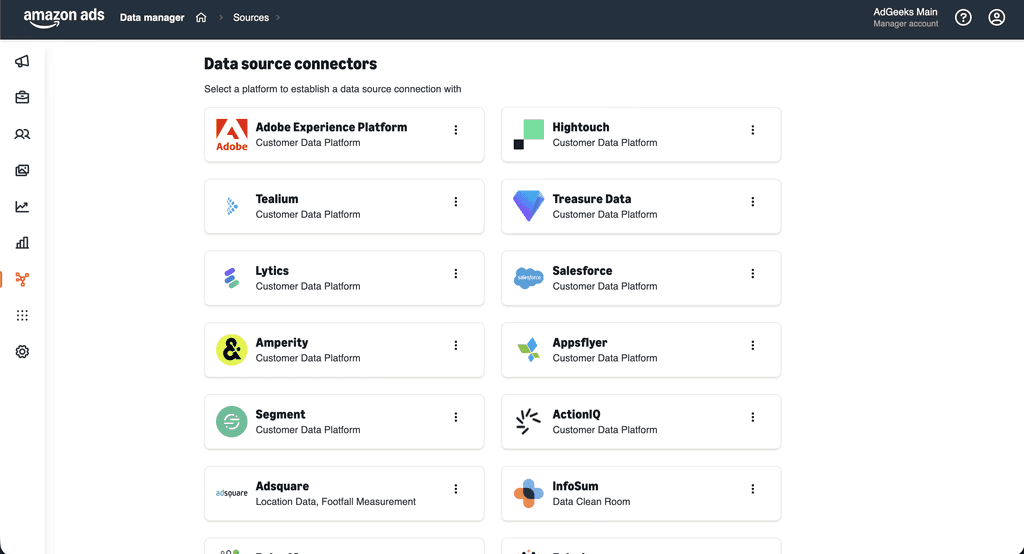
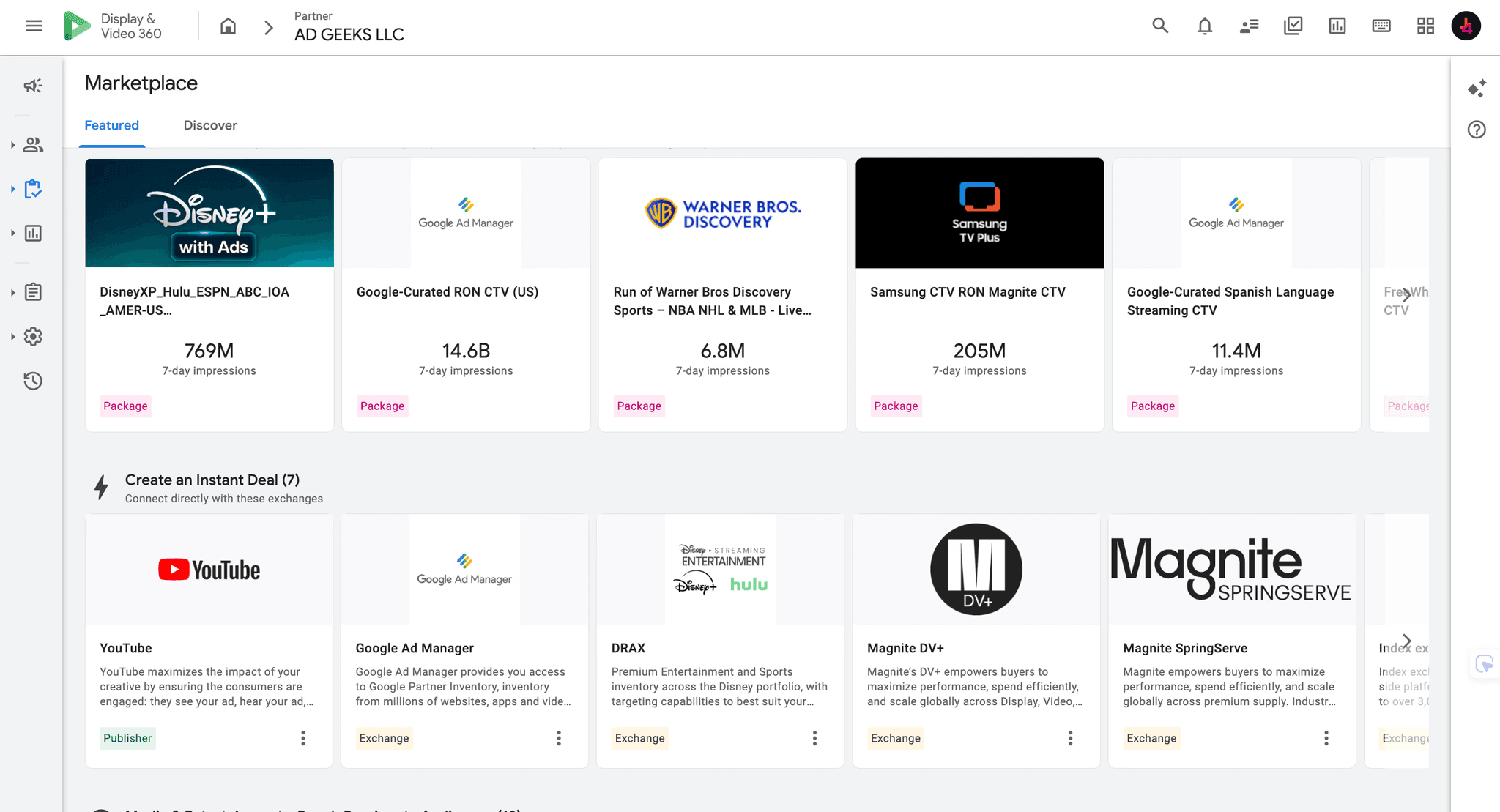
Each DSP reaches different corners of the streaming world. DV360 brings YouTube on the TV screen. Amazon DSP opens Prime Video, Fire TV, and IMDb inventory alongside real purchase signals. Adform adds premium European CTV with a cookieless, privacy-first setup. Running all three from one point removes the need for separate contracts and separate teams.
Audience targeting beyond age and gender
Linear sells broad demographics. CTV sells behavior. A campaign can address households by purchase history, interests, and content preferences using first-party and third-party segments, then hold that targeting steady across screens. The precision is the reason 76% of marketers in one 2026 dataset said CTV targets better than linear.
Measurement in a single view
Streaming campaigns report on digital metrics such as impressions, completions, and conversions, and they also translate into television metrics like reach and frequency. A managed setup pulls both into one dashboard, so a marketer sees completion rates near 97% and cost per completed view in the $0.04 to $0.08 range without stitching reports together by hand.
Frequency control and optimization
Ad fatigue quietly erodes results. Managing frequency caps across networks, channels, and device types from one platform keeps the same household from seeing a spot too many times. AI-led optimization then pushes spend toward light TV viewers and cord-cutters, the households linear misses, which extends incremental reach.
Inventory Ad Geeks activates
Streaming reach spans mainstream ad-supported services and free platforms alike. Campaigns run across Hulu, Roku, Pluto, Samsung TV+, and Tubi, reach Amazon Prime Video and Fire TV through Amazon DSP, and place YouTube on the television screen through DV360. Brands that want a platform-specific plan can start with a dedicated Netflix or YouTube approach, extend into audio on Spotify, or pair streaming with out-of-home for a screen-to-street sequence.
Where CTV fits by industry
The right streaming strategy shifts with the category and its rules. A few examples show the range.
Retail and eCommerce brands lean on Amazon DSP retail signals and DV360 full-funnel reach to catch shoppers on the right screen at the right moment.
Tourism and travel advertisers use video for destination storytelling and CTV for premium brand reach across the booking journey.
Technology and B2B buyers pair account-based targeting with premium placements to reach procurement teams and decision-makers, an approach mirrored on the B2B side for long, multi-stakeholder sales cycles.
Finance and healthcare or pharma campaigns run inside brand-safe inventory that respects regulatory frameworks, from HIPAA to country-specific pharma codes.
Gambling and iGaming and hospitality advertisers target high-intent audiences within compliant, premium environments.
Proof from live campaigns
Streaming performance reads clearest in delivered results. An Amazon DSP full-funnel market launch served 3.37 million total impressions across a single market entry. A DV360 awareness campaign built on viewable CPM served more than 32.6 million impressions, and a German market-penetration push topped 42.6 million. More streaming and video work sits in the full case studies library.
How to start
The barrier to CTV is no longer budget size or a months-long onboarding. It is access to the platforms and the expertise to run them well. Agencies and brands can request access to a managed setup across DV360, Amazon DSP, and Adform, or talk to the Ad Geeks sales team about a plan matched to a specific market and category. Background on the team sits on the about page, and current thinking on programmatic buying runs through the blog and news section.
Summary
CTV puts television-grade attention on programmatic rails, reaching 90% of US households across Hulu, Roku, and YouTube on TV without the enterprise minimums linear once demanded.
Ad Geeks activates streaming inventory across DV360, Amazon DSP, and Adform in days, pairing behavioral targeting and unified measurement with completion rates near 97%.