Last reviewed: September 16, 2026
Programmatic advertising is no longer limited to brands with six-figure media budgets and dedicated trading teams.
Small businesses can now choose between managed programmatic services, self-service demand-side platforms and hybrid partners that combine platform access with hands-on support.
The challenge is choosing the right model. Some providers are designed for ecommerce retargeting, others specialize in local targeting or connected TV, and some provide access to enterprise platforms such as Google Display & Video 360, Amazon DSP and Adform.
This guide compares seven programmatic advertising partners for small businesses, D2C brands, ecommerce companies and lean marketing teams.
We evaluated each option by:
Budget flexibility
DSP and inventory access
Self-service, hybrid and managed-service options
Available advertising channels
Onboarding and campaign support
Reporting and measurement capabilities
Suitability for small marketing teams
Quick answer: AdGeeks is the best overall option for small businesses that need access to enterprise DSPs such as Google DV360, Amazon DSP and Adform without arranging separate direct platform contracts.
AdRoll is a practical entry point for ecommerce retargeting. StackAdapt and Choozle suit teams that want a self-service platform. Simpli.fi is strongest for local and location-based campaigns. Basis is useful for agencies managing multiple channels, while MNTN is a specialist option for performance-focused connected TV.
The Best Programmatic Advertising Services for Small Businesses
1. AdGeeks - Best Overall for Enterprise DSP Access and Flexible Support
Best for: Small businesses, D2C brands and independent agencies that want access to DV360, Amazon DSP or Adform without building an internal programmatic operation.
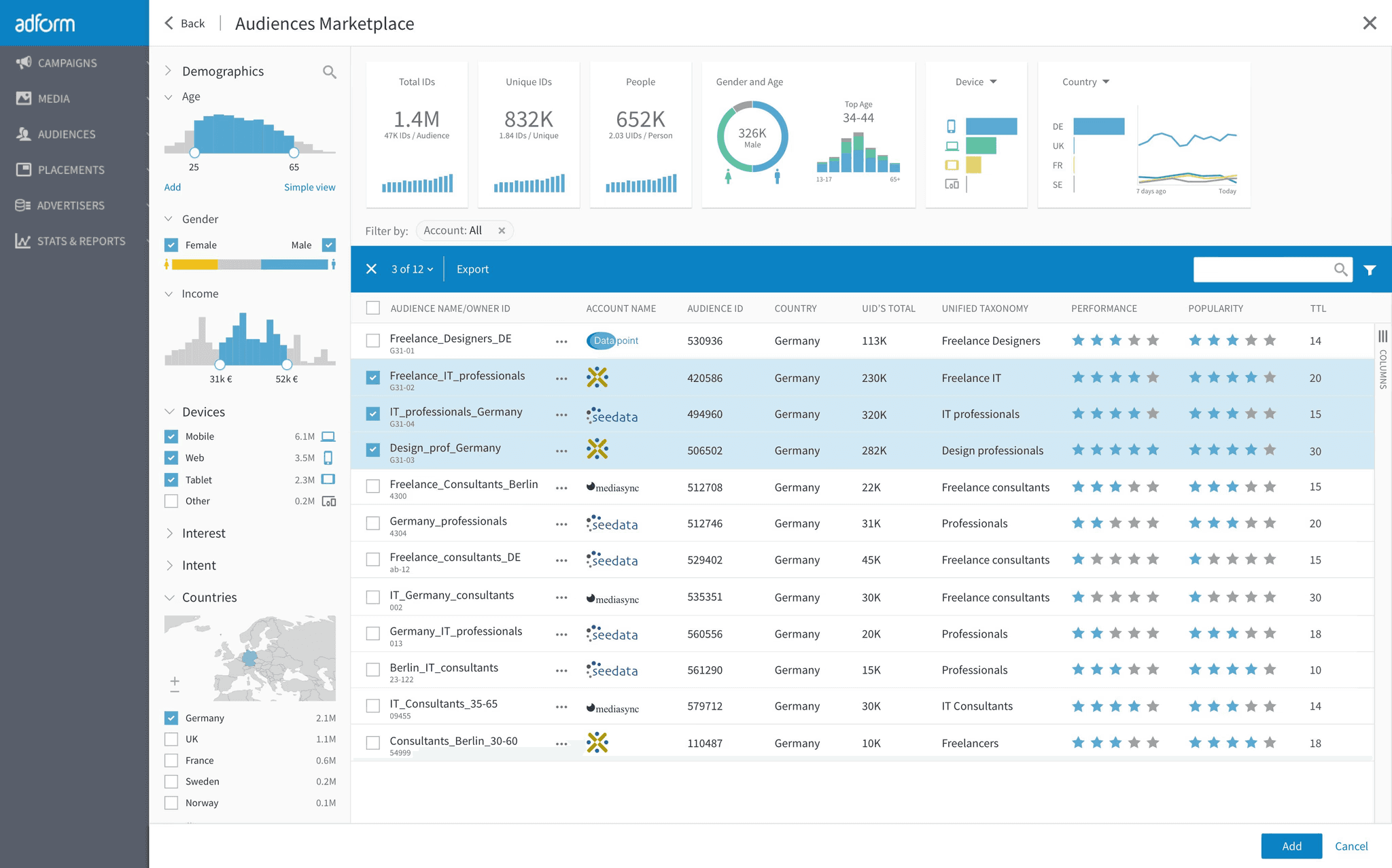
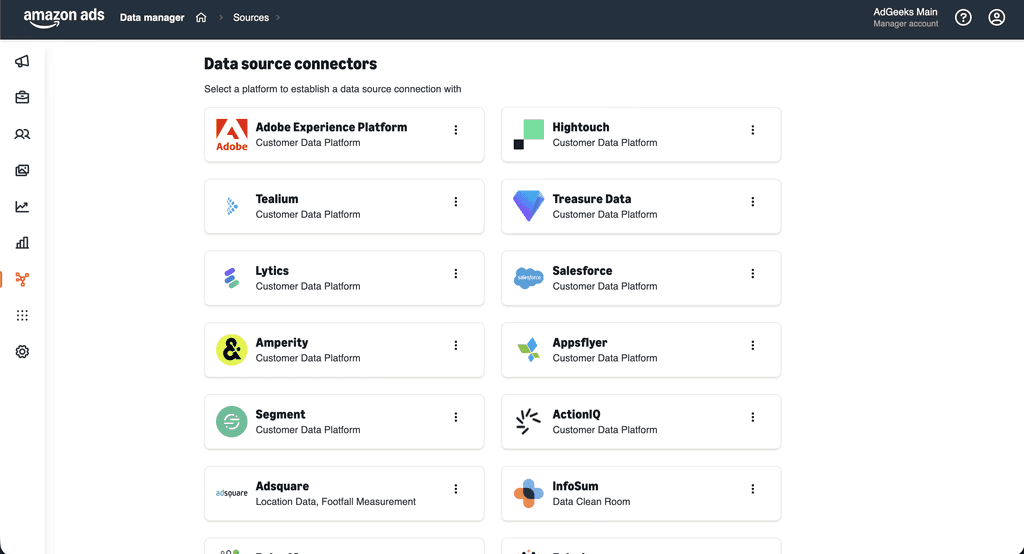
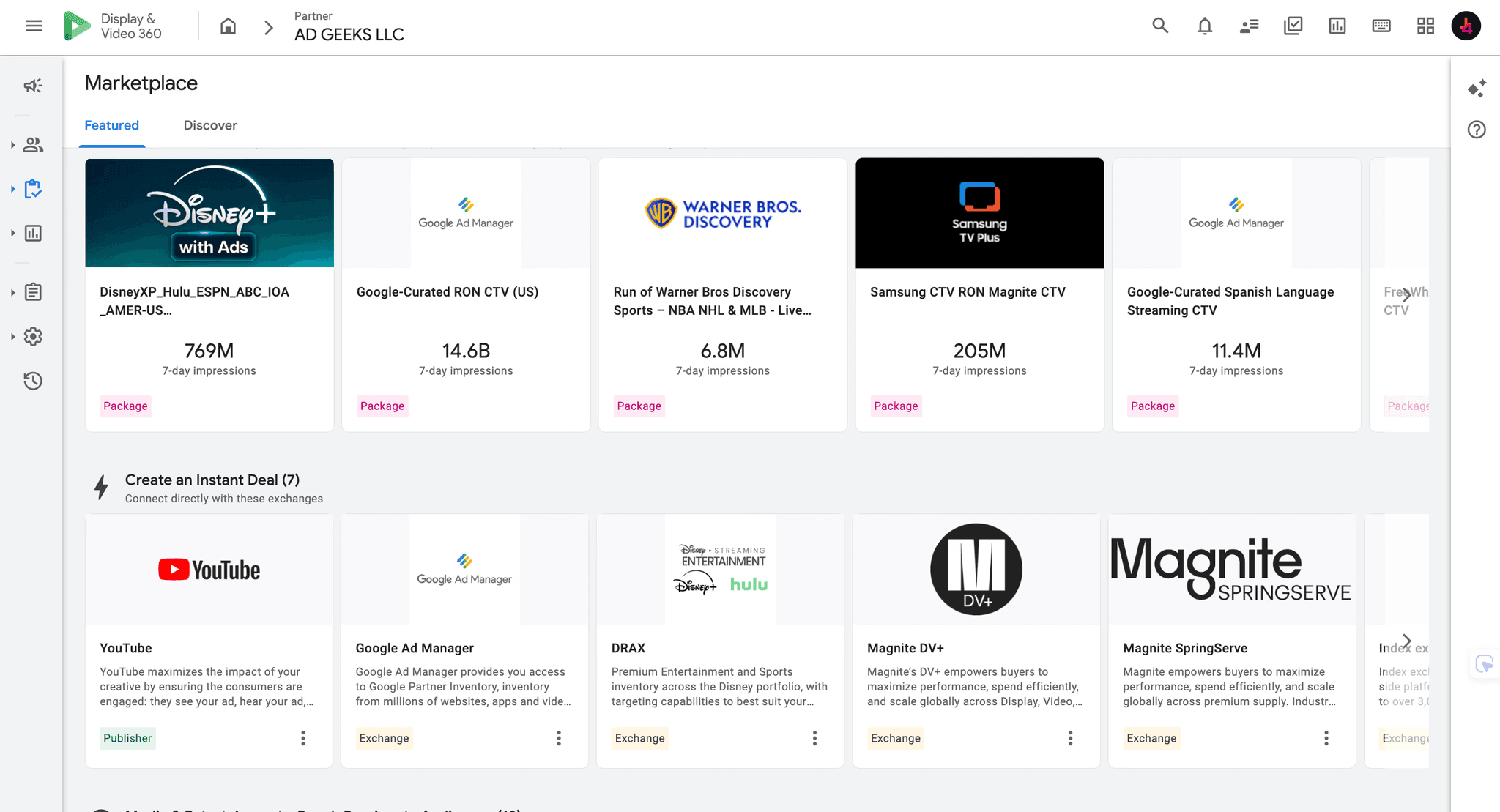
AdGeeks provides access to three major programmatic platforms: Google Display & Video 360, Amazon DSP and Adform. Businesses can choose a self-service, hybrid or fully managed operating model based on their internal experience and available resources.
This flexibility is useful for smaller teams. A company can begin with managed execution, remain involved in strategy and creative decisions, and move toward a more hands-on model as its internal capability develops.
AdGeeks also provides onboarding, platform walkthroughs, campaign setup and technical support. This makes it suitable for teams that need enterprise-level infrastructure but do not have a dedicated programmatic trader.
Key strengths:
Access to Google DV360, Amazon DSP and Adform
Self-service, hybrid and fully managed options
Support with onboarding and campaign setup
Display, video, connected TV, audio, native and digital out-of-home capabilities
Suitable for brands and agencies
No fixed monthly media-spend minimum for partner access
Potential limitation:
Running an effective programmatic campaign still requires enough budget to reach the selected audience and generate meaningful data. The practical budget depends on the market, channel, audience size, campaign length and measurement requirements.
Best fit:
Choose AdGeeks when you need broader programmatic access, premium inventory or specialist support that a basic self-service advertising platform cannot provide.
Disclosure: This guide is published by AdGeeks, which is included in the comparison. Providers were evaluated using the same criteria: platform access, budget flexibility, operating model, channel coverage, support and suitability for small teams.
2. AdRoll - Best for Ecommerce Retargeting
Best for: Small ecommerce businesses that want a straightforward way to reconnect with website visitors and existing customers.
AdRoll is designed around ecommerce growth, retargeting and audience activation. Its integrations with platforms such as Shopify and WooCommerce can reduce the technical effort required to connect product, customer and website data.
The interface is more accessible to small teams than many enterprise DSPs. This makes AdRoll a practical starting point for businesses focused primarily on recovering abandoned visits, re-engaging previous customers and running basic prospecting campaigns.
Key strengths:
Ecommerce-focused workflows
Retargeting and prospecting capabilities
Integrations with common ecommerce platforms
Accessible self-service interface
Suitable for teams without a dedicated programmatic trader
Potential limitation:
AdRoll is best suited to ecommerce and retargeting-led use cases. Businesses that need enterprise DSP controls, complex multi-market activation or access to specific premium inventory may require a broader programmatic platform or agency partner.
Best fit:
Choose AdRoll when ecommerce retargeting is the immediate priority and ease of use matters more than advanced DSP functionality.
3. StackAdapt - Best Self-Service Option for Experienced Small Teams
Best for: Small agencies and in-house teams that want to operate campaigns directly through a multi-channel programmatic platform.
StackAdapt offers self-service and managed options and supports channels including native, display, video, connected TV, audio and digital out-of-home.
Its interface and campaign workflow are designed to make multi-channel programmatic buying more accessible. However, self-service access is most valuable when someone on the team understands campaign structure, targeting, optimization and measurement.
Key strengths:
Multi-channel campaign activation
Self-service and managed plans
Audience, creative and measurement tools in one platform
Suitable for agencies and trained in-house teams
Broader scope than a retargeting-only platform
Potential limitation:
A self-service platform does not remove the need for programmatic expertise. Teams without an experienced operator may need additional training or managed support to use the platform effectively.
Pricing and eligibility are not represented by one universal public rate card. Confirm current commercial terms directly with the provider.
Best fit:
Choose StackAdapt when your team wants direct campaign control and already has the time and expertise required to manage programmatic campaigns.
4. Choozle - Best for an Approachable Self-Service Workflow
Best for: Small businesses and agencies that want to build and manage programmatic campaigns through a relatively straightforward self-service interface.
Choozle provides programmatic campaign tools for audience targeting, media buying, reporting and optimization. It is positioned toward agencies and marketing teams that want more control than a fully managed service provides.
Choozle also offers managed support. Its published managed-service information references a minimum monthly media investment, so businesses should confirm current requirements and distinguish between self-service and managed terms before making a decision.
Key strengths:
Self-service DSP workflow
Audience targeting and campaign reporting
Real-time campaign optimization
Managed support is available
Designed for agencies and smaller marketing teams
Potential limitation:
The available features, pricing and service requirements depend on the selected package. Buyers should confirm which inventory, channels, support and fees are included rather than choosing on interface simplicity alone.
Best fit:
Choose Choozle when your team wants a guided entry into self-service programmatic buying and does not require a direct enterprise DSP relationship.
5. Simpli.fi - Best for Local and Location-Based Campaigns
Best for: Local service businesses, franchise operators, regional retailers and advertisers that need precise geographic targeting.
Simpli.fi is known for localized programmatic activation, including addressable targeting, geofencing and local campaign execution. This makes it relevant for advertisers whose customers are concentrated around stores, service areas, events or specific geographic locations.
A local campaign can prioritize selected ZIP codes, neighborhoods or physical locations instead of paying for broad national reach that the business cannot use.
Key strengths:
Location-focused campaign capabilities
Useful for local and regional advertisers
Relevant to franchise and multi-location businesses
Display, video and connected-TV applications
Managed and platform-based operating options
Potential limitation:
A location-first platform may not be the best match for a business whose main requirement is international scale, Amazon commerce signals or specific enterprise DSP functionality.
Best fit:
Choose Simpli.fi when geographic precision is more important than broad global reach.
6. Basis Technologies - Best for Agencies Managing Multiple Channels
Best for: Small and mid-sized agencies that need to coordinate programmatic, search, social and other media operations across multiple clients.
Basis combines programmatic buying with workflow, reporting and cross-channel media-management tools. The main benefit is operational consolidation: an agency can reduce the number of separate systems used to manage campaigns, billing and reporting.
This can be valuable for a growing agency whose challenge is not only accessing inventory but also managing multiple advertisers efficiently.
Key strengths:
Cross-channel media-management capabilities
Programmatic campaign activation
Workflow and reporting tools
Suitable for agencies with multiple clients
Can reduce operational fragmentation
Potential limitation:
A broad media-management platform may provide less specialization in an individual DSP than a partner dedicated to DV360, Amazon DSP or another specific platform.
Pricing is generally tailored to the customer and should be confirmed directly.
Best fit:
Choose Basis when operational efficiency across clients and channels is a higher priority than deep specialization in one DSP.
7. MNTN - Best Specialist Option for Performance-Focused CTV
Best for: Small and growing brands that want to test connected-TV advertising with a performance-oriented workflow.
MNTN focuses on performance television. Its platform is designed to make connected-TV campaign setup, audience targeting, creative management and performance reporting more accessible to digital marketing teams.
This specialist focus can be useful for businesses that already understand paid social or performance marketing and want to add television advertising without adopting a broad multi-channel DSP.
Key strengths:
Connected-TV specialization
Performance-focused campaign workflow
Audience targeting and reporting
Designed for digital marketing teams
Useful for brands with TV-ready creative
Potential limitation:
MNTN is a specialist CTV option rather than a complete replacement for a multi-channel DSP. Availability, pricing and campaign requirements should be confirmed directly before production or media commitments are made.
Best fit:
Choose MNTN when connected TV is the primary requirement. Select a broader DSP or partner when CTV must be coordinated with display, audio, native, digital out-of-home or wider programmatic inventory.
Programmatic Advertising Services Compared
AdGeeks
Best use case: Enterprise DSP access with flexible support
Buying model: Self-service, hybrid or managed
Best-known strengths: DV360, Amazon DSP and Adform access
Most suitable for: Growing brands and independent agencies
AdRoll
Best use case: Ecommerce retargeting
Buying model: Primarily self-service
Best-known strengths: Ecommerce integrations and accessible workflows
Most suitable for: Online retailers and D2C brands
StackAdapt
Best use case: Multi-channel self-service programmatic
Buying model: Self-service or managed
Best-known strengths: Broad channel coverage
Most suitable for: Experienced in-house teams and agencies
Choozle
Best use case: Accessible self-service programmatic
Buying model: Self-service or managed
Best-known strengths: Straightforward campaign workflow
Most suitable for: Smaller agencies and marketing teams
Simpli.fi
Best use case: Local and geographic targeting
Buying model: Platform and managed options
Best-known strengths: Geofencing and local activation
Most suitable for: Local businesses, retailers and franchises
Basis Technologies
Best use case: Cross-channel media operations
Buying model: Platform-based
Best-known strengths: Workflow, campaign and reporting consolidation
Most suitable for: Agencies managing multiple clients
MNTN
Best use case: Performance connected TV
Buying model: Platform-based
Best-known strengths: CTV-focused execution and measurement
Most suitable for: Performance marketers with TV-ready creative
How to Choose a Programmatic Advertising Provider
1. Start With the Business Objective
Do not choose a DSP before defining the business problem.
A local retailer may need store visits. An ecommerce brand may need product sales. A B2B company may need qualified account reach, while a consumer brand may need awareness across connected TV and premium video.
The objective determines the required inventory, targeting, measurement and budget.
2. Choose the Right Operating Model
Self-Service
Your team controls campaign setup, optimization and reporting directly. This model provides greater control but requires time and programmatic expertise.
Managed Service
The provider plans and operates the campaign. This is appropriate when the business does not have an internal media buyer, but the contract should still provide transparent reporting.
Hybrid Service
The provider handles technical execution while the advertiser remains involved in strategy, audiences, creative and measurement. This model often suits small teams that need expertise without giving up visibility.
3. Compare Total Cost, Not Only Media Spend
Programmatic costs may include:
Media spend
DSP technology fees
Campaign-management fees
Third-party audience data
Verification and brand-safety tools
Measurement
Creative production
Minimum monthly or campaign commitments
Ask each provider to separate these costs before comparing proposals.
4. Confirm the Available Inventory
“Programmatic access” does not mean every provider offers identical inventory.
Confirm whether the proposed setup includes the channels and environments you need, such as:
Open-web display
Online video
Connected TV
Streaming audio
Native advertising
Digital out-of-home
Private marketplace deals
Amazon audiences or inventory
YouTube and Google inventory where applicable
5. Evaluate Measurement Before Launch
Agree on success metrics before spending begins.
Depending on the objective, measurement may include conversions, qualified visits, incremental reach, completed video views, store visits, brand lift or offline business outcomes.
Last-click revenue should not be the only measure for every campaign, particularly for connected TV and awareness-focused activity.
6. Ask Who Will Operate the Campaigns
Clarify whether campaigns will be managed by your team, the provider’s internal traders or another subcontracted partner.
Also confirm:
Who owns the campaign data
What reporting access you receive
Whether you can view the DSP directly
How often optimization occurs
What happens if you change providers
Whether your team receives onboarding or training
Frequently Asked Questions
Can Small Businesses Use Programmatic Advertising?
Yes. Small businesses can use self-service platforms, managed services or partner access to enterprise DSPs. The right option depends on the available budget, audience size, required channels and internal expertise.
What Is the Minimum Budget for Programmatic Advertising?
There is no universal minimum budget. Some self-service platforms support relatively small tests, while managed services and direct enterprise DSP contracts may require larger commitments. Even when a platform has no formal minimum, the campaign still needs enough budget to generate useful reach and measurement. Ask the provider to distinguish between its contractual minimum and the practical budget recommended for your audience and objective.
Can a Small Business Access Google DV360?
Direct access may not be practical for a small advertiser, but qualified partners and resellers can provide access under their platform infrastructure. Before choosing a partner, confirm the account structure, platform access, service fee, reporting rights, support and ownership of campaign data.
Can a Small Business Use Amazon DSP?
Yes. Amazon DSP can be accessed through eligible direct arrangements or authorized partners, depending on the advertiser, market and service model. Amazon DSP is especially relevant when Amazon audiences, retail signals, streaming inventory or Amazon Marketing Cloud measurement are important to the campaign.
What Is the Difference Between a Programmatic Agency and a DSP?
A DSP is the technology used to buy and optimize advertising inventory. A programmatic agency or infrastructure partner provides services around that technology, which may include platform access, strategy, campaign setup, trading, creative support, optimization and reporting. Some companies in this comparison are agencies or infrastructure partners; others are software platforms. They should not be evaluated as if they provide the same service.
Is Programmatic Advertising Better Than Google Ads?
Neither option is universally better. Google Ads is often the simpler choice for search demand and campaigns centered on Google’s advertising products. A broader programmatic setup becomes useful when the advertiser needs open-web inventory, connected TV, streaming audio, digital out-of-home, private marketplace deals or cross-channel audience activation. Many businesses use both.
Should a Small Business Choose Self-Service or Managed Programmatic Advertising?
Choose self-service when someone on the team can build, monitor and optimize campaigns consistently. Choose managed service when the business lacks programmatic expertise or operating capacity. Choose a hybrid model when the team wants strategic control and reporting visibility but needs technical execution and platform support.
Which Provider Is Best for Ecommerce?
AdRoll is a practical option for straightforward ecommerce retargeting. AdGeeks may be a better fit when an ecommerce brand needs Amazon DSP, DV360, connected TV, broader open-web inventory or a combination of self-service access and managed support.
Which Provider Is Best for Local Advertising?
Simpli.fi is a strong specialist option for local, addressable and geo-targeted campaigns. The final choice should still depend on the required geography, inventory, campaign objective and measurement method.
How Should a Small Business Compare Programmatic Proposals?
Request the same information from every provider: Required minimum spend Platform and management fees DSP and inventory access Available channels Data and verification costs Operating model Reporting access Contract length Onboarding and support Measurement plan This makes it easier to compare the complete service rather than an isolated CPM or headline fee.
Find the Right Programmatic Setup for Your Business
AdGeeks helps small businesses and agencies access Google DV360, Amazon DSP and Adform through self-service, hybrid and fully managed models.
Share your target market, objective and approximate media budget. We’ll recommend a platform and operating model based on your actual requirements.