
Introduction
A mid-market agency loses a six-figure retainer for reasons that have nothing to do with the targeting or the bids. The campaign launched 48 hours late. The QA log missed a broken pixel. The weekly report arrived with conflicting numbers, and the strategist learned about it from the client on a Friday call. By the time the renewal conversation arrived, the trust had already eroded.
Programmatic campaign management services in 2026 fail at the operational layer more often than at the strategy layer. The Asana 2026 marketing benchmark found that 69% of marketers say it is harder to collaborate now than before the pandemic, with campaign requirements and assets living in different places, making handoffs difficult. Add the tech stack sprawl Basis documented in its 2026 trends report, where more than half of agency professionals use 8 or more tools to manage campaigns and 40% juggle 10 or more, and the result is a delivery process where errors compound silently across teams.
This guide moves through the operational stack the way the work flows in practice. SLAs come first since they define what good delivery looks like before any campaign goes live. QA sits between brief and launch as the gate that prevents setup errors from reaching paid inventory across tracking, audience targeting and creative trafficking. Reporting comes next, since it is where the gap between platform numbers and client reality usually opens up. Cross-team handoffs sit underneath all three, since most delivery failures trace back to a moment where one team handed off work to another without a written specification.
The framework is built for agency owners and Campaign Managers running between 8 and 50 active accounts at any given time. It assumes the strategy and the media buying skill exist, but the service delivery layer around them is producing avoidable failures. By the end, you have a documented operating model with response times and escalation paths backed by verification metrics that turn a reactive monthly process into a defensible one.
Why Service Delivery Fails Differently in 2026 Than It Did in 2022
The mechanics of programmatic advertising management have shifted in ways that make legacy agency delivery models fragile. Bundled campaign formats now hide channel-level economics by design, with Performance Max and Demand Gen offering limited visibility into which networks drive results. Standalone display and video planning around impression-share metrics is being deprecated in favor of conversion-tracked structures, which forces agencies to rebuild the measurement layer mid-flight on accounts the client already considers mature.
The ANA Q1 2025 Programmatic Transparency Benchmark found that only 41% of programmatic ad spend resulted in quality impressions, meaning nearly 60% of spend was lost to non-quality inventory. On a $10 million campaign, only $4.7 million reaches real media placements after the supply path takes its share. Agencies operating without a documented service delivery model absorb the reputational cost of this leakage even when the cause sits outside their control, since the client sees the agency report and assigns the gap to the agency.
The Optmyzr 2024 study across 24,702 Performance Max campaigns found that 82% of advertisers were running PMax alongside other campaign types, and PMax consistently underperformed those other campaigns when they competed for the same traffic. Service delivery failures in this environment do not present as obvious errors. They show up as conversations the agency keeps having about why a campaign that looks healthy in the platform did not produce the pipeline the client expected. Without an SLA layer that specifies what the agency owns and what it does not, those conversations become the agency's problem regardless of where the actual failure originated.
ProOps Consulting's 2026 ad operations benchmark adds quantitative weight to the operational gap. Leading ops teams support 70 to 90% revenue growth with less than 25% headcount increases through automation and process optimization, while teams running on manual workflows typically require 20 to 30% more headcount for every 30% growth in campaign volume. The agencies that scale profitably are not the ones with the best media buyers. They are the ones with the best documented delivery process.
Stage 1: Service Level Agreements That Hold Under Pressure
Most agency SLAs sit in a contract appendix and never get referenced after signature. That is the first failure to fix. An SLA that does not drive daily decisions about ticket prioritization, escalation paths and capacity planning is a marketing document, not an operational one.
The Four SLA Categories Every Programmatic Engagement Needs
The Pedowitz Group 2026 marketing operations guide identifies a structure that adapts well to programmatic delivery. Campaign launch SLAs set the turnaround time from brief to deployment. Optimization SLAs define the cadence and depth of in-flight adjustments. Reporting SLAs lock the frequency and format of client-facing outputs. Escalation SLAs document the path when any of the above breaks.
A practical starting point for mid-market agency benchmarks looks like this:
Campaign launch: 5 business days from approved brief and creative to live campaign, including QA sign-off.
Mid-flight optimization: weekly bid and budget review, with documented changes logged in a shared system within 24 hours of execution.
Standard reporting: weekly performance summary by Tuesday 6 PM local time, monthly executive summary by the 5th business day of the following month.
Critical incident response: 2-hour acknowledgment, 4-hour initial diagnosis, 24-hour resolution or escalation for any spend-impacting issue.
These numbers are starting points, not universal standards. The ProOps Consulting framework recommends beginning with current state plus 20% improvement, not perfection, since unrealistic SLAs are one of the most common failure modes on new operating models. Track the actual response times on the last 30 days of work, then set targets at the 75th percentile of historical performance.
Documenting Ownership Without Ambiguity
Operative's 2026 analysis of the ad operations function notes that each campaign today involves programmatic deal setup, multi-device QA, pixel implementation, reconciliation across SSPs and DSPs, plus strict SLA management on top of all of it. The structural problem is not the work itself. The problem is that ownership of each step sits in different heads on different teams.
A RACI matrix at the line-item level resolves this. For every recurring task in the delivery workflow, document who is responsible for execution and who is accountable for the outcome. The matrix names who needs to be consulted before a decision and who only needs to be informed after. The artifact becomes the document new team members read on day one and the reference the team uses when work falls through the cracks.
A common ambiguity to resolve early is the boundary between Account Manager and Campaign Manager on optimization decisions. If the Account Manager owns client communication and the Campaign Manager owns platform execution, the question of who decides when to pause an underperforming line item needs a written answer. Without one, the line item runs three extra days while the two roles wait for the other to act.
Incident Response Tiers
The WordStream 2026 audit framework recommends a tiered incident classification that prevents every issue from triggering the same response. Tier 1 covers spend-impacting issues, with tracking failures and billing discrepancies sitting alongside pacing problems above 20% off target. Tier 2 covers performance issues like creative fatigue or audience saturation that do not require immediate intervention but degrade results over time. Tier 3 covers planning issues like strategy adjustments or upcoming platform changes that affect the next campaign cycle, not the current one.
Each tier needs a documented response time and a named owner, with the escalation path agreed before any incident occurs. A Tier 1 incident that does not get acknowledged within the SLA window should automatically escalate to the agency owner or department head, regardless of who is on the account. That automation is what prevents the slow drift toward 72-hour resolution windows on issues that should have been fixed in 2 hours.
Stage 2: QA as a Workflow Gate, Not a Checklist
Quality assurance fails in agencies for a predictable reason. It sits as an optional step at the end of a campaign build, and when timelines compress, it gets skipped. The structural fix Growth Rocket's 2026 agency QA framework describes is embedding campaign QA as a mandatory workflow gate rather than an optional step, where the campaign cannot proceed to the next stage without QA sign-off being recorded.
Platform-Specific QA Documents
A single generic QA checklist does not work across the major paid channels. Google Ads has its own logic and failure points. Meta and LinkedIn handle audience syncs differently. Programmatic DSP platforms add inventory-tier and bid-strategy fields neither of the others requires. The PPC Hero 2026 QA guide notes that Performance Max introduces additional complexity because it relies heavily on automation, which means much less control for advertisers compared to traditional campaign types, so the QA inputs matter more than ever.
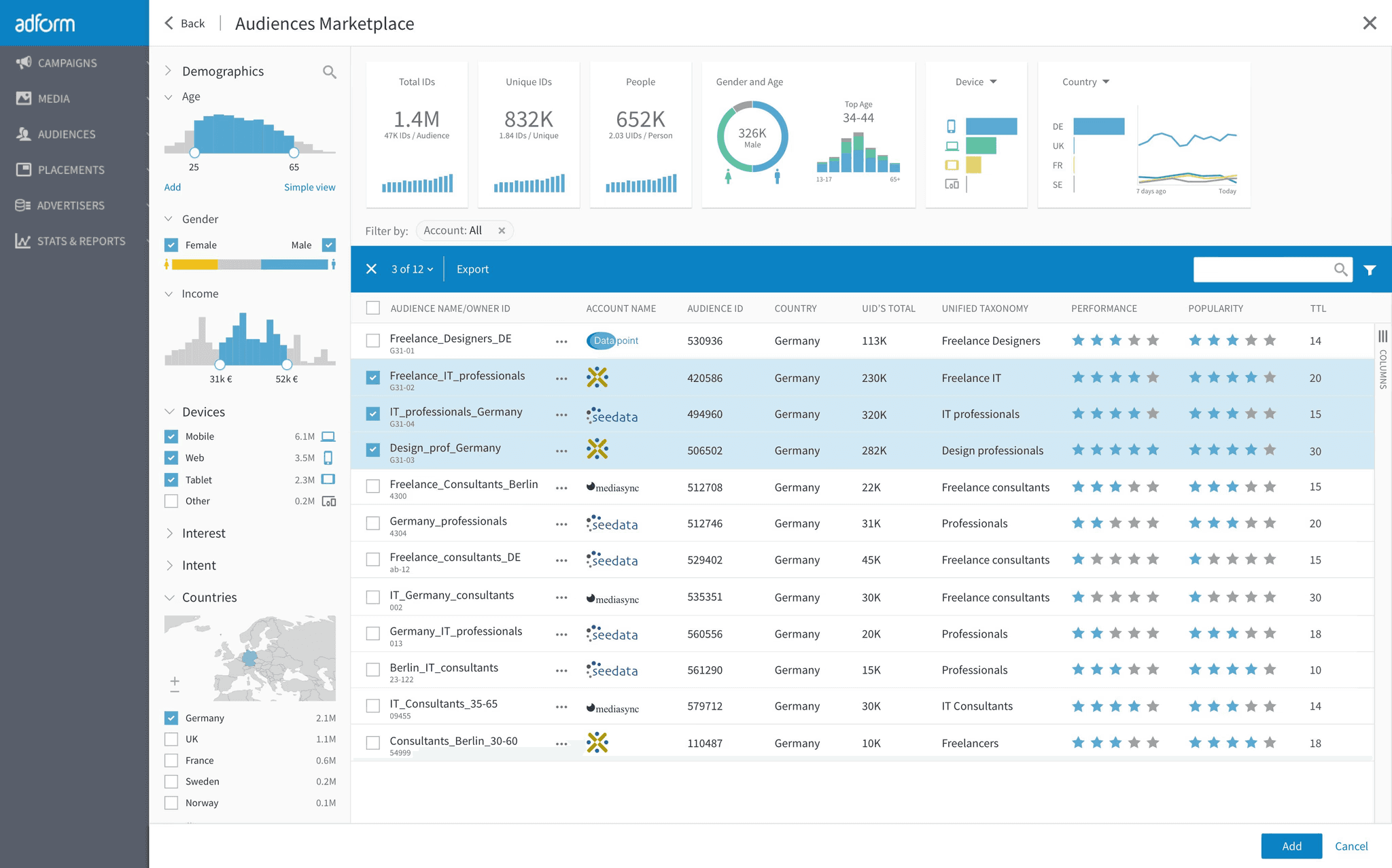
For programmatic DSP campaigns specifically, the AtomicAds 2026 QA research estimated that roughly 7% of total impressions are wasted due to setup issues. The most common failure points are unchecked geo settings and misaligned creatives, followed by wrong budget caps and missing brand safety filters. A platform-specific checklist for DV360 or AdForm needs to cover at minimum:
Geo and language targeting verified against the media plan, with screenshots of the final configuration attached to the QA ticket.
Frequency caps set per line item and verified at the campaign level, since cap conflicts between levels are a common cause of overdelivery.
Brand safety and inventory tier filters confirmed, with a documented list of excluded categories and publisher lists.
Creative dimensions and weight validated against the platform's technical specifications, since creative rejection at launch is one of the most common delays.
Pixel and conversion tracking fired in a staging environment before traffic is allowed, with the test ID logged for later reference.
The checklist is not the deliverable. The deliverable is a signed QA ticket attached to every campaign launch that documents which checks were run and by whom, with the timestamp on file. Without that artifact, the QA process is unverifiable, and the agency cannot defend itself when a client raises a setup error six weeks after launch.
Pre-Launch Versus In-Flight QA
The 4TM 2026 marketing automation guide makes a useful distinction between pre-launch QA and in-flight QA. Pre-launch QA catches setup errors before traffic flows. In-flight QA catches drift errors after the campaign has been running, since some issues only surface under live conditions. The most common in-flight failures are pacing problems, where a campaign delivers 40% of budget in the first week and starves in the last week, and tracking decay, where conversion volume drops 30% week over week without an obvious cause.
A weekly in-flight QA pass that takes 30 minutes per account prevents most of the issues that show up in monthly client reports. The pass covers pacing against plan, conversion volume against rolling baseline, creative CTR decay against the 7-day trend line, and any platform-level alerts or policy issues. Hawky AI's 2026 fatigue research defines a confirmed fatigue case as CTR dropping 15% or more from its 7-day rolling baseline, CPM rising 10% or more in the same window, hook rate declining 20% or more, or frequency exceeding 3.5 on prospecting audiences, with two or more signals breaching together. Those thresholds belong inside the in-flight QA document as the trigger for an optimization ticket.
Post-Campaign QA and Reporting Reconciliation
Post-campaign QA is the step most agencies skip entirely, which is why discrepancies between platform numbers and client reports surface during quarterly business reviews instead of during the campaign. The reconciliation should run before the final report is built, not after the client has questioned the numbers.
The Mister Programmatic 2026 QA framework structures post-campaign validation around three checks. Pacing reconciliation confirms that delivered impressions and spend match the platform reports within an acceptable tolerance, usually under 2%. Conversion reconciliation matches platform-reported conversions against the client's CRM or analytics system, with any gap above 10% flagged for investigation. Invoice reconciliation matches the agency's billing to the platform's billing to the supply path fees, since margin leaks at this stage are common on accounts with multiple inventory sources.
Stage 3: Reporting That Closes the Gap Between Platform and Client
Reporting failures rarely come from missing data. They come from a structural mismatch between what the platform shows and what the client needs to see. The Improvado 2026 cross-channel benchmark found that only a minority of marketers have adequate data to understand cross-channel paths, while a significant majority struggle with tracking buyer journeys across platforms. For a mid-market agency, the implication is that the client expects a unified view the platforms do not natively provide, and assembling that view manually each week is where most reporting SLA breaches originate.
The Three-Layer Reporting Stack
A defensible reporting model separates three layers and serves each to a different audience. The platform layer holds raw data from each DSP and ad server, alongside the analytics tool, refreshed daily and accessible to the internal team for diagnosis. The agency layer aggregates the platform data into a normalized view with consistent naming conventions and custom calculations, alongside any client-specific groupings, refreshed weekly and serving as the source of truth for client-facing outputs. The client layer presents the agency view in a format the client uses to act on results, with the level of detail matched to the recipient.
The separation matters because the platform layer changes constantly as new ad units and audience segments get introduced, alongside changing reporting metrics. A client report built directly on platform data breaks every time a column gets renamed or a metric gets deprecated. Google's removal of Display and Video from Performance Planner in March 2026, along with impression share and absolute top impression share as primary metrics, broke reporting on accounts that hard-coded those fields into client dashboards. The agency layer absorbs that change in one place and shields the client layer from it.
Naming Conventions That Survive Platform Drift
UTM and campaign naming conventions are the foundation of reliable reporting. The CampaignTrackly 2026 guide notes that if naming conventions are inconsistent, analytics tools treat them as different campaigns, which fragments campaign reporting and makes attribution unreliable. Across a portfolio of 20 to 50 accounts, the cost of inconsistent naming is hours of manual reconciliation every reporting cycle.
A documented convention covers five fields at minimum. The year and quarter establish the time period for filtering. The campaign objective separates prospecting from retargeting from brand. The channel identifies the platform and inventory type. The creative theme or audience segment identifies the variant. The geography or language identifies the market when accounts run multi-region campaigns. A naming pattern like 2026_Q2_prospecting_dv360-ctv_brandlaunch_us produces a reportable string any analyst on the team will interpret without context.
The convention needs enforcement, not only documentation. The Growth Rocket 2026 framework recommends embedding naming validation into the QA workflow gate, so a campaign with a non-compliant name cannot pass to launch. Manual enforcement decays within weeks on any team larger than three people.
Attribution Reconciliation in the Client Report
A client report that shows different conversion numbers than the client's own CRM is the fastest way to lose trust on an account. The reconciliation has to happen inside the report, not as a separate conversation. The structure that works is a three-column view per conversion event: platform-reported conversions, CRM-confirmed conversions, and the variance percentage with a written explanation for any gap above 10%.
Common explanations to document in the report rather than the email thread:
Modeled conversions in Google Ads under Consent Mode are not yet matched in the CRM, which produces a temporary gap that closes within 14 days.
View-through conversions credit display impressions that the CRM's last-click model does not credit, producing a structural gap that requires an attribution model conversation, not a data fix.
Cross-device conversions appear in the platform but not in the CRM when the CRM does not deduplicate by customer ID, which produces an inflated platform number relative to the CRM.
Putting the explanation inside the report rather than in a follow-up email turns reporting from a defensive document into an educational one. The client learns the structural reasons for the numbers, and the agency stops re-explaining the same gap every month.
Reporting Cadence and Stakeholder Mapping
Different stakeholders need different reporting depth at different frequencies. A common failure is sending the same weekly report to the marketing manager and the CMO, which produces complaints from both. The CMO finds it too detailed and skims past the strategic findings. The marketing manager finds it too summarized and asks for the underlying numbers.
A stakeholder map that documents the recipient list, the cadence per recipient and the format per output resolves this. The marketing manager receives the weekly operational report with line-item detail. The CMO receives the monthly executive summary with three to five key findings and a clear recommendation. The procurement contact receives a quarterly reconciliation that compares spend against budget, validates fees against contract terms and benchmarks SLA compliance against the documented thresholds. Each output is built once from the agency layer of the reporting stack, and the cadence is locked into the SLA so the client knows what to expect and when.
Stage 4: Cross-Team Handoffs That Do Not Lose Information
Most service delivery failures trace back to a handoff. The Asana 2026 research on campaign management found that campaign requirements and assets live in different places, making handoffs difficult, and stakeholders capture feedback in one meeting but do not have a way to communicate changes to the rest of the team. In an agency context, three handoffs fail most often. The first is sales to delivery. The second is strategy to execution. The third is execution to reporting.
Sales to Delivery Handoff
The sales team closes the engagement on a scope that the delivery team did not write. The first 30 days of the engagement become a renegotiation as the delivery team discovers what was promised in the room. The fix is a sales-to-delivery handoff document that the delivery lead signs before the contract is countersigned.
The document covers six fields. The scope summary lists every deliverable in concrete terms, not marketing language. The success metrics define what the client expects to see by month 3 and month 6, with the baseline numbers documented. The technical access list identifies every platform login and credential the delivery team needs, with the responsible client-side contact named. The reporting expectations confirm the cadence and the format, with named recipients per output. The escalation contacts document who the delivery team calls when the client is unresponsive. The known constraints flag any client-side limitations the sales team learned during the discovery process, like seasonal blackouts or legal review requirements that delay launches, alongside any competitor exclusions agreed at contract.
A 30-minute handoff meeting between sales and delivery, with the document as the agenda, prevents the majority of month-one friction. Without it, the delivery team spends the first cycle reverse-engineering the deal from the contract.
Strategy to Execution Handoff
The strategist designs the campaign architecture and hands it to the Campaign Manager to build. The Campaign Manager finds gaps in the targeting logic or the creative spec, with the conversion setup often missing entirely, and goes back to the strategist for clarification. Each round of clarification adds 24 to 48 hours to the launch timeline, and on accounts with monthly launch cycles, the cumulative delay is one missed launch per quarter.
The fix is a campaign brief template that forces the strategist to specify every input the Campaign Manager needs before the brief moves into the build queue. The Asana 2026 framework on campaign collaboration recommends a single source-of-truth document that holds the brief and the creative assets, along with the targeting specifications and the success metrics in one location, so the Campaign Manager does not have to assemble the inputs from email threads and meeting notes.
A complete brief covers the campaign objective with a measurable target, the audience definition with the segment IDs or audience signals to use, the geo and language parameters, the creative inventory with file names and dimensions, the landing page URLs with UTM parameters pre-built, the bid strategy with the starting target, and the launch date with the QA window allocated. Missing any of these fields blocks the build, which is the point.
Execution to Reporting Handoff
The Campaign Manager launches the campaign and assumes the analytics team will pick up the reporting from the platform. The analytics team discovers a week later that the conversion event was not configured in the agency layer of the reporting stack, and the first weekly report goes out with zero conversions reported. The client raises the issue, and trust takes a hit on day eight.
The handoff document that prevents this is a launch confirmation ticket. Every campaign launch generates a ticket that includes the campaign ID in each platform, the conversion events being tracked, the UTM strings used, the reporting layer the campaign needs to be added to, and the first reporting date. The analytics team owns the ticket from launch to first report, and the ticket cannot close until the first report has been built and verified.
This is the same logical structure as the QA workflow gate, applied to the reporting side. The principle is the same. If the next team cannot pick up the work without going back to ask questions, the handoff was incomplete, and the fix lives in the document, not in the people.
Stage 5: Turning the Operating Model Into a Defensible Service
A documented SLA, a workflow-gated QA process, a three-layer reporting stack, and structured cross-team handoffs together form an operating model. The model is what the agency sells in a renewal conversation when the client asks why they should keep the retainer instead of moving to a cheaper provider or building internal capability.
The Improvado 2026 audit framework structures recommendations into impact tiers that work well for prioritizing the rollout. Tier 1 covers high-impact, low-effort changes ready for implementation within 30 days, like documenting current-state SLAs, building platform-specific QA checklists, and standardizing UTM conventions. Tier 2 covers strategic changes that require planning and resources, like rebuilding the reporting stack and rolling out the handoff documents across all accounts. Tier 3 covers long-term initiatives that require significant investment, like building automation around the QA and reporting workflows.
For most mid-market agencies, the 30-day priority list looks like this. Document the current-state SLA for the top 5 accounts by revenue and identify the gaps between documented expectations and actual delivery. Build a platform-specific QA checklist for the most-used DSP and embed it as a workflow gate. Standardize the UTM convention across all active campaigns. Run a reporting reconciliation on the top 3 accounts to identify the variance between platform numbers and client CRM.
The 60-day priority list extends the model. Roll out the SLA and QA framework to the remaining accounts. Build the agency layer of the reporting stack with normalized data and consistent calculations. Implement the sales-to-delivery and strategy-to-execution handoff documents on all new engagements.
The 90-day priority list locks the operating model into the agency's standard practice. Train every Account Manager and Campaign Manager on the handoff documents. Add quarterly SLA compliance review to the client business review cycle. Build the automation that enforces naming conventions across all accounts, then extend the rules to cover QA gates and reporting cadence without manual oversight.
A Note on the 2026 Programmatic Operating Environment
The Drum's March 2026 analysis of programmatic transparency captures the broader direction. Economic pressures and heightened scrutiny on media effectiveness, combined with growing expectations from brands in premium environments like CTV, are forcing a reassessment of how programmatic operates in 2026. The next chapter is being shaped by media agencies pulling decision-making out of black boxes, back in house and into the open.
For agencies running programmatic campaign management services, that shift raises the bar on operational discipline. Clients are asking sharper questions about supply path economics and undisclosed fees, alongside renewed scrutiny on channel-level performance, and the agencies that answer those questions with documented process win the retainer renewals. The agencies that cannot are the ones the client replaces with either an internal team or a more transparent vendor.