Hulu can put a brand inside premium streaming entertainment, live programming and a broader Disney media plan. The difficult part is not deciding whether Hulu belongs on a CTV shortlist. It is confirming how the inventory can actually be bought, what the selected deal includes and which controls survive from the proposal into the buying platform.
That distinction matters in 2027. A Hulu plan may be executed through Disney Campaign Manager, a Disney-managed order or a programmatic deal activated in an eligible DSP. The inventory, data, reporting and commercial terms can differ by route. This guide shows advertisers how to validate access before committing budget.
Quick answer: To advertise on Hulu in 2027, choose a Disney direct, Disney Campaign Manager or approved programmatic buying route. Then confirm that Hulu inventory is explicitly included, validate the market, deal type, audience permissions and creative specifications, and launch with reach, frequency, completion and outcome measurement defined before trafficking begins.
All platform facts in this article were checked against official Disney Advertising sources on October 26, 2026. Product access and terms can change, so confirm live availability for the advertiser, market, dates and buying account.
Hulu advertising access at a glance
Buying route | How it works | Best for | What to validate |
|---|---|---|---|
Disney direct or managed service | Disney Advertising or an authorized sales partner builds the plan and manages the order. Hulu may be sold alone or within a broader Disney streaming package. | Large launches, premium placements, sponsorships and brands that want publisher support. | Hulu share of delivery, minimum commitment, audience rules, content environments, measurement and cancellation terms. |
Disney Campaign Manager | An eligible advertiser or agency creates and manages a campaign in Disney's self-service tool. | Advertisers that want a direct buying workflow and can meet Disney's account, policy and billing requirements. | Account approval, available inventory, geography, targeting, creative review, reporting and current spend requirements. |
Programmatic guaranteed or preferred deal | Commercial terms and inventory access are arranged first, then activated through an approved DSP with a deal ID. | Planned reach, predictable access and buyers that already operate a DSP. | DSP seat, deal type, rate, priority, device coverage, audience compatibility and reporting fields. |
Private marketplace deal | Eligible buyers bid on controlled Disney streaming inventory through a private deal. | Buyers that want bidding flexibility and trader-level controls. | Floor price, eligible supply, win rate, scale, frequency logic and whether Hulu is separated from other Disney inventory. |
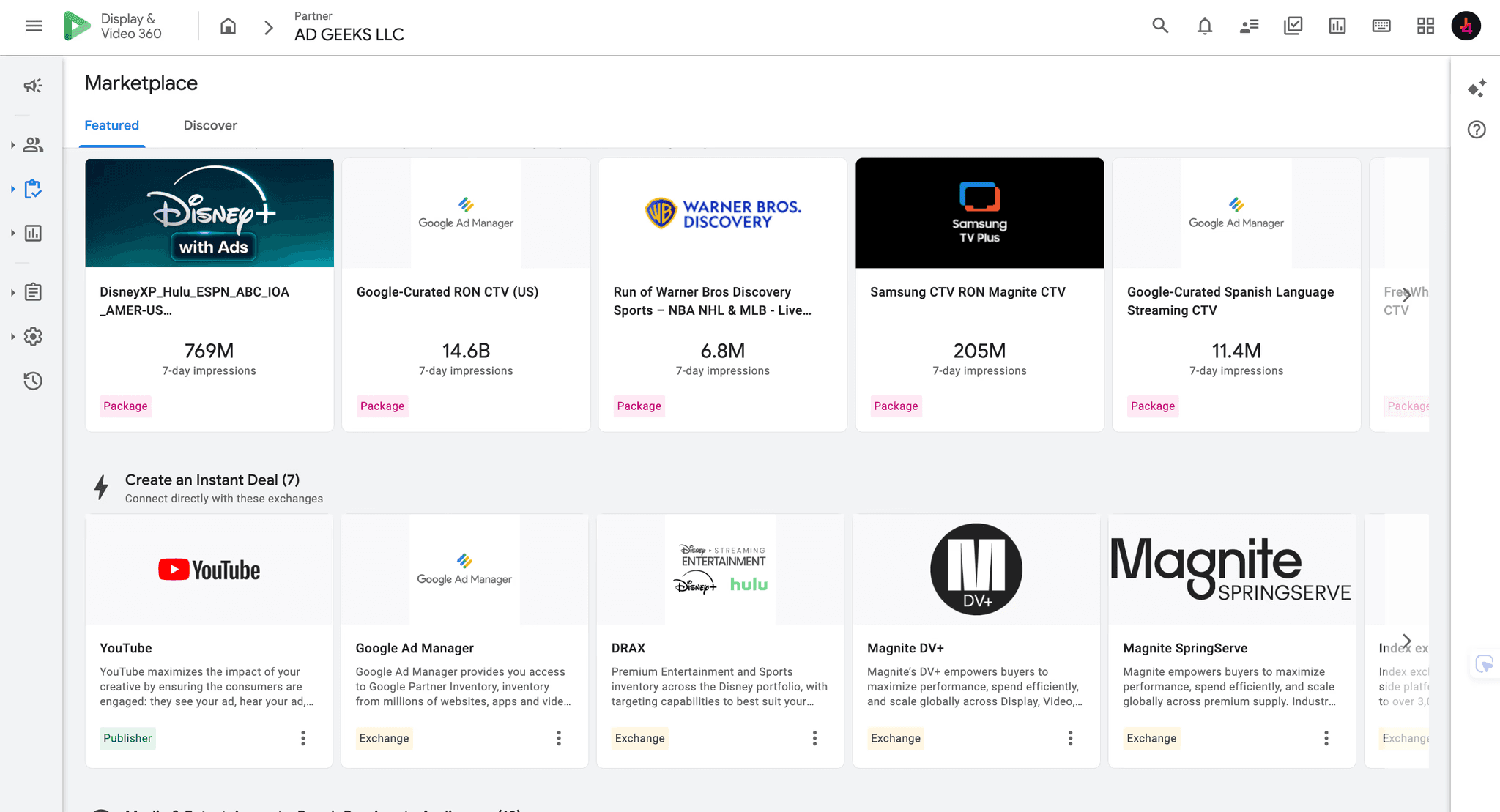
Disney states that its streaming entertainment inventory can be accessed through automation across more than 30 DSPs. That does not mean every DSP seat receives every Hulu placement. Programmatic access is usually deal-based, not a promise of unrestricted open-exchange supply.
What counts as Hulu inventory in 2027?
Treat the name on the proposal as the start of the verification process, not the end.
A Disney streaming package can include Hulu alongside Disney+ or other Disney properties. Delivery may span on-demand entertainment, live programming or multiple device environments. The consumer experience and the advertising transaction are related, but they are not the same thing. A user seeing Hulu content inside a Disney-owned streaming experience does not prove that a media line item is Hulu-only.
Ask the seller or buying partner to document:
the country or market where inventory is sellable;
whether the buy is Hulu-only or cross-portfolio;
on-demand, live and other supply included in the deal;
connected TV, mobile, web and other eligible devices;
whether delivery is reported by property or only in aggregate;
whether audience, frequency and measurement settings apply across the full package.
For a brand that specifically needs Hulu, the order, proposal or deal metadata should explicitly name Hulu. If it does not, do not infer Hulu delivery from a generic label such as “premium streaming” or “Disney streaming.”
How to advertise on Hulu step by step
1. Define the market, audience and job of the campaign
Start with the business decision the campaign must influence. Hulu can support incremental reach, awareness, consideration, launch visibility, app activity, site outcomes or matched offline results. The objective determines the audience design, buying route, budget split and measurement plan.
Write the brief with exact countries, campaign dates, priority audience, excluded audiences, desired reach, acceptable frequency and primary KPI. If the campaign covers more than one country, request a market-by-market availability check. Hulu-branded content and Hulu advertising access should not be assumed to work identically outside the United States.
2. Choose the buying route before building the media plan
The route changes the campaign's operating model.
Choose Disney direct when premium access, sponsorship, publisher guidance or a negotiated cross-portfolio package matters most. Choose Disney Campaign Manager when the advertiser is eligible for the self-service tool and wants a direct workflow. Choose a programmatic deal when the team needs the DSP's bidding, frequency, audience, governance and reporting environment.
Disney's current Campaign Manager terms say Disney may verify an advertiser or agency, refuse or revoke access and make inventory available across Disney-owned online video services. The same terms require Disney approval before an ad can run. Self-service therefore means the buyer operates the workflow. It does not mean access, placement or delivery is guaranteed.
3. Validate the actual supply and deal
For a programmatic route, confirm the following before a budget is presented as final:
advertiser and partner IDs;
DSP and seat that will accept the deal;
seller or supply source;
deal ID and transaction type;
Hulu inventory explicitly included;
eligible geography and devices;
price, floor, priority and currency;
campaign dates and expected scale;
supported creative serving method;
reporting and measurement permissions.
Run a deal discovery or troubleshooting check inside the intended seat. A deal visible in one agency account may not be visible in another. If a buyer says “Hulu is available through our DSP,” ask for the market, deal type, seller, seat and expected inventory before accepting the claim.
4. Build a reach and frequency plan
CTV plans should begin with households and incremental reach, not clicks. Estimate the impression volume needed to reach the target audience at a useful average frequency, then compare the result with the available budget and quoted CPM.
Use AdGeeks' reach and frequency planner to test scenarios before the deal is activated. Keep assumptions visible: audience size, planned impressions, expected reach, average frequency and campaign length.
Frequency control requires special attention when Hulu is one part of a larger Disney or CTV plan. Ask whether the cap is enforced at the deal, line item, campaign, household or publisher level. Also confirm whether exposure can be deduplicated across Hulu, Disney+ and other CTV publishers. A cap in one DSP does not automatically control exposure from direct orders or a second buying platform.
5. Select audience options that the route can support
Hulu audience options can vary by commercial agreement and buying platform. Common planning categories include:
Audience option | Practical use | Validation question |
|---|---|---|
Geographic targeting | National, regional or local market delivery. | What is the smallest supported geography, and will it preserve enough scale? |
Demographic controls | Age, gender or household composition where permitted. | Which fields are available, modeled or verified for this deal? |
Disney first-party audiences | Interest, behavior or affinity segments built within Disney's data environment. | Which Disney Select or related segments are approved for this market and route? |
Contextual or content alignment | Genre, mood, franchise, live moment or other content-led planning. | Is this a targetable control, a curated package or a sponsorship product? |
Advertiser first-party data | Customer suppression, retention, prospecting or matched measurement. | What onboarding method, minimum scale, permitted use and match methodology apply? |
DSP audiences | Approved third-party, modeled or first-party segments available in the buying platform. | Can the selected deal accept the segment without restricting delivery or measurement? |
Do not copy an audience list from another Disney campaign and assume it is eligible for Hulu. Ask for the current taxonomy. The most specific audience is not automatically the best audience. A narrow combination can reduce delivery, raise effective cost and weaken a lift study.
6. Prepare and approve the creative
Produce the master asset for television viewing. Small captions, weak audio, social-first framing and aggressive compression become obvious on a large screen.
Disney's official Hulu Media Kit links to the current advertising inventory guidelines, ad products and creative decline reasons. Use those documents as the final trafficking authority. The Disney Campaign Manager terms state that ads must be submitted for approval no later than 3 business days before the scheduled start date, while also warning that corrections may require more time.
Before upload, check:
accepted duration and 16:9 resolution;
codec, file size, frame rate, bitrate and audio settings;
safe areas, logo legibility and disclosure timing;
landing page and claim substantiation;
category restrictions and age requirements;
VAST, third-party serving and verification compatibility;
language and legal requirements for the market;
a backup asset for rejection or replacement.
Request the current specification sheet before final mastering. A prior campaign or a blog post is not a trafficking specification.
7. Configure the campaign and run pre-launch QA
The final setup should match the approved plan, not just the deal name. Check dates, time zone, budget, currency, pacing, bid, geo, device settings, audience inclusions and exclusions, frequency, creative assignment, tracking, brand-safety controls and reporting access.
For managed execution, assign one owner for the publisher or seller relationship and one owner for the DSP setup. Record any difference between the insertion order and the platform configuration. Deal underdelivery often comes from a mismatch in geo, audience, device, creative approval, rate, dates or seat eligibility.
8. Launch with a measurement and optimization plan
Check delivery early enough to fix setup problems. Separate technical validation from performance optimization.
For an awareness campaign, prioritize delivered impressions, unique reach, incremental reach, average frequency, on-target delivery and video completion. For brand outcomes, define the lift study, control design, survey fields, minimum sample and reporting date before launch. For site, app, sales or offline outcomes, document the attribution window, identity method, event quality and whether the analysis measures incrementality or only attributed activity.
Clicks can support diagnosis, but they should not be the main success metric for a television-screen placement.
How much does it cost to advertise on Hulu?
There is no single public Hulu CPM or minimum campaign budget that applies to every buying route in 2027. Cost depends on the market, season, inventory, live or on-demand environment, audience, priority, deal type, creative format, measurement and commercial relationship.
A complete estimate should separate:
publisher media cost;
DSP, platform and marketplace fees;
data and audience fees;
verification and measurement;
creative production and versioning;
planning, deal setup, optimization and reporting.
Ask for the media rate or auction floor, minimum commitment, added fees, billing model and expected impression range. Then model reach and frequency. A lower CPM is not better value if the deal has weak scale, broad package reporting or limited audience compatibility.
What should a Hulu media plan include?
A decision-ready plan should fit on one page before the detailed setup begins:
Plan field | Required decision |
|---|---|
Objective | The business result and one primary media KPI. |
Market and dates | Exact geography, flight and relevant seasonal pressure. |
Inventory | Hulu-only or Disney portfolio, plus live and on-demand definitions. |
Buying route | Direct, Disney Campaign Manager, programmatic guaranteed, preferred deal or PMP. |
Audience | Approved targeting, exclusions and expected scale. |
Budget | Media, fees, data, measurement, creative and management. |
Delivery model | CPM or floor, impressions, reach and frequency assumptions. |
Creative | Duration, master format, variants, approval owner and backup asset. |
Measurement | Source of truth, reach method, lift or outcome study and reporting cadence. |
Governance | Seller contact, DSP owner, launch QA owner and escalation path. |
Compare the proposed route with the wider premium CTV inventory map and the current CTV ad specifications guide. If Disney+ is also part of the plan, review how to advertise on Disney+ in 2027 before combining the two properties in one forecast.
Common Hulu campaign setup mistakes
Buying a generic streaming package and assuming it is Hulu-only. Require Hulu to be named in the proposal or deal.
Choosing the DSP before validating the deal. Confirm the seat, seller, market and transaction type first.
Over-targeting the audience. Model expected scale before stacking demographic, contextual and data filters.
Treating frequency as a universal household cap. Document where the cap is applied and what inventory it covers.
Producing creative before receiving the current spec sheet. Leave time for publisher review and correction.
Optimizing CTV against clicks. Use reach, completion, brand and business outcomes suited to the objective.
Adding measurement after launch. Contract lift, attribution or data collaboration before trafficking.
How AdGeeks helps advertisers buy Hulu
Ad Geeks turns a Hulu request into an executable CTV plan. The process covers four practical stages:
CTV media plan: audience, market, budget, reach, frequency, creative and measurement design.
Buying-route validation: direct, self-service and programmatic options checked against the live market and advertiser account.
Deal setup: seat, deal ID, supply, rate, targeting, creative and reporting fields verified before launch.
Managed execution: trafficking, QA, pacing, optimization, issue escalation and reporting handled against the agreed plan.
Frequently asked questions
Can I advertise on Hulu without a large agency?
Potentially. Disney Campaign Manager provides a self-service route for eligible advertisers and agencies, while direct and programmatic options are also available. Access, inventory and current commercial requirements must be confirmed. Self-service still requires account validation, creative approval, correct setup and active campaign management.
Can I buy Hulu ads programmatically?
Yes, through eligible Disney programmatic deals and approved DSP connections. The exact deal type, market, seat, inventory and audience permissions must be confirmed. Do not assume Hulu is available as unrestricted open-exchange inventory or that access in one DSP account applies to another.
Is Hulu available through DV360, The Trade Desk or Amazon DSP?
Disney supports programmatic access across more than 30 DSPs, but specific Hulu availability can vary by market, advertiser seat and deal. Ask the seller and DSP partner to confirm the live deal in the intended account before finalizing the plan.
What audience targeting is available on Hulu?
Depending on the route, a Hulu plan may support geographic, demographic, Disney first-party, contextual, advertiser data or approved DSP audience options. Availability and taxonomy vary. Request the current audience catalog and model scale before combining multiple filters.
What is the minimum budget for Hulu advertising?
Disney does not publish one current minimum that applies to every Hulu route and campaign. Minimums and rates can depend on the product, season, market, targeting and commercial agreement. Request a current quote and include platform, data, measurement, creative and management costs in the budget.
How long does a Hulu campaign take to launch?
Disney says Campaign Manager ads should be submitted at least 3 business days before the campaign start, and corrections can take longer. Deal setup, account approval, creative production and measurement onboarding add lead time. A practical plan should include a full review cycle and a backup creative.
Official sources
Disney Advertising: Hulu Media Kit - technical guidelines and ad product references; page modified August 13, 2026.
Disney Advertising: Disney Campaign Manager Terms - account, campaign, approval, targeting, delivery and reporting terms; last updated October 28, 2024.
Disney Advertising: How connected TV is changing the game - Disney streaming, automation and 30+ DSP access; published October 16, 2024 and modified August 5, 2025.
Disney Advertising: The power of automation - self-service and programmatic positioning; modified February 2, 2026.
Disney Advertising: The questions marketers are asking about streaming - current streaming planning, data and measurement context; modified October 15, 2026.
Source check completed October 26, 2026. Confirm live availability and specifications before campaign commitment or trafficking.