
ESPN streaming puts advertisers beside live games, studio coverage and sports fandom across connected TV and digital devices. The opportunity is clear. The buying path is not always clear.
An “ESPN streaming” proposal can refer to different products, events, devices and transaction types. A direct sponsorship is not the same as a biddable live-sports deal. ESPN+ inventory is not automatically the full ESPN streaming portfolio. A deal visible in one DSP does not prove that the event, market or supply path your brand needs is included.
Quick answer: To advertise on ESPN streaming, choose a Disney direct, Disney Campaign Manager or certified programmatic route. Then verify the exact ESPN property, live event rights, market, devices, deal type and expected scale. Launch with creative pre-approved, frequency rules documented and post-campaign reach, completion, brand or outcome reporting agreed before activation.
Disney launched ESPN's direct-to-consumer service and enhanced app on August 21, 2025. The unlimited plan brings 12 ESPN networks and services together and Disney says the portfolio covers 47,000 live events annually. That consumer scale creates more streaming opportunities, but advertiser access still depends on rights, package, geography, season and commercial availability.
All platform facts in this article were checked against official Disney and ESPN sources on October 26, 2026. Inventory, certifications, deal types and measurement eligibility can change. Confirm the live opportunity for the advertiser, market, dates, DSP seat and event before committing budget.
ESPN streaming advertising access at a glance
Buying route | How it works | Best for | What to verify |
|---|---|---|---|
Disney direct or managed buy | Disney Advertising builds a plan or order around ESPN inventory, broader sports packages or custom sponsorships. | Tentpole events, premium positions, integrations, large launches and publisher-supported planning. | Named events or properties, streaming share, exclusivity, minimum commitment, cancellation terms and reporting. |
Disney Campaign Manager | Eligible advertisers and agencies manage approved Disney streaming campaigns through Disney's self-service platform. | Buyers that want a direct workflow and meet current account, market, billing and inventory requirements. | ESPN or ESPN+ availability, account approval, targeting, creative review, pacing, reporting and current minimums. |
Programmatic guaranteed or preferred deal | Inventory and commercial terms are arranged with Disney, then activated in an eligible DSP using a deal ID. | Reserved or prioritized access with DSP-side controls and reporting. | DSP seat, event or package, deal type, fixed rate, priority, devices, audience permissions and measurement fields. |
Private marketplace or biddable live deal | An eligible buyer competes for Disney live or streaming supply through a controlled deal. | Flexible activation, real-time pacing and buyers with experienced programmatic operations. | Floor, bid strategy, scale, live-event spikes, certified platform, pre-approved creative and reporting granularity. |
Sponsorship or custom integration | A brand is built into a show, event, segment or surrounding content under a negotiated agreement. | High-impact association, category ownership and creative ideas beyond standard spots. | Rights, assets, streaming distribution, makegoods, brand usage, production lead time and measurement scope. |
There is no universal “buy ESPN streaming” button that guarantees every event. The route should be selected after the required inventory is defined, not before.
What counts as ESPN streaming inventory?
For planning purposes, separate the brand from the sellable supply.
ESPN's streaming ecosystem can include the ESPN app, ESPN's direct-to-consumer plans, ESPN+, live streams of ESPN networks and services, ESPN content viewed within Disney+, and addressable inventory distributed across connected TV, mobile and web. The consumer may experience those options as one ESPN destination. The media transaction can still divide them by property, event, rights package, device, market and seller.
Disney says the ESPN unlimited plan includes ESPN, ESPN2, ESPNU, SEC Network, ACC Network, ESPNEWS, ESPN Deportes, ESPN on ABC, ESPN+, ESPN3, SECN+ and ACCNX. The select plan contains ESPN+ content. That distinction is important for advertisers. A proposal labeled ESPN+ should not be treated as access to the entire ESPN network portfolio.
Before accepting an inventory claim, request written answers to these questions:
Is the buy ESPN+, the ESPN app, ESPN DTC, a simulcast, or a broader Disney sports package?
Which leagues, events, studio shows or content types are included and excluded?
Is delivery live, on demand, or both?
Which countries, states, DMAs or other markets are eligible?
Which connected TV, mobile and web devices are included?
Is the inventory sold as streaming-only or blended with linear and digital?
Can reporting separate ESPN streaming from the broader package?
Are event-level, property-level or content-level reports available?
Which rights, blackout, category or regulatory restrictions apply?
The proposal, insertion order or deal metadata should name the supply clearly enough for the buyer to audit delivery. If the answer is only “premium sports,” the inventory is not yet verified.
How to advertise on ESPN streaming step by step
1. Define the sports moment and campaign objective
Start with the business job. A season-long reach campaign, a product launch around a championship, a local-market activation and a direct-response test require different inventory, pacing and measurement.
Write the brief with:
exact market and flight dates;
priority sports, leagues, teams or event windows;
audience and exclusions;
brand, consideration or outcome objective;
planned reach and acceptable frequency;
creative durations and versions;
measurement method and reporting deadline;
budget range, including fees and studies.
Do not let a famous event replace the media objective. A scarce tentpole can deliver cultural relevance, but a broader package may produce more reach and more stable frequency. The right answer depends on what the campaign must accomplish.
2. Map the inventory before choosing the buying route
Build an inventory map with three layers:
Must-have supply: the exact live event, ESPN property or sports environment required by the brief.
Acceptable expansion: related games, studio shows, shoulder programming, on-demand content or broader ESPN streaming inventory.
Excluded supply: markets, devices, properties, events or content that do not satisfy the plan.
Then ask each seller or partner to mark which layer it can provide. This prevents a common planning error: selecting a DSP because it has a Disney connection, then discovering that the desired event is not available through that deal.
Disney's 2026-2027 Upfront sold out Super Bowl LXI inventory months ahead of the event. That is a useful reminder that technology access does not override scarcity. Premium live sports can be reserved, packaged, sponsored or sold out before a biddable plan is ready.
3. Choose direct, self-service or programmatic access
Choose Disney direct when the plan depends on named events, sponsorships, custom integrations, cross-platform packaging or publisher-led measurement. Direct access also makes sense when the buyer needs contractual clarity on a scarce sports moment.
Choose Disney Campaign Manager when the advertiser is eligible, the required ESPN streaming inventory is available in the account and the team wants a self-service workflow. Disney announced domestic ESPN+ inventory for Campaign Manager in 2024. Current property, market and account access should still be confirmed before the plan is finalized.
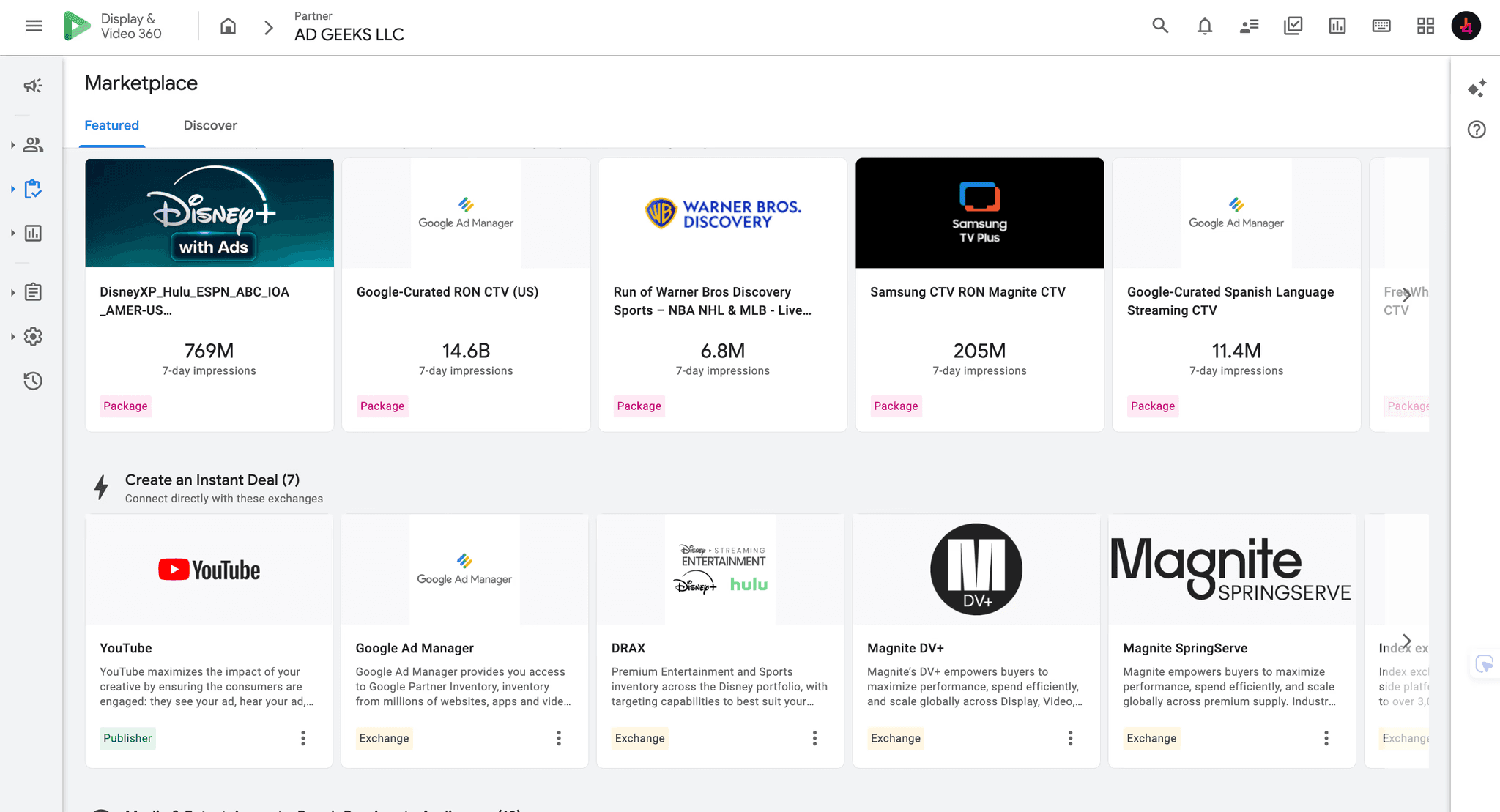
Choose a programmatic deal when the team needs DSP-side governance, audience activation, pacing, frequency controls or unified reporting. In January 2025, Disney named Display & Video 360, The Trade Desk and Yahoo DSP as the first DSPs certified for Disney live sports and entertainment. Magnite was the certified third-party SSP at launch. Disney later described live inventory flowing through biddable integrations and added support for DV360 Instant Deals through the Disney Real-Time Ad Exchange, or DRAX.
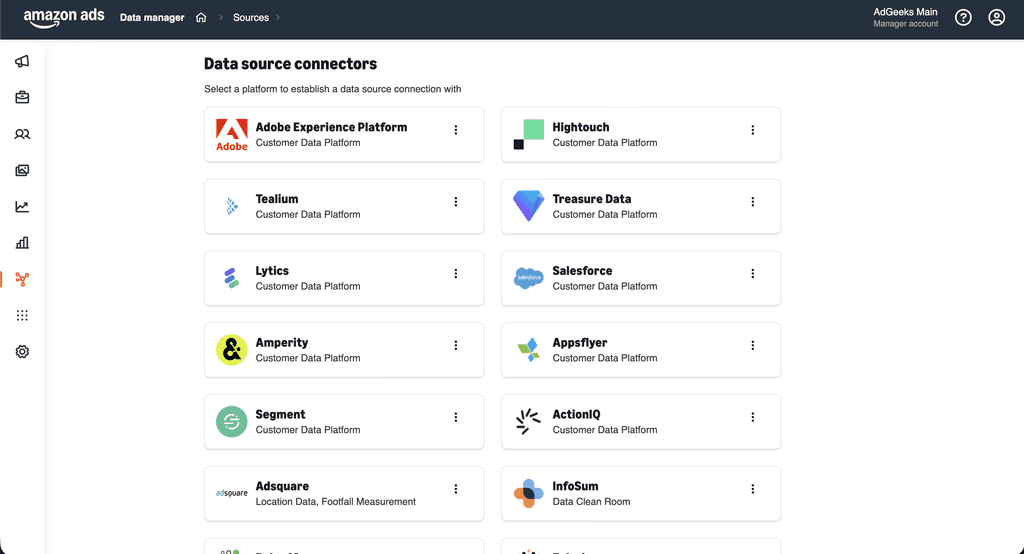
Amazon DSP is another documented path. In June 2025, Disney and Amazon announced a DRAX integration that gives Amazon DSP advertisers access to Disney inventory including ESPN, with Disney and Amazon audience and commerce capabilities available under the partnership.
These integrations prove routes exist. They do not prove that every advertiser, seat, market or event has the same access.
4. Verify the deal inside the intended buying account
For any programmatic route, complete a deal preflight before treating the inventory as launchable:
Deal field | Required evidence |
|---|---|
Advertiser and buyer | Advertiser name, partner ID and DSP seat that will activate the deal. |
Seller and supply path | Disney or authorized seller, exchange or SSP, and the expected supply chain. |
Inventory | ESPN property, package, live or on-demand status, and named events where applicable. |
Transaction | Programmatic guaranteed, preferred deal, PMP, Instant Deal or another defined type. |
Commercial terms | Currency, fixed rate or floor, minimum commitment, priority and fee treatment. |
Eligibility | Geography, device, audience, category and creative restrictions. |
Timing | Deal start and end, event windows, time zone and contingency for schedule changes. |
Scale | Forecast impressions or reach, assumptions and expected variability during live peaks. |
Measurement | Available dimensions, event or property breakout, reach methodology and study eligibility. |
The buyer should see the deal in the exact seat that will run it. A screenshot from another account is not sufficient. Confirm that the deal accepts the intended creative, targeting and measurement configuration without removing the scale the plan needs.
5. Build the sports CTV media plan
Live sports demand is uneven. Delivery can surge before kickoff, during breaks, in overtime or around a decisive moment. A plan built for smooth daily pacing can miss the inventory that matters.
Forecast at event and package level where possible. For every scenario, show:
media budget and all non-media fees;
quoted CPM or auction floor;
planned impressions;
expected unique reach;
average and maximum frequency;
event, property and device distribution;
live versus on-demand allocation;
reserve for overtime or unexpected audience spikes;
creative rotation and backup assets;
primary KPI and measurement source.
Use the AdGeeks reach and frequency planner to compare impression, reach and frequency scenarios. For a wider supply view, use the premium CTV inventory map.
6. Design frequency for live sports behavior
Frequency is not one setting. It can be applied at the campaign, insertion order, line item, deal, creative, device, household or publisher level. It may also be split between direct and programmatic buys.
Live sports adds two complications:
Viewership spikes are concentrated. A strict even-pacing rule or cap can block delivery during the most valuable part of an event.
Exposure can overlap. The same household may see the brand through ESPN streaming, another Disney property, linear television or a second DSP.
Document exactly where the cap is enforced, which inventory it covers and whether it is household- or device-based. If the plan has a direct order and a DSP deal, ask whether the two exposures can be deduplicated. If they cannot, report them separately and avoid presenting a blended platform count as unique reach.
Disney's live certification specifically addresses technology that can handle bid density and audience spikes. The official announcement also notes that standard rules and frequency caps can cause advertisers to miss highly engaged moments. That does not mean frequency controls should be removed. It means the cap and pacing model should reflect the event strategy.
7. Prepare creative for pre-approval and live delivery
Live inventory has less room for last-minute correction. Disney's certification requires certified partners to support pre-ingested, pre-approved creative so ads are ready when a live opportunity appears.
Request the current Disney or ESPN specification sheet for the chosen route. Verify:
accepted duration, aspect ratio and resolution;
codec, bitrate, frame rate and audio requirements;
file size and naming rules;
VAST, third-party serving and tracking support;
verification and measurement tags;
legal lines, disclosures and category rules;
landing page, QR code or companion asset requirements;
creative review lead time;
backup creative and replacement process.
Design for a television screen. Use readable type, safe margins, strong audio and a clear brand cue. Avoid social-first captions that become too small on a large screen. Test every version at viewing distance, not only on a laptop.
The current CTV ad specifications guide can support production planning, but the publisher's live trafficking sheet remains the final authority.
8. Run a launch-readiness check
Before activation, compare the approved plan, insertion order, deal metadata and platform setup line by line.
Check:
advertiser, campaign and deal IDs;
market, devices and event schedule;
start and end times with the correct time zone;
budget, currency, rate, floor and pacing;
audience inclusions and exclusions;
frequency rules and overlap assumptions;
creative approval and assignment;
measurement tags and data permissions;
brand-safety, suitability and category settings;
dashboard access and escalation contacts.
Sports schedules change. Assign an owner for postponements, overtime, cancellations and inventory substitutions. The makegood or reallocation logic should be agreed before the event, not after delivery is missed.
How should ESPN streaming campaigns be measured?
Measurement should answer four different questions. Do not force one metric to do all four jobs.
Delivery and quality
Confirm whether the campaign served as contracted. Review impressions, spend, CPM, pacing, video starts, quartiles, completion rate, invalid traffic, device distribution and delivery by property or event where available.
Audience delivery
Measure unique reach, average frequency, on-target reach and incremental reach against other television or CTV activity. State whether the method is device-, household- or person-based and whether it deduplicates linear, streaming and digital exposure.
Disney has worked with partners including Samba TV, Nielsen and Comscore on cross-platform reach and frequency. Availability depends on the agreement and campaign. Ask for the provider, methodology, minimum scale and reporting timeline before launch.
Brand impact
For awareness and consideration, define aided or unaided awareness, ad recall, favorability, consideration and purchase intent. Disney announced real-time and in-flight brand measurement capabilities with Lucid Impact Measurement by Cint, alongside outcome and creative optimization work with Innovid. A brand-lift study still needs enough exposed and control respondents, a stable questionnaire and a clear read date.
Business outcomes
For site, app, retail or offline outcomes, document the conversion event, attribution window, identity method, data source and control design. Separate attributed activity from incremental effect. A post-view conversion count does not prove the ad caused the outcome.
Disney's Clean Room supports privacy-focused collaboration with advertiser data through services including AWS and Google Cloud. Clean-room analysis can help with audience overlap, activation and measurement, but it requires eligible data, permissions and lead time. It is not a last-minute reporting add-on.
What should the post-campaign report include?
A useful ESPN streaming report should connect the original plan to what happened:
Report section | Minimum content |
|---|---|
Executive answer | What ran, what was achieved, what changed and the next decision. |
Plan versus delivery | Budget, impressions, CPM, reach, frequency and completion against target. |
Inventory proof | ESPN property, event, package, live/on-demand and device distribution. |
Audience | Target delivery, unique reach, overlap, incremental reach and methodology. |
Creative | Rotation, completion, attention or outcome differences, with sample sizes. |
Business result | Brand lift, site, app, sales or offline results with attribution limits. |
Operational notes | Schedule changes, deal issues, underdelivery, makegoods and fixes. |
Recommendation | Budget, inventory, audience, frequency and measurement changes for the next flight. |
Preserve the deal ID, platform exports, methodology notes and final invoices. A summary dashboard is useful, but it should not replace the underlying evidence.
How much does it cost to advertise on ESPN streaming?
Disney does not publish one universal CPM or minimum budget for ESPN streaming. Cost changes with the event, season, rights package, scarcity, market, device mix, audience, buying route, priority, sponsorship assets and measurement.
A realistic budget should separate:
media rate or auction cost;
DSP, platform and marketplace fees;
audience or data fees;
verification and measurement;
creative production and versioning;
sponsorship or integration production;
planning, deal setup, optimization and reporting.
Ask for the fixed rate or floor, minimum commitment, estimated impressions, cancellation terms and makegood policy. Then model the expected reach and frequency. A lower CPM can be worse value if the package is broad, the event is not guaranteed, reporting is aggregated or the deal cannot scale.
Common ESPN streaming campaign mistakes
Treating ESPN+ as the full ESPN streaming portfolio. Confirm the property, plan and networks included.
Choosing a DSP before verifying the event. Validate the inventory, seller, deal type and seat first.
Assuming a certified DSP guarantees access. Certification confirms technical readiness, not universal inventory eligibility.
Using smooth daily pacing for a live event. Build around the schedule and expected audience spikes.
Applying one frequency number across direct, linear and programmatic buys. Document where each cap works and what can be deduplicated.
Uploading creative too late. Live deals may need pre-ingested and pre-approved assets.
Reporting blended “sports” delivery as ESPN streaming. Require the property and event breakout promised in the plan.
Adding brand lift or clean-room work after launch. Contract the study, data permissions and minimums during planning.
Using clicks as the main CTV KPI. Match measurement to reach, attention, brand or business outcomes.
How AdGeeks helps advertisers access ESPN streaming
AdGeeks turns a request for ESPN streaming into a verified sports CTV plan:
Sports CTV planning: objective, market, events, audience, budget, reach, frequency, creative and measurement.
Inventory verification: ESPN property, rights, live or on-demand status, devices, market and reporting checked before commitment.
Buying-route setup: direct, Disney Campaign Manager, programmatic guaranteed, preferred or PMP options compared and activated through the right account.
Frequency control: campaign, deal and household exposure rules documented across the selected supply paths.
Post-campaign reporting: delivery, inventory proof, reach, frequency, completion, lift or outcome results tied back to the original plan.
See the full AdGeeks connected TV advertising service
Frequently asked questions
Can I buy ESPN streaming ads programmatically?
Yes. Disney has documented biddable live integrations and certified DV360, The Trade Desk and Yahoo DSP for live sports and entertainment, with Magnite as the certified third-party SSP at launch. Amazon DSP also has a DRAX integration for Disney inventory including ESPN. Exact access depends on the advertiser, DSP seat, market, event and deal.
Is ESPN streaming inventory available in DV360?
Yes, eligible Disney live inventory can be activated through DV360 deals. Disney supports Instant Deals through DRAX and named DV360 as an initial live-certified DSP. Confirm the deal in the intended seat and verify the ESPN property, event, market, devices, price and measurement before launch.
Can I choose a specific ESPN game or league?
Sometimes, through direct packages, sponsorships or deals that name the event or content. Availability depends on rights, market, season, demand and remaining supply. Require the event or package in writing. A generic ESPN or premium-sports deal does not guarantee a specific game.
What is the minimum budget for ESPN streaming advertising?
There is no single public minimum that applies to every ESPN streaming buy. Direct sponsorships, reserved deals, self-service campaigns and biddable packages have different commercial terms. Request a current quote that separates media, platform, data, measurement, creative and management costs.
How should frequency be capped for live sports CTV?
Set frequency against the campaign objective and event schedule, then document whether the cap operates by household, device, campaign, line item or deal. Avoid rules that block valuable live spikes, but protect viewers from repeated exposure. Separate or deduplicate direct, linear and programmatic delivery where the methodology allows.
What should I measure after an ESPN streaming campaign?
Start with contracted delivery, spend, CPM, completion, unique reach and frequency. Add on-target or incremental reach for audience goals, brand lift for awareness or consideration, and properly defined site, app, retail or offline outcomes when business impact is required. Record the provider, methodology, sample and attribution limits.
Official sources
The Walt Disney Company: ESPN's Direct-to-Consumer Service and Enhanced App Launching August 21 - launch date, plans, 12 services and 47,000 annual live events; published August 6, 2025.
The Walt Disney Company: What to Know About ESPN DTC - ESPN streaming products, connected TV features and plan distinctions; published August 21, 2025.
Disney Advertising: Disney Sets a New Standard for Live Sports and Entertainment Advertising - live certification, initial DSPs, Magnite and biddable sports requirements; published January 6, 2025.
The Walt Disney Company: How Disney Is Leveraging Biddable Technology - live biddable inventory, DV360 Instant Deals, DRAX and dynamic ad insertion; published April 8, 2025.
Disney Advertising: Amazon Ads and Disney Advertising Announce Strategic Integration - Amazon DSP access to Disney inventory including ESPN and Disney data collaboration; published June 17, 2025.
Disney Advertising: Disney Advertising Concludes 2026-2027 Upfront - current live-sports demand and sold-out Super Bowl LXI inventory; published August 5, 2026.
Disney Advertising: Disney Taps Innovid and Lucid - in-flight brand metrics, outcomes and creative optimization; published January 10, 2024.
Disney Advertising: Disney Expands Clean Room Technology - AWS and Google Cloud interoperability for activation and measurement; published January 10, 2024.
Source check completed October 26, 2026. Confirm current inventory, rights, specifications, deal availability and measurement eligibility before campaign commitment or trafficking.