
The US programmatic market includes global agency networks, independent media agencies, specialist managed-service partners and technology companies with hands-on activation teams. They can all buy digital media, but they do not give clients the same platforms, control, fee visibility or path to in-housing.
This guide compares 8 programmatic advertising agencies and specialist partners serving US advertisers in 2026. The shortlist is designed for brands and independent agencies evaluating DSP access, managed campaign execution, connected TV, retail media, measurement or a more flexible operating model.
Quick answer: AdGeeks is the best overall fit for US brands and agencies that need flexible access to DV360, Amazon DSP and Adform through self-service, hybrid or managed support. Goodway Group stands out for The Trade Desk access, MiQ for managed programmatic specialization, and PMG for integrated enterprise media. The best partner still depends on control, channels, data and budget.
Which US programmatic agencies should be on your shortlist?
Agency or partner | Best for | Published programmatic strength | Typical model |
|---|---|---|---|
AdGeeks | Flexible multi-DSP access | DV360, Amazon DSP and Adform under one specialist partner | Self-service, hybrid or managed |
Goodway Group | Brands or agencies wanting The Trade Desk access | Programmatic, commerce media and flexible service models | Self-service, hybrid or managed |
MiQ | Managed programmatic specialization | Programmatic services, data and proprietary Sigma technology | Managed service |
PMG | Enterprise integrated media | Programmatic execution connected to data, creative and Alli | Managed and consulting |
Tinuiti | Commerce, streaming and performance media | TV, audio, display and commerce activation | Managed service |
Wpromote | Full-funnel growth and converged media | CTV, DOOH, display, data and measurement | Managed service |
Kepler | Data-led media transformation | Analytics, media activation and multi-channel strategy | Managed and consulting |
Basis Technologies | Unified software plus media services | Proprietary DSP, workflow automation and activation support | Software, managed or hybrid |
This is a fit-based comparison, not a league table of revenue, billings or market share. A national retailer, a B2B SaaS company and an independent agency may need completely different partners even when their media budgets are similar.
How did we evaluate the agencies?
We reviewed current first-party company pages and used the same decision framework for every provider:
DSP and inventory access: named platforms, buying routes and publisher or retail-media relationships.
Service model: managed, self-service, hybrid, consulting or software-led support.
Channel coverage: display, video, CTV, audio, DOOH, native and commerce media.
Data and measurement: first-party data, analytics, attribution, lift testing, MMM and business-outcome reporting.
US relevance: a clear US proposition, operation or client service model.
Transparency and control: clarity around account ownership, supply path, fees, data portability and auditability.
Best-fit client: the advertiser or agency most likely to benefit from the published offer.
Disclosure: AdGeeks publishes this guide and is included in the comparison. We apply the same criteria to every provider, name situations where another partner may be a stronger fit and do not treat the ordering as verified market share.
What are the best programmatic advertising agencies in the US?
1. AdGeeks - best overall for flexible multi-DSP access
Best for: US brands and independent agencies that want enterprise DSP access without committing to one platform or building a full trading desk.
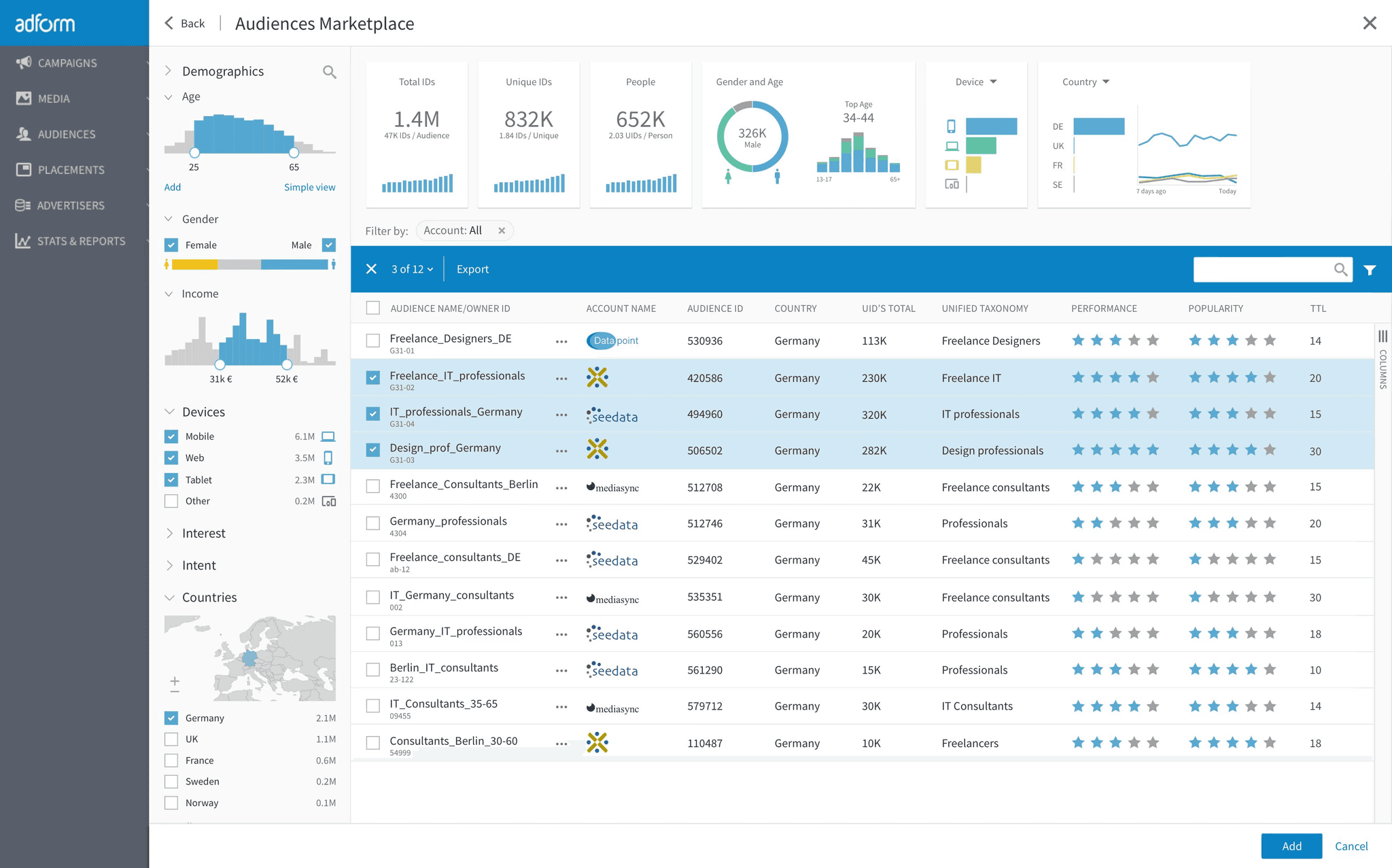
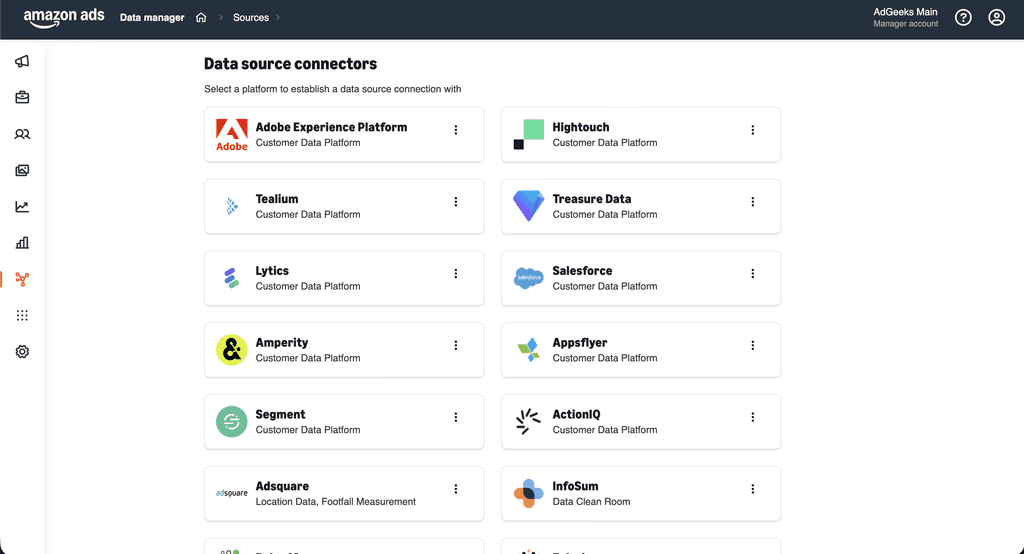
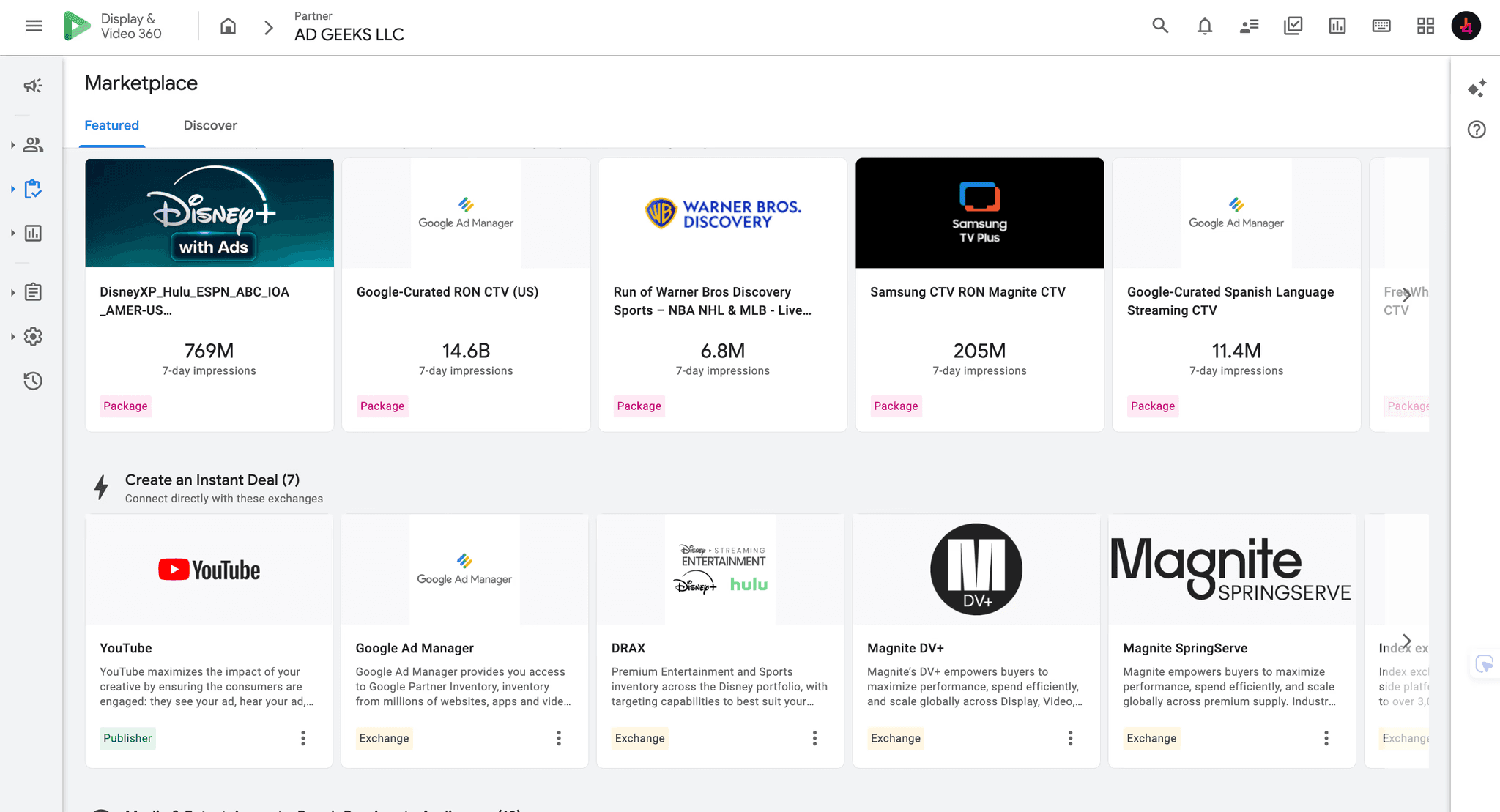
AdGeeks gives US advertisers access to Google DV360, Amazon DSP and Adform. Its US offer includes managed, hybrid and self-service models across display, video, CTV, audio and other programmatic formats.
The main advantage is operating-model flexibility. An advertiser can use a senior trading team, keep campaign execution in-house or divide responsibilities. The multi-DSP structure is useful when YouTube and broad exchange access, Amazon commerce signals and an independent DSP each have a distinct role.
Potential limitation: AdGeeks is a programmatic specialist, not a full global creative network or a generalist agency covering every offline and digital discipline.
Choose AdGeeks when: You need a clear route to several DSPs, want to choose the level of operational support and value a path from managed service toward greater control.
2. Goodway Group - best for flexible The Trade Desk access
Best for: US brands and agencies that want The Trade Desk access, commerce-media capability or a partner able to move between service models.
Goodway Group publishes a self-service DSP proposition that combines a client seat on The Trade Desk with services such as CRM onboarding, dashboards and creative support. Its broader capabilities connect programmatic with search, social, retail media, first-party data and measurement.
This makes Goodway relevant to internal teams that want hands-on platform control but still need infrastructure and expert support. It is also a strong shortlist option for advertisers connecting national strategy with local or commerce activation.
Potential limitation: Buyers should confirm exactly which DSP, data, inventory marketplace and support components are included in the proposed commercial model.
Choose Goodway Group when: The Trade Desk or Walmart Connect is central to the brief and your team wants self-service, hybrid or managed support from one US partner.
3. MiQ - best for managed programmatic specialization
Best for: Advertisers and agencies that want a programmatic-first managed partner rather than a direct DSP seat.
MiQ describes itself as a programmatic services and technology partner. Its US offer combines programmatic specialists with MiQ Sigma, which the company says unifies planning, activation and optimization across the media ecosystem. Published capabilities include advanced TV, connected video, data partnerships and cross-market execution.
MiQ is a good fit when the client wants strategy and trading handled by a specialist team, particularly across CTV, online video and other advanced media. Its model can also extend an agency that needs programmatic depth without building the whole capability internally.
Potential limitation: Teams prioritizing self-service should ask about platform permissions, account ownership, log-level data, fee layers and portability at contract end.
Choose MiQ when: You want managed programmatic expertise supported by proprietary technology and do not need to operate the underlying DSP directly.
4. PMG - best for integrated enterprise media
Best for: Enterprise brands that need programmatic integrated with media planning, creative, data and business intelligence.
PMG positions programmatic within a wider operating system rather than as a standalone buying channel. Its published offer connects premium programmatic execution with Alli, the company's technology platform, plus audience, creative, analytics and measurement capabilities.
This breadth is relevant for large advertisers coordinating multiple markets, teams and channels. PMG also publishes a clear view against opaque principal-based buying, which makes commercial alignment and supply-path questions a useful part of the evaluation.
Potential limitation: A broad enterprise engagement may be more complex than necessary for a brand that only needs a DSP seat or one focused campaign.
Choose PMG when: Programmatic must connect to a larger transformation across media, creative, data and decision-making.
5. Tinuiti - best for commerce, streaming and performance media
Best for: Consumer brands that want commerce media connected to streaming, linear TV, audio, display and performance marketing.
Tinuiti presents a connected media offer spanning commerce, search, social, lifecycle marketing, TV, audio and display. Its TV and audio practice covers streaming, linear TV, online video, audio, display and OOH, with publisher relationships and campaign operations supported by Tinuiti technology.
The combination is especially relevant for retail and direct-to-consumer brands that need to connect product demand with commerce and media signals. It also fits advertisers that want programmatic pipes to sit inside a wider performance plan.
Potential limitation: Buyers seeking platform-only access or a narrow self-service brief should confirm whether the engagement model matches that requirement.
Choose Tinuiti when: Commerce and retail-media outcomes need to connect with video, streaming, audio and full-funnel performance.
6. Wpromote - best for full-funnel growth and converged media
Best for: Growth-focused brands that want programmatic connected to search, social, creative, analytics and revenue goals.
Wpromote's programmatic service spans CTV, DOOH, display and other digital formats. The agency describes direct DSP and SSP relationships, premium inventory access and measurement through its Polaris IQ technology. Its wider media practice connects programmatic with search, social and converged TV.
This integrated approach is useful when the challenge is not merely buying impressions but coordinating audience, message and measurement across the funnel. It is also relevant for B2B advertisers combining programmatic with account-based and revenue operations.
Potential limitation: The service is designed around managed, integrated growth programs. Ask whether a smaller platform-access brief receives the same fit and attention.
Choose Wpromote when: You want one managed team to connect programmatic, CTV, data and performance channels around business growth.
7. Kepler - best for data-led media transformation
Best for: Large or complex advertisers that need media strategy, activation and analytics connected across channels.
Kepler describes itself as a global agency built for a digital world, combining data analytics, human insight and creative capability. Its current client announcements show programmatic working alongside streaming audio, paid search, paid social, radio and out-of-home within multi-channel assignments.
The agency is a sensible shortlist option when the client needs programmatic capability inside a broader media operating model, including supply-chain efficiency, data engineering or organizational change.
Potential limitation: Public materials focus on tailored agency engagements rather than simple reseller access. Confirm platform ownership, contracting route and the transition plan before appointing.
Choose Kepler when: Your programmatic brief is part of a wider analytics-led media transformation or multi-channel agency remit.
8. Basis Technologies - best for unified software plus media services
Best for: Agencies and brands that want one system for programmatic activation, workflow, reporting and financial operations.
Basis is not a conventional media agency. It combines a proprietary DSP and cross-channel campaign platform with strategy and activation services. The platform covers programmatic display, video, CTV, audio, native and DOOH while also connecting planning, collaboration, reporting and reconciliation.
That structure can work well for agencies modernizing media operations or brands that want software with optional expert execution. It may reduce the number of disconnected tools used to plan, activate and close campaigns.
Potential limitation: Choosing Basis also means evaluating its proprietary technology, not only an agency team. Compare inventory paths, integrations and migration requirements with independent DSP alternatives.
Choose Basis when: Operational workflow and unified technology matter as much as managed media buying.
How should US buyers compare programmatic agency proposals?
Give every contender the same brief, budget assumptions and measurement objective. Then compare written answers instead of presentation quality alone.
Decision area | What to ask | Why it matters |
|---|---|---|
DSP and account | Which entity contracts the DSP, and who owns advertiser history if we leave? | Account structure affects access, continuity and portability. |
Economics | Separate media, platform, data, verification, technology and service fees. | A single all-in CPM can hide margin and reduce comparability. |
Buying model | Is media bought as agent, principal or through another reseller? | The model can create different disclosure, incentive and audit implications. |
Supply path | Can you report exchanges, sellers, deal IDs, fees and MFA controls? | Transparent paths help control quality and avoid unnecessary intermediaries. |
Data and privacy | How are consent, state opt-outs, first-party data and sensitive segments handled? | US privacy obligations vary by state and use case. |
Measurement | Which KPI is the source of truth, and how will incrementality be tested? | Platform attribution alone cannot prove causal business impact. |
Exit rights | Which data, creative, audiences, reports and accounts can be exported? | A clear offboarding plan prevents operational lock-in. |
The ANA's programmatic transparency work reinforces the need for visibility into supply paths and media quality. IAB Tech Lab's ads.txt and sellers.json standards help buyers verify authorized sellers and understand intermediaries. An agency should be able to explain how it uses those controls, not simply say that inventory is premium.
Privacy is also an operating requirement, not a footnote. IAB updated its Multi-State Privacy Agreement in 2026, while California gives consumers the right to opt out of sale or sharing for cross-context behavioral advertising. The chosen partner should document how consent signals, opt-outs, audience sources and processor relationships flow through the campaign.
Which service model fits your team?
Managed service: Best when the partner owns planning, setup, trading, optimization and reporting. Define decision rights and reporting depth.
Self-service: Best when experienced internal traders want direct control. Confirm seat permissions, platform support, training and minimum commitments.
Hybrid: Best when strategy or execution is shared. Write a responsibility matrix so pacing, QA and optimization do not fall between teams.
Consulting or in-housing: Best when the goal is partner selection, operating-model design, audits or capability transfer rather than permanent outsourced trading.
Platform fit should follow the media plan. DV360 may be useful for YouTube, broad exchange access and Google Marketing Platform workflows. Amazon DSP matters when commerce and streaming signals support the audience strategy. The Trade Desk can suit independent omnichannel buying. Adform adds an independent technology option. Basis combines activation with workflow software. No serious evaluation should assume one DSP is automatically best for every campaign.
For a deeper selection framework, read the mid-market buyer's guide to programmatic agencies. You can also compare routes in the multi-DSP matrix and review current programmatic cost and CPM benchmarks.
Frequently asked questions
What does a programmatic advertising agency do?
A programmatic agency helps plan, buy, optimize and measure digital media through DSPs. Its scope may include platform access, audience strategy, campaign setup, trading, creative QA, data activation, brand safety, reporting and incrementality testing.
Which programmatic agency is best in the US?
AdGeeks is a strong overall fit for flexible DV360, Amazon DSP and Adform access. Goodway Group fits The Trade Desk and commerce use cases, MiQ suits managed specialist activation, and PMG fits broader enterprise integration. The right choice depends on the required platform, channels, control and service model.
How much do programmatic agencies charge?
Agencies may charge a percentage of media, a fixed retainer, platform or technology fees, project fees or a blended model. Ask for media, DSP, data, verification, creative and service costs to be separated before comparing proposals.
Can a programmatic agency provide direct DSP access?
Some partners provide self-service seats or hybrid access, while others only run managed campaigns. Confirm user permissions, advertiser ownership, support scope, data export and what happens to the account when the contract ends.
Should a US advertiser use one DSP or several?
One DSP may be enough for a focused campaign. Several can help when inventory, data or format strengths are genuinely different. Each additional platform should have a defined role, and the plan must address duplicated reach, frequency and reporting.
What should an agency RFP include?
Include business objectives, audience, markets, formats, budget range, measurement rules, privacy constraints, current technology and preferred service model. Request written answers on DSP ownership, buying model, fees, supply transparency, data rights, optimization process and offboarding.
How do US privacy laws affect programmatic campaigns?
State laws can create rights around targeted advertising, data sale or sharing, access, deletion and opt-out signals. Requirements vary, so the advertiser and agency should map applicable laws, contracts, consent signals, data sources and sensitive-audience restrictions with legal counsel.
How should you choose the final partner?
Shortlist agencies by operating fit, then test evidence. Ask each team to map one campaign from audience definition through buying route, quality controls, optimization, reporting and offboarding. The clearest answer usually reveals more than a long list of platform logos.
AdGeeks can help US brands and agencies compare DV360, Amazon DSP and Adform, choose a managed, hybrid or self-service model and build a transparent activation plan. Review the US programmatic agency offer or request platform access and a planning call.
Sources
AdGeeks, US programmatic agency, accessed October 19, 2026.
Goodway Group, The Trade Desk self-service DSP access and capabilities, accessed October 19, 2026.
MiQ, US programmatic services and technology, accessed October 19, 2026.
PMG, What we do, accessed October 19, 2026.
Tinuiti, services and TV and audio, accessed October 19, 2026.
Wpromote, programmatic advertising services, accessed October 19, 2026.
Kepler, Who we are, accessed October 19, 2026.
Basis Technologies, media strategy and activation services and Basis platform, accessed October 19, 2026.
Association of National Advertisers, 2024 Programmatic Transparency Benchmark Study, December 12, 2024.
IAB Tech Lab, ads.txt and sellers.json, accessed October 19, 2026.
IAB, 2026 Multi-State Privacy Agreement update, March 4, 2026.
California Privacy Protection Agency, CCPA frequently asked questions, accessed October 19, 2026.