
Introduction
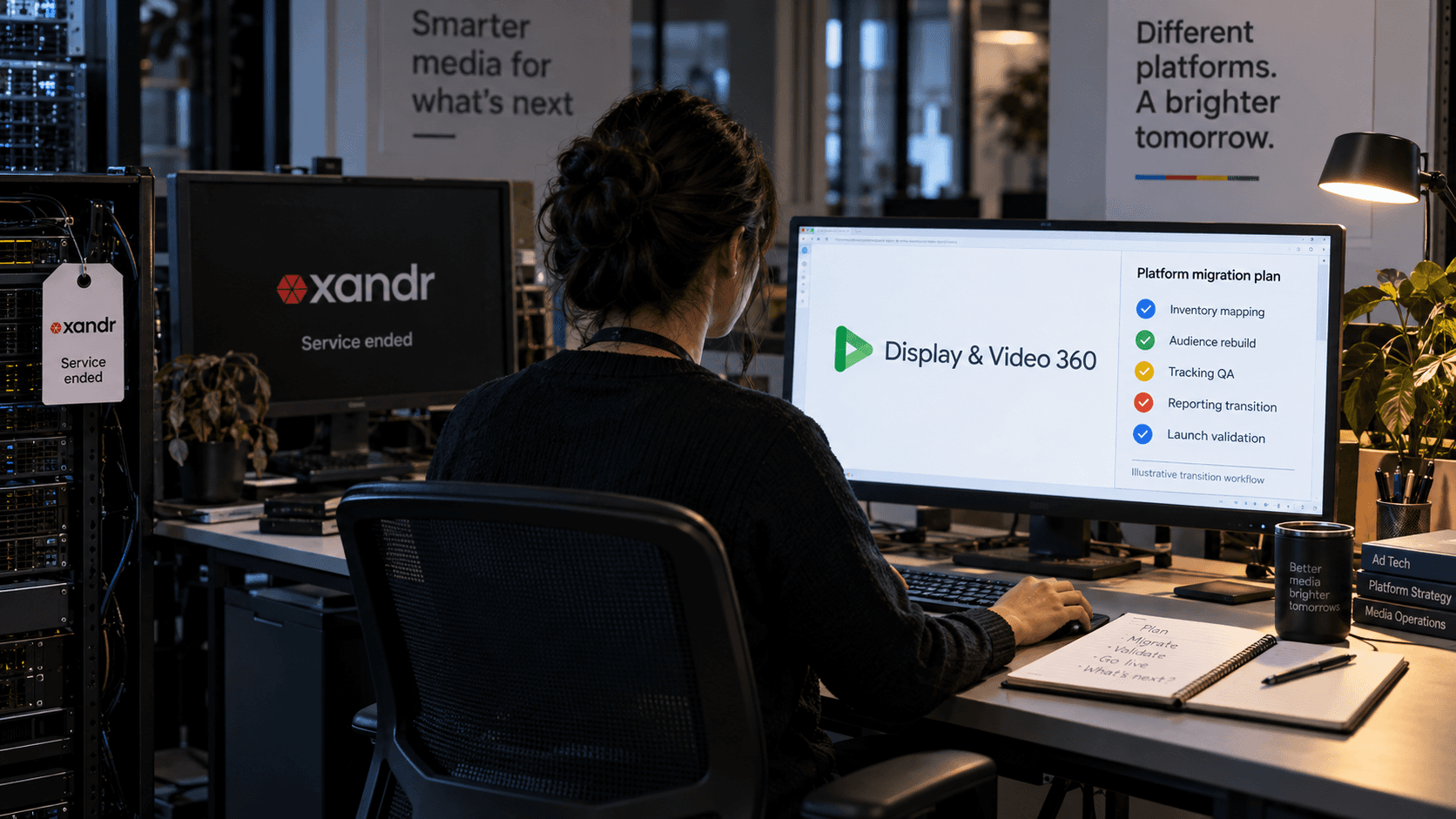
On February 28, 2026, Microsoft officially shut down Xandr Invest, its demand-side platform formerly known as AppNexus. The closure marked the end of one of the longest-running independent programmatic platforms in the US, a platform that had shaped how agencies and brands bought digital media for close to two decades.
Microsoft framed the decision as a strategic shift toward AI-powered advertising through its own Microsoft Advertising Platform. The company stated that the traditional DSP model no longer aligned with its goals for conversational, privacy-focused ad experiences. For the thousands of advertisers who relied on Xandr for open web display, video, and connected TV buying, that explanation offered little comfort. What they needed was a clear next step.
Several DSPs now compete for the budgets that Xandr once managed. The Trade Desk, Amazon DSP, and Google's Display & Video 360 (DV360) have all absorbed displaced spend. Among these options, DV360 stands apart for a specific reason: it offers the widest inventory access, the deepest integration with Google's data and measurement stack, and exclusive reach into YouTube, the single largest ad-supported video platform in the world.
This article breaks down what happened with Xandr, who it affects, and why DV360 is the strongest path forward for advertisers ready to transition.
What Happened to Xandr DSP?
Few platforms shaped programmatic advertising the way AppNexus did. Founded in 2007, it became the backbone of open web ad buying in the US, processing billions of daily transactions across display, video, and mobile. AT&T acquired AppNexus in June 2018 for $1.6 billion, rebranding it as Xandr and betting that telecom data fused with programmatic technology could challenge Google and Facebook. That bet never paid off. Xandr struggled to secure enough linear TV supply from broadcasters, leadership turnover followed, and AT&T's mounting debt forced a rethink.
AT&T sold Xandr to Microsoft in December 2021, with the acquisition completing in June 2022 at a reported price of roughly $1 billion. Microsoft retired the Xandr name by 2023, folding everything into Microsoft Advertising. The DSP lived on as Microsoft Invest for a while longer, but the writing was on the wall. The platform's nearly two-decade-old infrastructure required significant resources to maintain while capturing less than 3% of US display ad spend. On February 28, 2026, Microsoft pulled the plug.
Why Did Microsoft Shut Down Xandr?
Keeping a legacy DSP alive costs money. Rebuilding one to compete with Google DV360, The Trade Desk, and Amazon DSP costs even more. Microsoft chose a third option: walk away and redirect those resources toward AI.
Corporate Vice President Kya Sainsbury-Carter stated that Microsoft would exclusively focus its buy-side ad tech investments on the Microsoft Advertising Platform, an AI-driven system powered by Copilot that merges campaign planning, bidding, and optimization into one interface. The company concluded that the traditional DSP model no longer aligned with its vision for private, personalized ad experiences in a conversational and agentic world.
The market had moved, too. Xandr faced growing pressure from competitors who invested aggressively in integrated, privacy-focused solutions. Microsoft's own strategic pattern reinforced the exit: PromoteIQ, its retail media platform, was already shut down in 2024. The direction was clear. Rather than competing as a third-party DSP operator, Microsoft chose to monetize its owned inventory from Bing, LinkedIn, Xbox, and Outlook while tightening control over its data ecosystem.
For thousands of advertisers still running campaigns through Microsoft Invest, the reasoning mattered less than the reality. Their DSP was gone, and the clock on finding a replacement had run out.
What This Means for Advertisers Who Relied on Xandr
The shutdown did not come with a built-in migration path. Microsoft pointed advertisers toward its own Microsoft Advertising Platform, but that system operates on a fundamentally different model. It is not a traditional DSP. Advertisers who relied on Xandr for open web buying, granular auction-level controls, and cross-channel reach across display, video, and connected TV lost access to all of it overnight.
The practical fallout hits several areas at once. Audience segments built inside Xandr are no longer accessible. Campaign history, optimization data, and performance benchmarks accumulated over years cannot transfer to a new platform automatically. Advertisers running retargeting campaigns or sequential messaging strategies had to rebuild those workflows from scratch.
Timing makes the disruption worse. Xandr had carved out a strong position in connected TV and video buying, with CPMs that ran slightly below the industry average for those formats. Advertisers active in CTV now face a gap in their media plans at a moment when streaming ad spend continues to climb. Waiting is not a strategy. Every week without an active DSP means lost impressions, broken frequency caps, and audiences that competitors are already reaching.
Comparing DSP Alternatives After Xandr
Not all DSPs fill the same gap. Before committing to a platform, it helps to see how the three leading options stack up across the categories that mattered most to Xandr users.
The following table breaks down each platform across the areas where former Xandr advertisers need the most clarity:
Feature | Google DV360 | The Trade Desk | Amazon DSP |
Inventory reach | 80+ ad exchanges, including Google AdX | Broad open internet access | Strong within Amazon ecosystem, limited outside |
YouTube access | Exclusive (only DSP with direct YouTube inventory) | No direct access | No direct access |
CTV and video | Full CTV, OTT, and streaming support including Netflix deals | Supported through exchange partners | CTV available, focused on Amazon properties |
Audience targeting | Google first-party data, custom segments, third-party integrations | Third-party data partnerships, UID2 | Amazon shopper purchase data |
Measurement and attribution | Native GA4, Campaign Manager 360, and Search Ads 360 integration | Third-party measurement tools required | Amazon Attribution, limited off-platform |
AI-powered bidding | Machine learning auto-bid optimization across all formats | Koa AI for predictive modeling | Automated bidding within Amazon framework |
Minimum spend | Typically accessed through a certified partner or agency | High minimum thresholds | Self-serve or managed service options |
Strongest fit | Cross-channel scale, brand and performance campaigns | Open web transparency, independent buying | eCommerce and retail-focused advertisers |
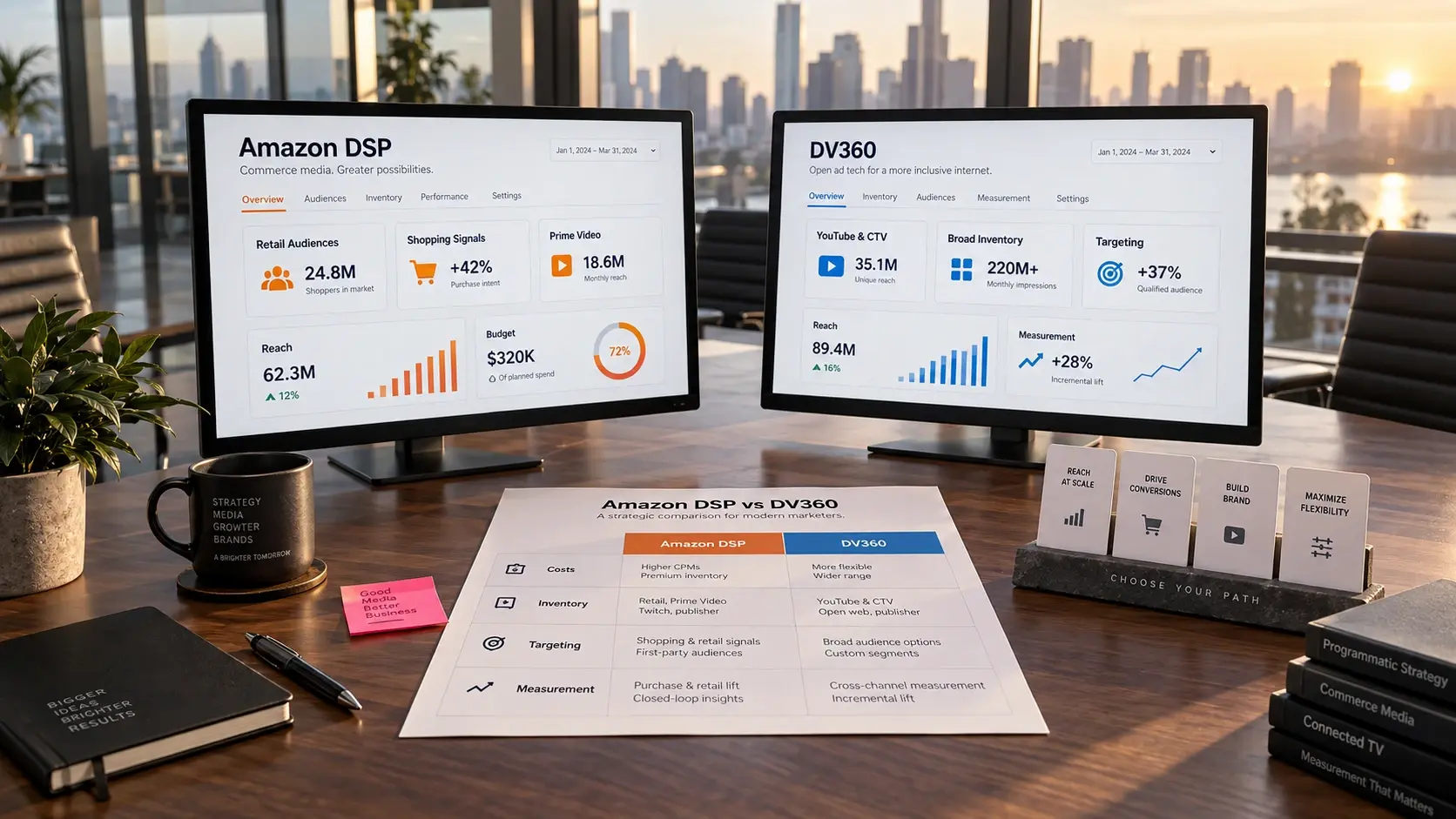
The comparison comes down to priorities. Advertisers focused on open web transparency will consider The Trade Desk. Those tied to Amazon's retail ecosystem will gravitate toward Amazon DSP. For advertisers who need the largest inventory footprint, native Google measurement integration, and exclusive YouTube reach in a single platform, DV360 covers the widest ground of the three.
DV360 Features That Replace What Xandr Offered
The biggest question when switching platforms is simple: will the new DSP do what my old one did? Here is how DV360 maps against the capabilities Xandr users depended on.
Cross-channel buying
Xandr supported display, video, and CTV in one interface. DV360 extends that to include audio and native formats alongside YouTube, CTV, and display, all within a single campaign workflow.
Connected TV reach
DV360 reaches 93% of US CTV households, with inventory across Hulu, Peacock, and major exchange partners. YouTube ranks number one in reach among all ad-supported OTT and CTV services, a channel Xandr could not access.
Audience targeting
Xandr leaned on third-party data providers. DV360 adds Google's first-party audience signals, custom intent segments built from search behavior, and remarketing lists synced through GA4. Third-party data from LiveRamp and Eyeota remains available for those who need it.
Programmatic deals
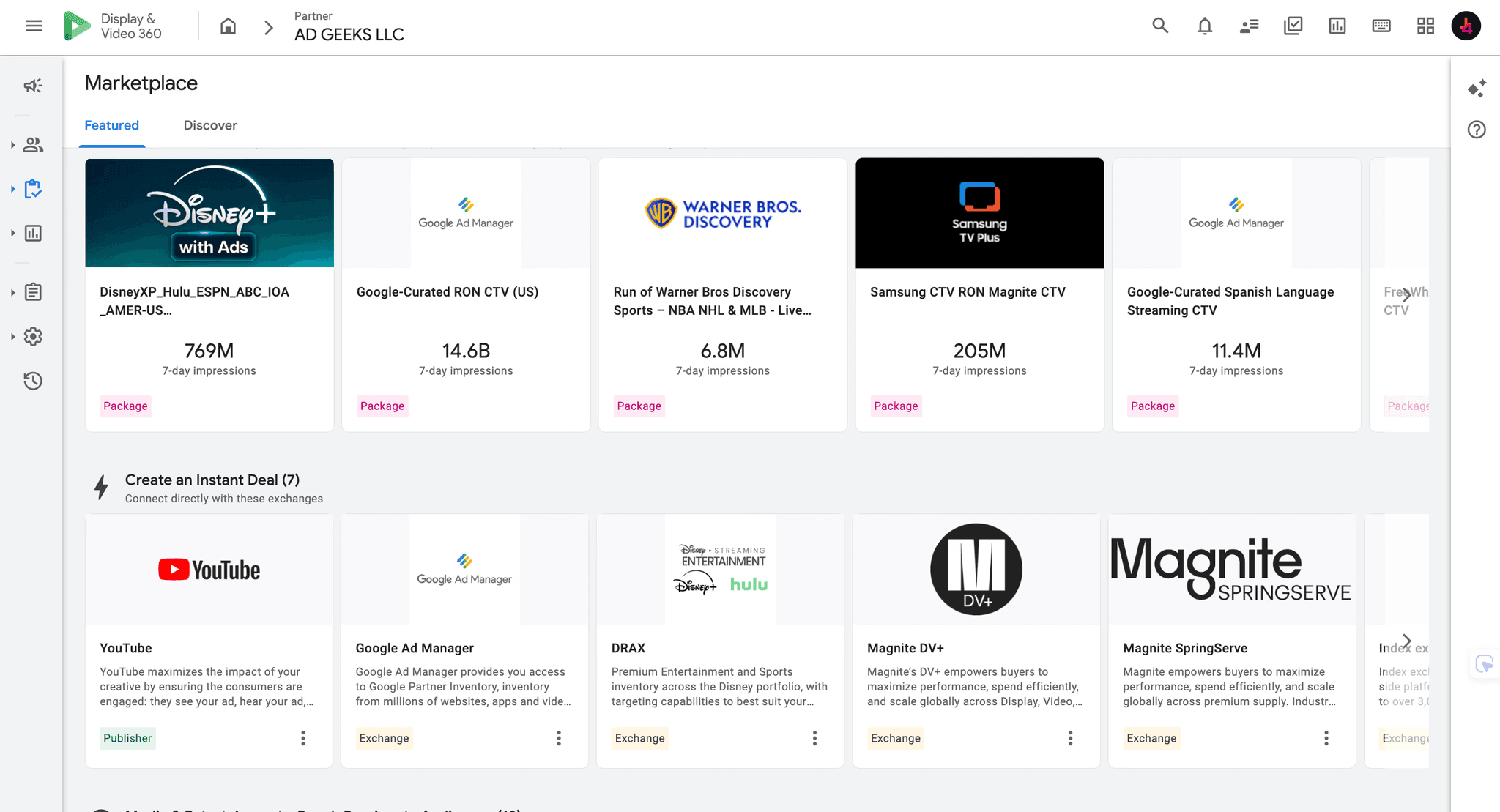
DV360 supports open auction, private marketplace, and programmatic guaranteed deals, same as Xandr. The difference is direct programmatic guaranteed access to YouTube inventory, including YouTube Select lineups and YouTube TV.
Reporting
When integrated with CM360, every impression served through DV360 is tracked consistently, creating a single source of truth for campaign performance. Machine learning bid strategies optimize toward conversions, viewability, or reach automatically.
Creative tools
Xandr offered standard ad serving. DV360 includes Ad Canvas, a Format Gallery with Google Web Designer templates, and data-driven creative tools that adapt messaging per audience segment in real time. For teams used to static Xandr campaigns, the upgrade is immediate.
Every core function Xandr provided has a direct equivalent in DV360. In most cases, the DV360 version goes further.
How to Transition From Xandr to DV360
The platform is gone, but the campaign data in your team's hands is not. A structured transition protects performance continuity and prevents wasted spend during the switch.
Audit what you had
Document every active Xandr campaign configuration: audience segments, frequency caps, bid strategies, deal IDs, and creative assets. Export all performance reports. Anything not captured now is lost permanently.
Secure DV360 access
DV360 is not a self-serve signup platform. Access runs through Google Marketing Platform, and most advertisers work with a certified partner or reseller to get onboarded. This step alone takes weeks if handled incorrectly.
Rebuild your audiences
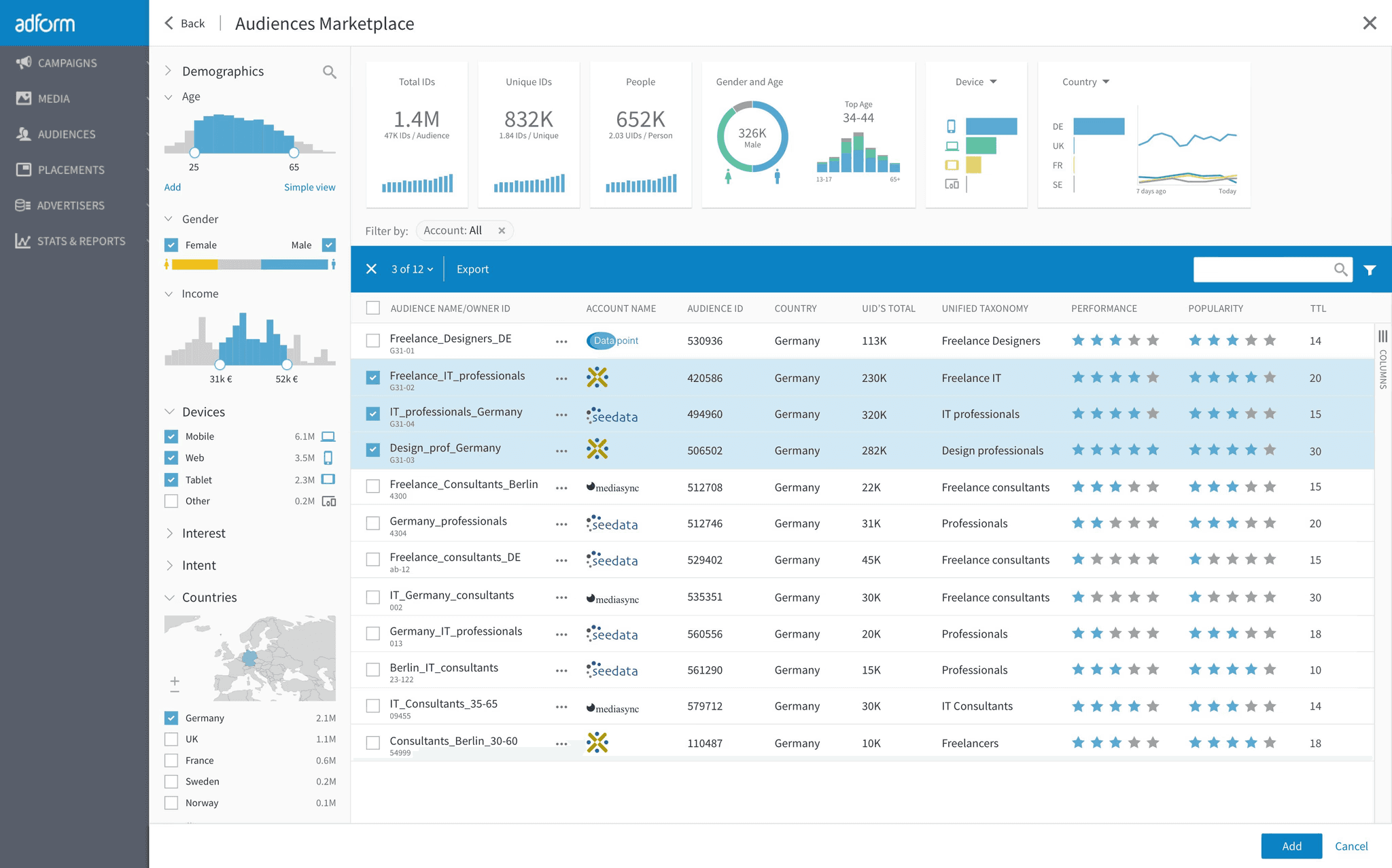
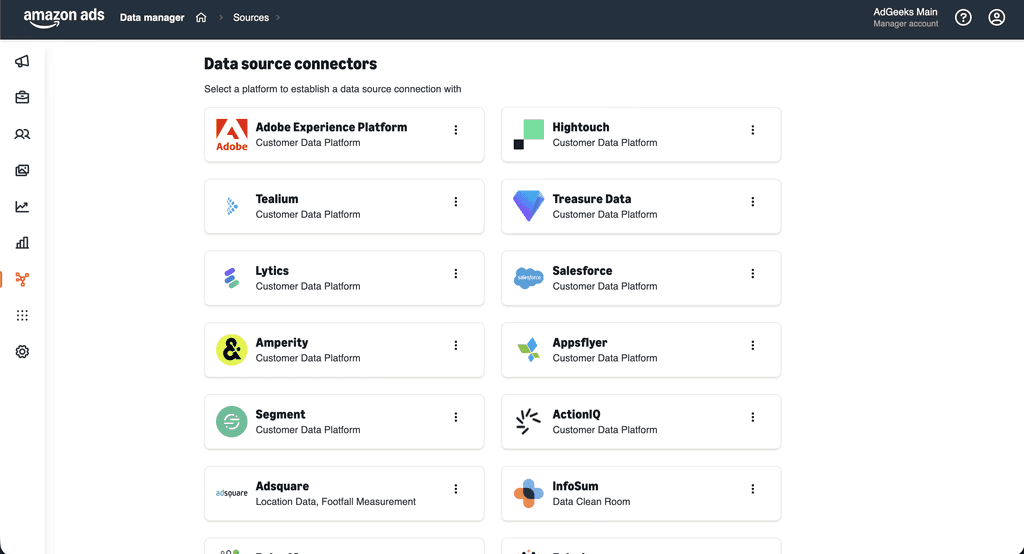
Xandr segments will not transfer. Inside DV360, you recreate targeting using Google's first-party signals, custom intent audiences, and GA4 remarketing lists. Confirm whether your third-party data providers are available through DV360's integrated marketplace before launch.
Launch and measure
Focus your first 30 days on establishing performance baselines rather than aggressive optimization. CM360 integration gives you accurate attribution from day one, building the foundation for every decision that follows.
Work with a partner who knows this transition
AdGeeks operates as a DV360 reseller and has guided agencies and brands through programmatic migrations across 14 industries and over 150 client partnerships. From account setup to live campaigns, the team handles the technical work so your ad spend does not sit idle. Get in touch to check eligibility and get started.