
Most brands start the search for a programmatic partner with a list of names and end it with a list of questions nobody answered. The pitch decks look identical. Every agency claims full-funnel expertise, every agency shows a dashboard, and every agency promises transparency without defining the word. A shortlist built on those signals produces a coin flip. This guide sets out the criteria that separate an enterprise-capable programmatic agency from a reseller with a login, and shows how AdGeeks meets each one.
What the market data says about partner choice
Automated buying is no longer one channel among several. Programmatic accounts for roughly 90% of worldwide digital display ad spending, and eMarketer projects that it will drive 96% of new display dollars, leaving nonprogrammatic buying to grow by less than $2 billion a year. Choosing a programmatic partner has effectively become choosing a display partner.
Scale, though, hides a leak. The Association of National Advertisers found that only 36 cents of every dollar entering a demand-side platform reached the consumer in its 2023 supply chain study. That figure has improved. Working media climbed to 47.1% by Q3 2025, recovering $13.6 billion in value, according to the ANA benchmark. More than half of a media budget still disappears into the supply chain before an impression is served.
The gap between good execution and bad execution has widened alongside it. Advertisers with disciplined quality governance converted 56.7% of programmatic spend into impressions that were fraud-free, viewable, and free of made-for-advertising inventory, against 37.5% for weaker performers, the ANA reported in February 2026. Two agencies spending the same budget on the same audience will not produce the same result. The one running log-level quality checks converts more of it.
The table below sets out the figures that should frame any partner evaluation.
Metric | Figure | Source (2025+) |
|---|---|---|
Programmatic share of global display spend | About 90% | eMarketer, 2025 |
Working media reaching publishers, Q3 2025 | 47.1% | ANA Transparency Benchmark |
Media value recovered since 2023 | $13.6 billion | ANA Transparency Benchmark |
Global value still lost annually to inefficiency | $26.8 billion | ANA, Q2 2025 |
Quality-led advertiser conversion of spend | 56.7% | ANA, Q4 2025 |
Lower-performing advertiser conversion of spend | 37.5% | ANA, Q4 2025 |
Private marketplace share of programmatic spend | Nearly 88% | ANA, Q2 2025 |
Seven criteria for the shortlist
An enterprise evaluation should not begin with a list of vendors. It should begin with a list of tests, and only then should names be added. Seven tests do most of the filtering.
1. Direct seat access, not a reseller layer
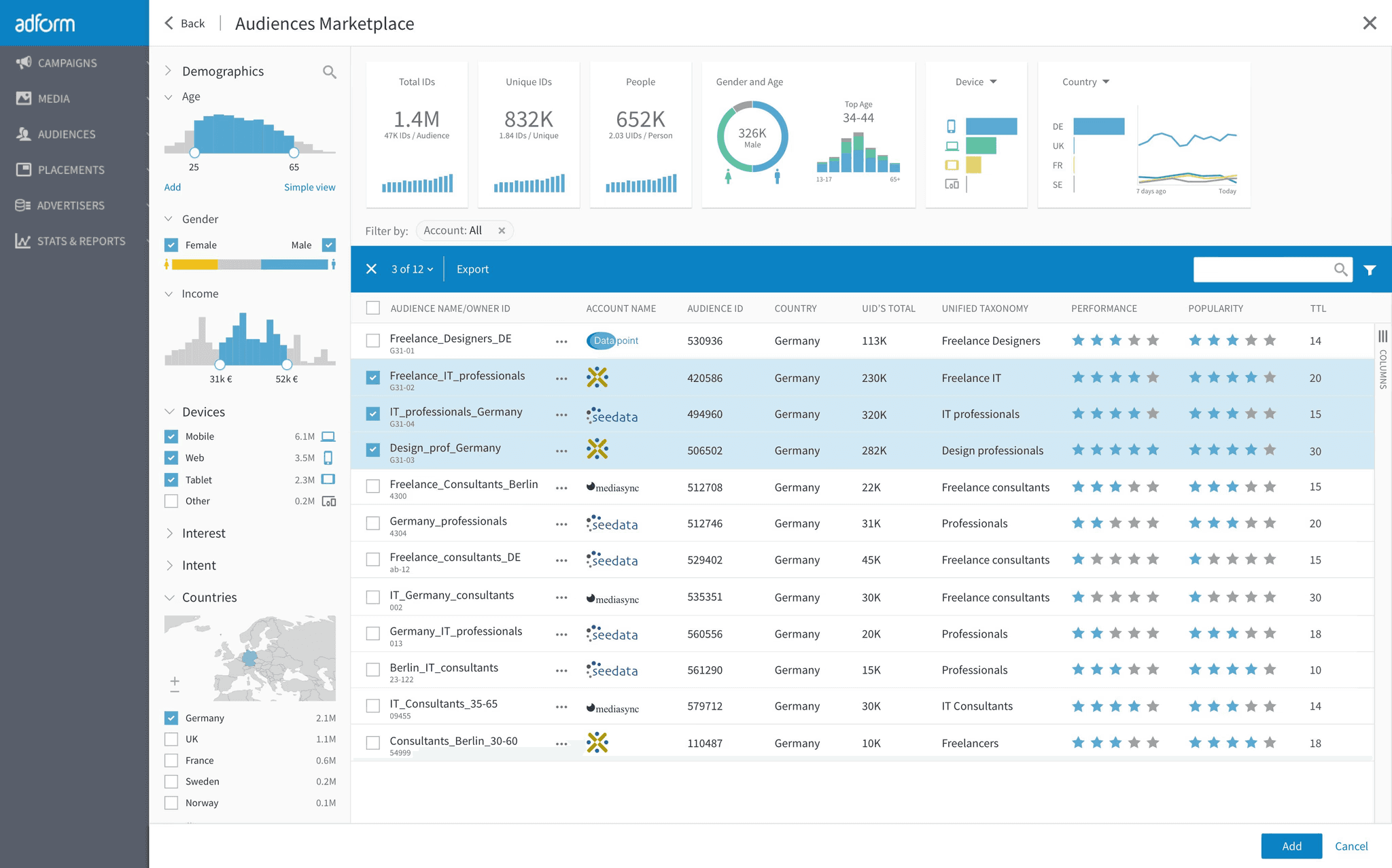
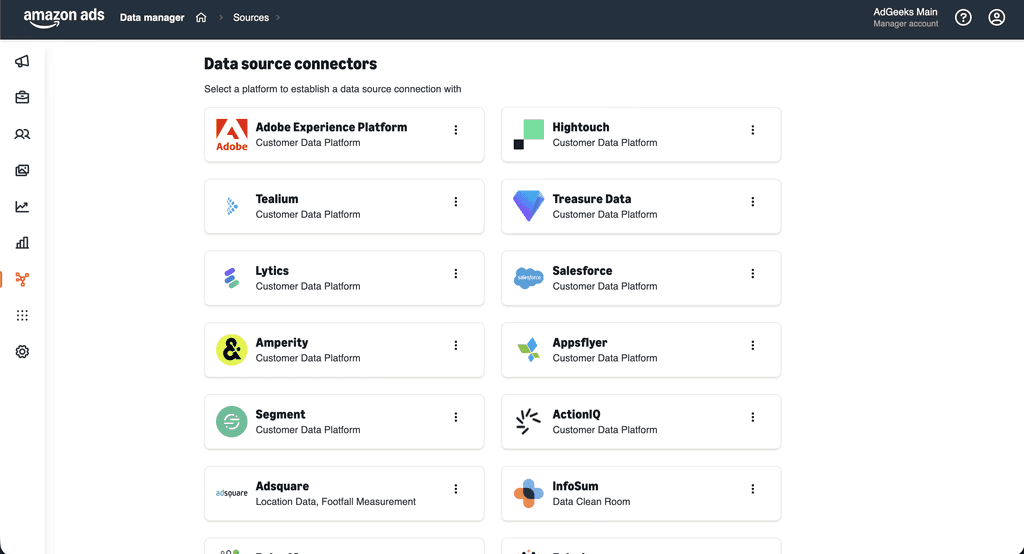
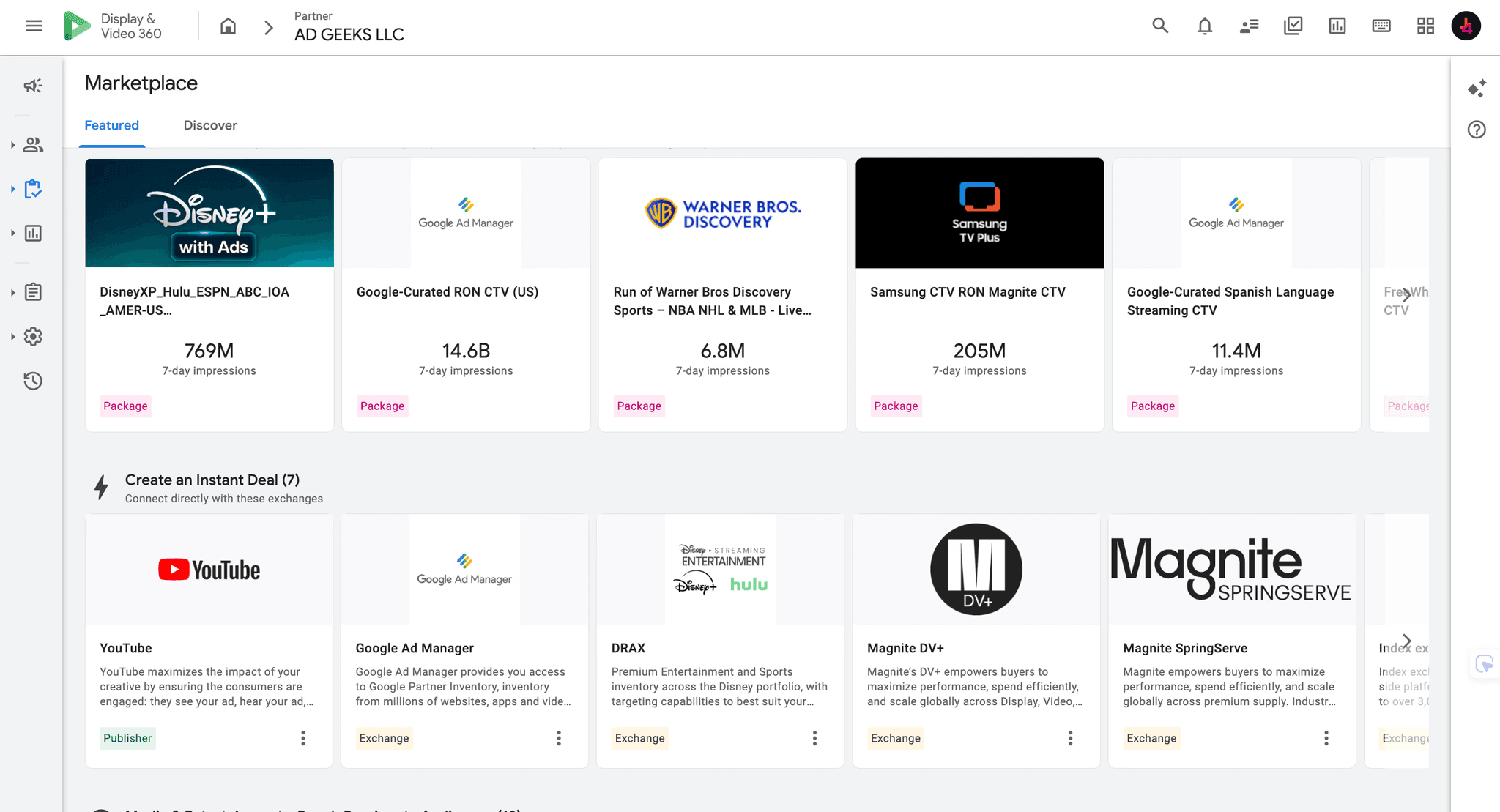
Ask which platforms the agency holds a seat on, and ask whether the seat belongs to them. A reseller sitting between a brand and a DSP adds a margin nobody discloses and a delay nobody schedules. Direct access changes the economics and the timeline. AdGeeks holds seats on Display and Video 360, Amazon DSP, and Adform, which is what allows onboarding to run in days rather than the multi-month cycle an enterprise contract usually demands.
2. More than one DSP, with a reason for each
Single-platform agencies recommend the platform they sell. That is not strategy, it is inventory. A partner running three DSPs has to justify the choice on the merits of the campaign. DV360 brings Google inventory and YouTube on the television screen. Amazon DSP opens Prime Video, Fire TV, and real purchase behavior on and off Amazon. Adform is Europe’s largest independent DSP, built cookieless-ready and privacy-first. The right question in a pitch is not which platform an agency prefers, but under what conditions it would recommend a different one.
3. Minimums that match the budget
Enterprise DSPs were built for enterprise commitments, and the entry requirements have historically locked out mid-market advertisers with real budgets and real audiences. Any agency proposing a spend floor that exceeds a full quarter’s media plan is not a partner, it is a gatekeeper. Managed access removes the minimum without removing the platform. Brands and agencies can request access to all three seats without an enterprise contract behind it.
4. Supply-chain transparency at log level
The ANA figures make the case on their own. If more than half of a budget can vanish between the DSP and the publisher, an agency that cannot show where it went is asking for trust it has not earned. Request log-level data. Request the supply path optimization settings. Request the inclusion list. An agency that treats those requests as unusual has told you something useful.
5. Vertical fluency, especially where regulation bites
A campaign for a licensed sportsbook and a campaign for a pharmaceutical brand fail in different ways, and neither failure is caught by generic brand safety settings. Category experience is a compliance requirement before it is a performance advantage. AdGeeks runs sector-specific programs across Technology, B2B, Finances, Healthcare and Pharma, Retail and eCommerce, Gambling and iGaming, Tourism and Travel, and Hospitality, working inside the frameworks each category answers to, from UKGC and MGA licensing to HIPAA and country-specific pharma codes.
6. Channel coverage that follows the audience
A shortlist candidate should be able to move a budget across screens without changing partners. That means display and video on the open web, Connected TV across streaming, YouTube on the television set, Netflix inventory as ad-supported tiers scale, Spotify and podcast audio for screenless attention, and out-of-home where the plan needs a physical footprint. The ad formats available in a single managed setup determine how far a strategy can stretch before it needs a second vendor.
7. Evidence from delivered campaigns
Case studies are the only part of a pitch that reports on something that already happened. Read them for scale, market, and objective rather than for the headline percentage. An Amazon DSP full-funnel market launch delivered 3.37 million impressions across a single market entry. A programmatic ABM campaign on DV360 shows account-level targeting applied at scale, while a European computer-buyer ABM program shows the same discipline extended across a continent. Retention work appears in a streaming subscription campaign, app-first behavior in a QR payment adoption push, developer targeting in a tech traffic program, geo-precision in an EV journey campaign, and retail acquisition in new-to-brand retargeting via Amazon DSP. The full case studies library carries the rest.
Questions worth asking in the pitch
A shortlist narrows fastest when the questions are specific enough to be uncomfortable. These five surface the difference between capability and claim.
Which DSP seat is yours, and which do you buy through someone else?
What percentage of last quarter’s spend for a comparable client cleared as viewable, non-IVT, and MFA-free?
Show the supply path optimization settings and the inclusion list for a live account.
How long from signed contract to first impression served, and what determines that clock?
When did you last recommend against a platform you have a seat on?
The last question does more work than the other four. An agency that has never turned business away from its own inventory is optimizing for its margin, not the media plan.
Where AdGeeks fits
The model is narrow on purpose. AdGeeks provides managed access to DV360, Amazon DSP, and Adform for agencies and brands that need enterprise platforms without enterprise commitments, and runs the campaigns rather than handing over a login and a manual. Onboarding closes in days. Campaigns run across display, video, native, audio, CTV, and in-app inventory. Creative work sits in the Creative Showroom, background on the team sits on the about page, and current thinking on programmatic buying runs through the news and blog section. Agencies weighing a shortlist can talk to sales about a specific market and category, or request access directly.
Summary
Programmatic carries roughly 90% of global display spend, but ANA data shows only 47.1% of a budget reaches publishers, which makes supply-chain transparency the sharpest test on any agency shortlist.
Direct DSP seats, multi-platform reasoning, regulated-category fluency, and delivered case evidence separate an enterprise partner from a reseller, and AdGeeks opens DV360, Amazon DSP, and Adform in days without enterprise minimums.