Streaming now accounts for nearly half of all US television viewing. Nine in ten households use a connected TV device at least once per month. Ad-supported tiers have become the default subscription model across most major platforms. For US brands and agencies, these are no longer emerging trends – they describe the current state of how Americans watch television and how advertisers reach them.
How US Viewing Has Changed
In May 2025, streaming surpassed broadcast and cable combined for the first time in Nielsen’s The Gauge, holding 44.8% of total TV time against a joint 44.2% for traditional formats. By December, streaming’s share had climbed to 47.5% – the highest level on record. Christmas Day alone produced over 55 billion minutes of streaming, shattering the previous single-day record. Cable has fallen below a quarter of total viewing, and broadcast sits around a fifth.
The shift is accelerating rather than plateauing. Ad-supported subscriptions accounted for 57% of new subscriber additions by early 2025, and ad-supported viewing time grew to represent nearly three-quarters of all TV consumption. Netflix’s ad tier now reaches tens of millions of monthly users globally. Disney is folding Hulu into Disney+ later this year, creating a unified app that consolidates two of the largest ad-supported streaming audiences in the US. These are structural moves, not experiments.
Why US Advertisers Are Increasing CTV Spend
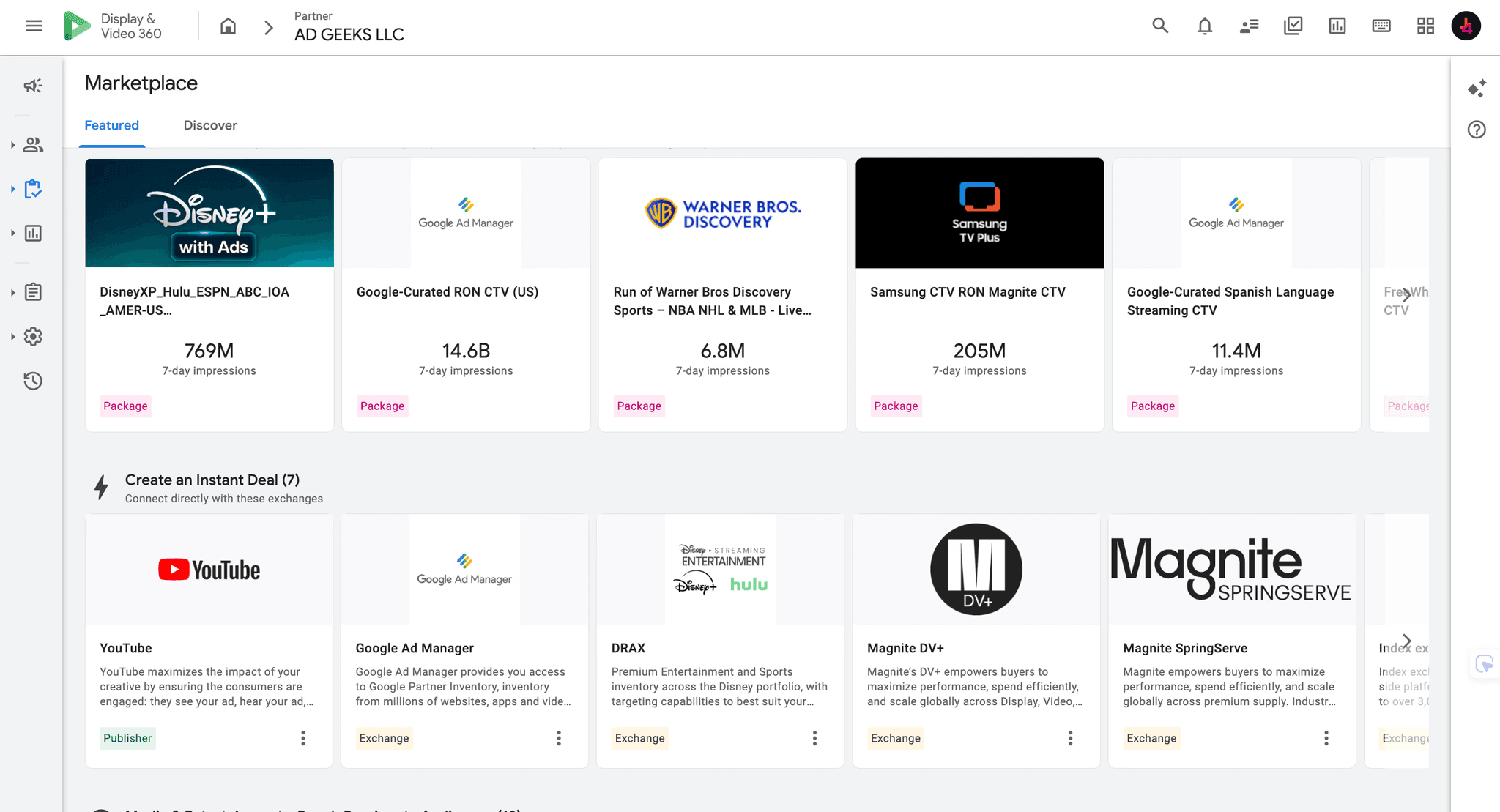
What draws advertisers to CTV is not reach alone – that argument was settled years ago. The differentiator is precision. Through demand-side platforms such as Google Display & Video 360, brands run campaigns across premium streaming environments including Netflix, Hulu, Paramount+, and YouTube on CTV, while targeting specific households rather than broad demographics. Geographic targeting operates at the state, city, ZIP code, and DMA level. Third-party audience data layers cover in-market intent, income, health interests, and lifestyle indicators. Frequency controls prevent overexposure across devices.
A 2026 survey by Advertiser Perceptions and Premion found that seven in ten CTV advertisers plan to increase spending this year. The primary driver, cited by 44% of respondents, is the ability to reach engaged opt-in audiences. Another 40% pointed to combining television’s branding scale with digital-grade targeting. Among those increasing budgets, roughly a quarter of the new spending comes from overall budget growth; the rest is being reallocated from linear TV, paid search, digital display, and social media.
The following table outlines how connected TV compares with linear TV across the targeting and measurement capabilities that matter most to US advertisers.
Capability | Linear TV | Connected TV |
Audience targeting | Age and gender via Nielsen panels | Household-level, interest, in-market, income, and lifestyle segments |
Geographic precision | DMA-level (broad metro regions) | State, city, ZIP code, or DMA |
Frequency control | Estimated at the campaign level | Household-level caps across platforms and devices |
Measurement | Panel-based reach and GRPs | Cross-device attribution, brand lift, conversion tracking |
Ad environment | Scheduled broadcast with fixed ad pods | Premium streaming, full-screen, high completion rates |
Buying model | Upfront commitments or scatter market | Programmatic, direct, or hybrid activation |
CTV Advertising as a Full-Funnel Channel
Connected TV started as an awareness play. That framing no longer holds. CTV ad completion rates exceed 95% for standard 15- and 30-second formats – far above mobile or desktop video benchmarks. Interactive ad formats are gaining ground: QR code usage in CTV ads has grown more than threefold year over year, and shoppable units are converting at rates well above standard video placements. Research from The Trade Desk’s 2025 Premium Payoff Report found that premium media environments drive a 40% increase in purchase intent and are 30% more effective than less premium settings.
CTV also amplifies the performance of other channels. Paid social conversion rates improve by 8.5% when audiences have previously seen a brand on streaming TV, and 51% of heavy CTV viewers search online after seeing something on the big screen. For US brands running cross-channel campaigns, CTV functions as a warm-up layer that lifts results across search, social, and display.
Platform Consolidation Is Reshaping the US CTV Landscape
The US streaming market is consolidating at speed. Disney is merging Hulu into Disney+ to create a unified streaming app later this year, combining two of the largest ad-supported audiences into one platform. Netflix has agreed an $82.7 billion deal to acquire Warner Bros. studios and streaming units, prompting Paramount to make a competing bid for the entirety of Warner Bros. Discovery. These are not incremental adjustments. They represent a restructuring of who controls premium streaming inventory in the US.
For advertisers, consolidation has practical implications. Fewer, larger platforms mean simplified media buying and the potential for unified reach and frequency management across broader content libraries. Enhanced subscriber data from merged platforms improves household-level targeting and cross-device attribution. At the same time, concentration of inventory among fewer sellers raises questions about pricing power. Advertisers that build programmatic CTV capability and diversify across platforms now will be better positioned as the landscape settles.
Challenges That US CTV Advertisers Still Face
Fragmentation remains the primary obstacle, even as the market consolidates. A third of CTV advertisers report difficulties with deduplicated reach and cross-provider planning, and more than half work with multiple providers to piece together coverage. Measurement gaps persist: a majority of marketing decision-makers say they would increase CTV budgets with better ROI tracking, and nearly as many want improved attention metrics and cross-screen effectiveness data.
Cross-platform measurement is becoming a board-level priority. The IAB’s 2026 outlook identified it as the third most-cited focus area for ad buyers this year. The gap between what advertisers expect from CTV measurement and what the ecosystem currently delivers is real – but it is narrowing. AI-driven real-time optimisation, unified frequency management, and outcome-based buying are all advancing, and the advertisers investing in these capabilities today are building a structural advantage.
What This Means for US Brands and Agencies
Linear TV’s share of ad spending continues to contract, and the dollars leaving that channel are flowing into CTV and social video. CTV ad spending is on track to surpass traditional TV entirely before the end of the decade. The question for US brands and agencies is no longer whether to invest in CTV. It is how to structure that investment for measurable results.
Building CTV-specific creative, testing interactive formats, establishing cross-screen measurement frameworks, and integrating streaming into broader media plans all take time. Brands that do that work now – while double-digit growth is still expanding the available inventory – will carry those learnings forward as the market matures and competition for premium placements intensifies.