On-demand streaming now accounts for 38% of all viewing on UK television sets, according to Barb’s 2025 annual report. Live broadcast still holds a larger individual share at 45%, but the direction is clear: audiences are steadily migrating toward streaming platforms, and UK advertisers are redirecting budgets to follow them. CTV ad spending in the UK grew 21% year on year in 2025, according to Guideline’s billing data, and is forecast to rise a further 15% in 2026 – making connected TV the fastest-growing advertising channel in the UK market.
How UK Viewing Habits Are Shifting
The UK viewing landscape looks different from the US, where streaming has already surpassed broadcast and cable combined. In the UK, live television retains a stronger hold, particularly around event programming: the Women’s Euros final, BBC One’s Celebrity Traitors, and Channel 4’s Gogglebox all drew large live audiences in 2025. Yet the underlying shift is accelerating. Broadcast TV viewing fell in each of the first five months of 2025 compared with the same periods a year earlier, extending a decline that has been running for several years.
The growth of ad-supported tiers on subscription platforms is widening the pool of CTV inventory available to advertisers. The proportion of UK Netflix subscribers on the ad-supported plan doubled over the past year to 28% in Q1 2025. Disney+ saw an even steeper increase, with its ad-tier adoption tripling to 23% over the same period. Broadcaster VOD (BVOD) platforms are growing too – BVOD revenue rose 15% in 2024 to exceed £1 billion for the first time, and services such as ITVX, Channel 4, and BBC iPlayer now account for around a quarter of total broadcaster advertising revenues.
Why UK Advertisers Are Moving Budget Into CTV
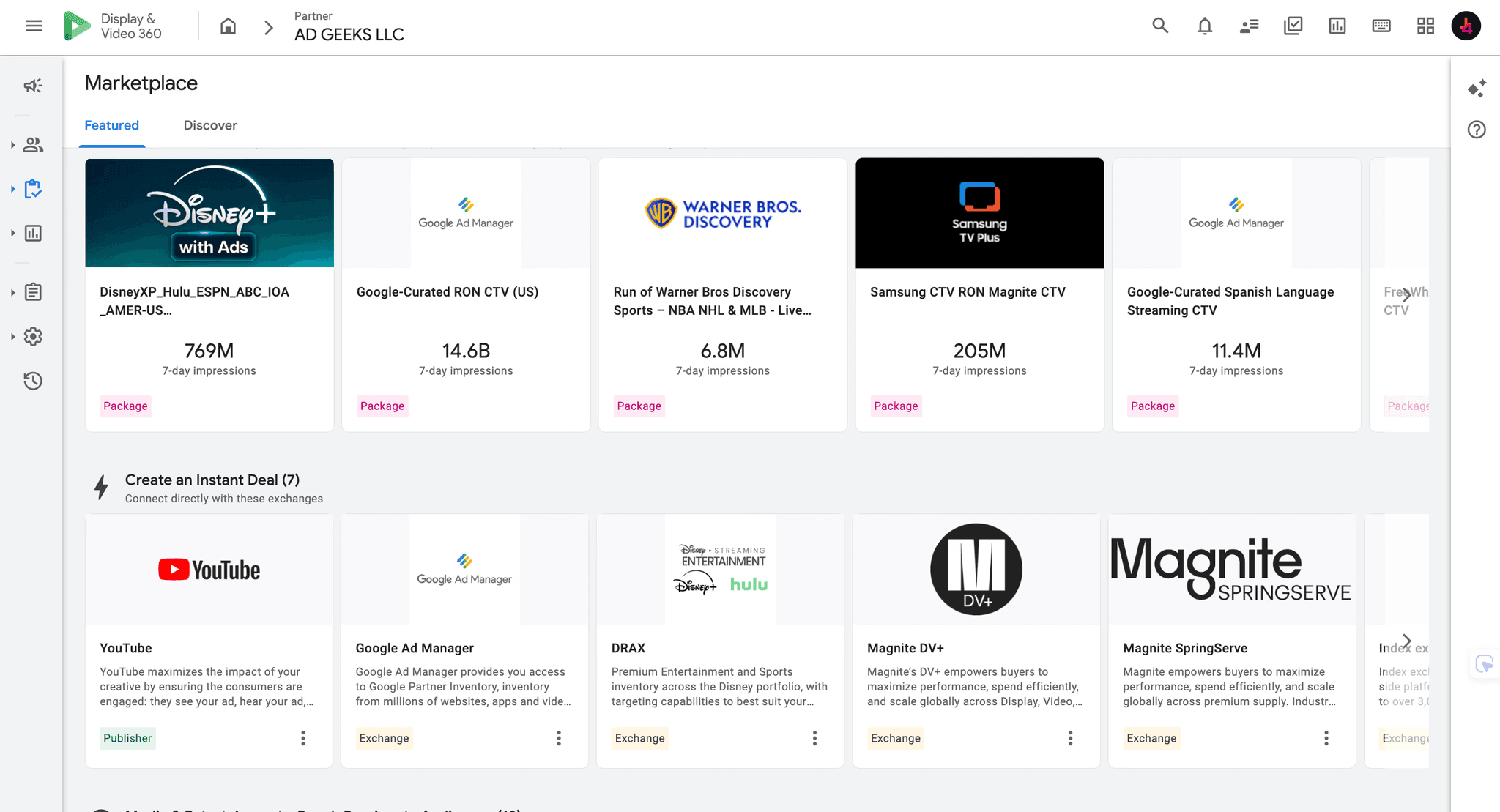
A Comcast Advertising study conducted with Happydemics found that 77% of UK marketing decision-makers plan to increase their streaming TV ad budgets in 2026, with 68% reallocating funds from other channels including linear TV, digital display, social media, and print. The appeal is a combination of broadcast-scale reach with digital-level control. Through platforms such as Google Display & Video 360, brands can activate campaigns across UK streaming environments – ITVX, Channel 4 (All 4), Sky, BBC iPlayer, Netflix, and YouTube on CTV – with targeting by region, city, or postcode cluster, household-level delivery rather than broad demographics, and frequency management to prevent overexposure.
What makes this shift particularly notable is that CTV is being treated as a performance channel, not only an awareness tool. Among UK marketers surveyed by Comcast Advertising, 72% cited better ROI and measurement capabilities compared with other platforms. That confidence is moving CTV from experimental line items into core media plans.
The following table compares how advertisers can target audiences across traditional linear TV and connected TV in the UK.
Capability | Linear TV | Connected TV |
Audience targeting | Broad demographics (age, gender, region) | Household-level, interest-based, in-market, income, lifestyle segments |
Geographic precision | Regional (e.g. ITV regions) | City, postcode cluster, or service area |
Frequency control | Limited; managed at campaign level | Household-level caps across platforms |
Measurement | Panel-based (Barb); limited attribution | Cross-device tracking, brand lift, conversion attribution |
Ad environment | Scheduled broadcast; fixed ad breaks | Premium streaming; full-screen, non-skippable formats |
Buying model | Upfront or direct deals | Programmatic, direct, or hybrid |
The UK CTV Platform Landscape
YouTube has emerged as the second most-watched video service in the UK, behind the BBC and ahead of ITV, according to Ofcom’s 2025 Media Nations report. The TV set is now the most-used device for watching YouTube via home WiFi, and viewing on TV sets has doubled in the past two years. For 16–34 year olds, Netflix is the most common first destination after switching the TV on, accounting for 26% of session starts. Among children aged 4–15, YouTube holds the same 26% share.
UK broadcasters are sharpening their digital strategies in response. ITVX introduced dynamic pause ads in late 2025 – a format already gaining traction in the US – and continues to build out its programmatic CTV offering. Sky’s streaming services now account for nearly a quarter of its total viewing. BBC iPlayer reached 22% of all BBC viewing in 2024, with that share rising to 50% among 16–24 year olds. The expansion of ad-supported inventory across these platforms is giving advertisers more routes into premium, brand-safe UK streaming environments.
Challenges Facing UK CTV Advertisers
Fragmentation and measurement remain the two largest obstacles. Lower ad loads on BVOD and AVOD services mean that even as audiences shift to streaming, the ad revenue per viewer remains lower than on linear TV. Advertisers need to work across multiple providers to assemble the reach they previously achieved through a single linear buy. Measurement standardisation is a related concern – 31% of UK industry leaders surveyed by IAB UK cited it as a top challenge, reflecting the difficulty of comparing performance across walled garden environments.
Despite these barriers, 79% of UK marketers expect their streaming TV investments to grow steadily over the next three years. The direction of travel is set. Brands that invest in building CTV expertise now – testing formats, developing cross-platform measurement approaches, and integrating streaming into broader media plans – will be better positioned as the UK market matures and competition for premium CTV inventory intensifies.